Key Findings
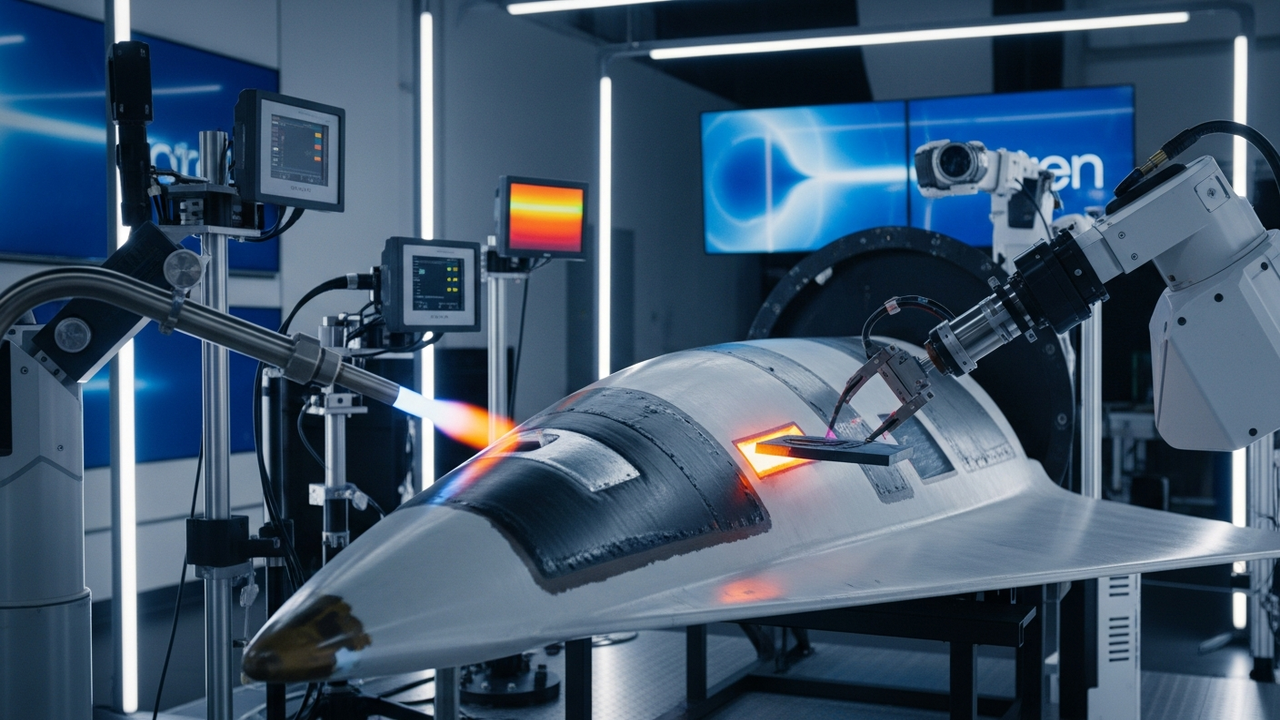
A groundbreaking ceramic-based high-temperature resistant coating has been developed, capable of maintaining material integrity in extreme environments exceeding 2000°C, which are typical for hypersonic re-entry vehicles. This new coating demonstrates superior thermal shielding capabilities and mechanical durability, surpassing conventional heat-resistant materials. This represents a significant advance, especially for enhancing the reusability of spacecraft to withstand multiple re-entries. Detailed thermal and mechanical property analyses have validated its high performance and stability, indicating its potential as a breakthrough in thermal protection systems for next-generation reusable spacecraft.
Technical Details
The developed heat-resistant coating comprises a specialized composite ceramic, primarily composed of hafnium oxide and tantalum carbide, characterized by a dense crystalline structure and a unique multi-layer design. Even after 10 minutes of exposure to a high-temperature plasma flow exceeding 2000°C, the material showed negligible surface melting, delamination, or internal structural degradation. Ground-based arc jet wind tunnel tests, simulating re-entry conditions at Mach 20+, demonstrated that the coating could reduce heat transfer to the substrate by up to 30% compared to conventional Carbon-Carbon (C/C) composites. Furthermore, in thermal shock resistance tests involving rapid temperature cycles (repeated exposure from ~2000°C to room temperature), crack initiation was delayed by over 50% compared to existing materials, demonstrating high robustness against both mechanical and thermal stresses during re-entry.
Background & Context
Hypersonic re-entry vehicles and reusable spacecraft are subjected to extreme heat, plasma flow, and high aerodynamic pressures reaching thousands of degrees Celsius during atmospheric re-entry. Thermal Protection Systems (TPS) capable of enduring this harsh environment are among the most critical technologies for ensuring spacecraft reusability and reducing operational costs. Traditional TPS materials often face challenges such as being partially expendable, having limited reusability, or incurring substantial maintenance costs. This new heat-resistant coating aims to overcome these issues, paving the way for more reliable and economical reusable spacecraft.
Strategic Significance & Outlook
This innovative heat-resistant coating technology is expected to profoundly influence the design of thermal protection systems for next-generation reusable space transportation, hypersonic flight vehicles, and future probes for atmospheric planets like Mars and Venus. The next steps involve optimizing the material’s manufacturing processes, scaling up production, and conducting long-duration durability tests in actual space environments. The commercialization of this technology promises to dramatically extend spacecraft operational cycles, accelerating routine access to space and enabling a wider range of missions.
Source: #
Get our weekly technology intelligence — free
Receive an infographic that lets you judge at a glance whether each field’s analysis report is worth reading.
Subscribe Free — Weekly Tech Intelligence
By subscribing, you’ll receive Troy-Technical’s weekly technology intelligence newsletter.
- Your email and selected fields are used only to deliver the newsletter.
- We never share your information with third parties.
- You can unsubscribe anytime via the link in each email.
See our Privacy Policy for details.
Takes about a minute · Unsubscribe anytime





Comments