Key Findings
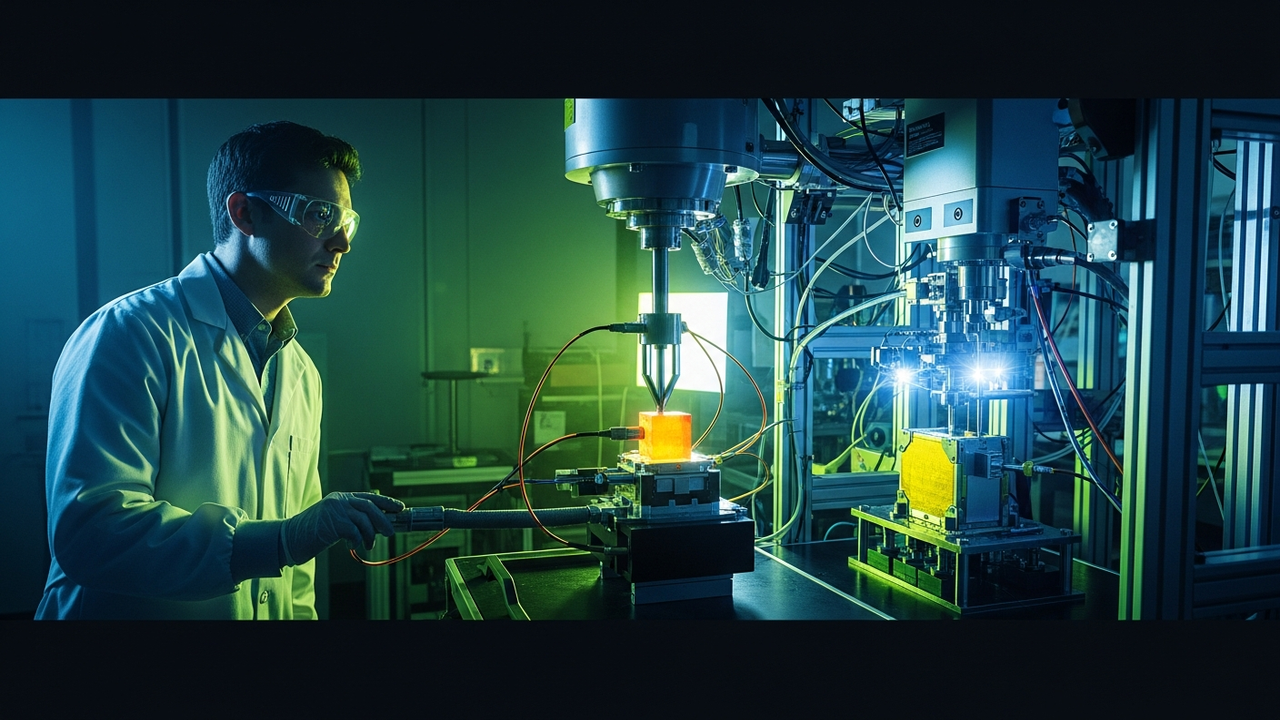
Researchers at Argonne National Laboratory have demonstrated the effectiveness of a high-speed mixing technique as a novel approach to dramatically improve the performance of all-solid-state lithium-sulfur batteries. This groundbreaking method significantly enhances the battery’s energy density and cycle life, showing remarkable stability with over 80% capacity retention after an impressive 450 charge-discharge cycles.
Technical & Clinical Details
- Battery Type: All-solid-state lithium-sulfur batteries
- Core Technology: High-speed mixing process
- Mixing Conditions: Solid electrolyte and cathode materials were mixed at 2,000 revolutions per minute (rpm) for 5 hours.
- Mechanism of Action: High-speed mixing intentionally induces halide segregation within the battery. This segregation optimizes the interfacial properties between the electrode and electrolyte, enhancing ion conductivity and suppressing unwanted side reactions.
- Performance Improvements:
- Enhanced energy density
- Extended cycle life
- 100% performance retention after 100 cycles
- Over 80% performance retention after 450 cycles
This technology addresses one of the primary challenges of all-solid-state batteries: reducing the high interfacial resistance between the solid electrolyte and electrodes. By facilitating smoother ion transport, it enables higher performance. While traditional solid-state battery manufacturing often aims for homogeneous mixing, this research achieves performance gains by intentionally creating specific inhomogeneities (segregation), offering new design guidelines for solid-state battery research.
Background & Industry Context
All-solid-state batteries are considered next-generation power sources, offering numerous advantages over conventional lithium-ion batteries that use liquid electrolytes, including enhanced safety (reduced risk of leakage and thermal runaway), higher energy density, and faster charging capabilities. These attributes make them highly anticipated for applications in electric vehicles (EVs) and large-scale energy storage systems. Lithium-sulfur all-solid-state batteries, in particular, are attractive for their use of abundant and inexpensive sulfur, aligning with sustainability and cost reduction goals. However, high interfacial resistance between the solid electrolyte and electrodes has been a major barrier to their practical implementation. Argonne’s achievement represents a critical breakthrough in overcoming this bottleneck.
Strategic Significance & Outlook
The improvement in all-solid-state lithium-sulfur battery performance through high-speed mixing directly contributes to extending EV range, shortening charging times, and enhancing safety and efficiency in data centers and grid-scale storage. If this technology can be integrated into mass production processes, it is expected to accelerate the commercialization of all-solid-state batteries and significantly contribute to the widespread adoption of high-performance, safe energy storage solutions. Furthermore, it provides new insights into interface engineering-based material design, potentially influencing the direction of future battery research and development.
Get our weekly technology intelligence — free
Receive an infographic that lets you judge at a glance whether each field’s analysis report is worth reading.
Subscribe Free — Weekly Tech Intelligence
By subscribing, you’ll receive Troy-Technical’s weekly technology intelligence newsletter.
- Your email and selected fields are used only to deliver the newsletter.
- We never share your information with third parties.
- You can unsubscribe anytime via the link in each email.
See our Privacy Policy for details.
Takes about a minute · Unsubscribe anytime








Comments