Key Findings
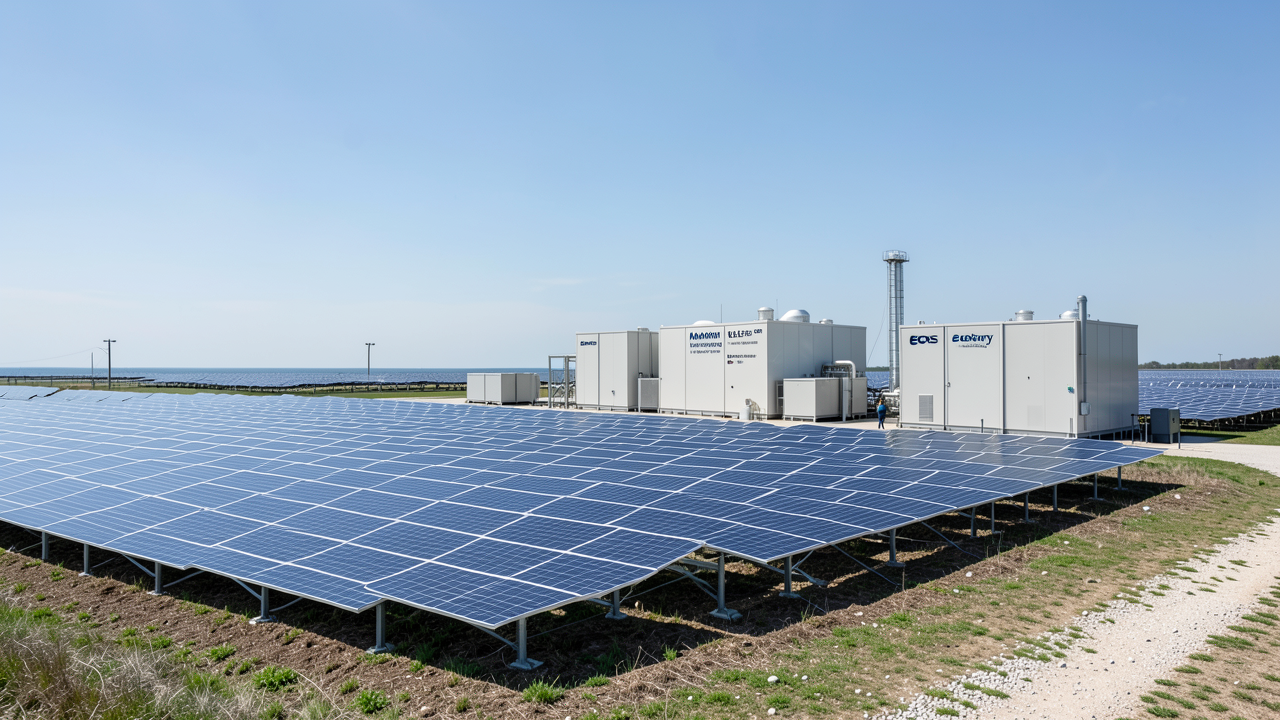
Google, MN8 Energy, and Eos Energy Enterprises have announced a collaborative project for the Mammoth Solar installation in West Virginia, integrating multiple energy storage technologies. This ambitious initiative combines 86MW of solar power generation with a 10MW/100MWh Eos Z3 zinc-based long-duration energy storage (LDES) system and a 70MW/280MWh lithium-ion Battery Energy Storage System (BESS). Announced on September 2, 2026, the project is designed to address critical grid needs, particularly by providing capacity tailored to the demanding load profiles of data centers.
Technical & Application Details
- Hybrid Storage Architecture: The project’s hybrid design leverages the strengths of both lithium-ion BESS for high-power, shorter-duration needs and zinc-based LDES for sustained, longer-duration discharge. The Eos Z3 LDES system, with its 10MW capacity and 100MWh energy rating, signifies a 10-hour discharge capability, crucial for bridging multi-hour gaps in renewable generation or providing extended backup.
- Tailored for Data Centers: Google’s involvement highlights the growing demand from hyperscale data centers for reliable, sustainable, and dispatchable power. By integrating diverse storage technologies, the project aims to ensure continuous power supply, mitigate grid intermittency, and support the demanding energy requirements of AI and cloud computing infrastructure.
- LDES Commercialization Milestone: The LDES component of this project is expected to become commercially operational in 2030. This marks a significant milestone as it represents the first commercial-scale long-duration energy storage deployment in West Virginia, setting a precedent for future installations in the region.
- Material Advantages: Eos’ zinc-based batteries utilize abundant and inexpensive raw materials, offering a cost-effective alternative to lithium-ion for applications requiring longer discharge durations, further enhancing the economic viability of such large-scale projects.
Background & Industry Context
The global energy landscape is rapidly evolving, driven by the imperative to integrate more renewable energy and the exponential growth of energy-intensive data centers. Long-duration energy storage (LDES) technologies, capable of discharging power for several hours to days, are becoming critical for grid stability and reliability. While lithium-ion batteries dominate the shorter-duration storage market, there is a strong push towards technologies like zinc-based, iron-air, and flow batteries for their extended discharge capabilities and resource abundance. This project demonstrates a leading-edge approach to meeting these complex energy challenges.
Strategic Significance & Outlook
This collaborative project by Google, MN8 Energy, and Eos signifies a strategic shift towards more comprehensive and diversified energy storage solutions, particularly for high-demand industrial loads like data centers. The successful deployment and commercial operation of this hybrid system, especially the LDES component, will provide invaluable real-world data and establish a scalable model for future renewable energy integration projects. It underscores the critical role of multi-technology energy storage in achieving decarbonization goals while maintaining grid reliability, potentially inspiring similar deployments across the U.S. and globally to support the sustainable growth of digital infrastructure.
Get our weekly technology intelligence — free
Receive an infographic that lets you judge at a glance whether each field’s analysis report is worth reading.
Subscribe Free — Weekly Tech Intelligence
By subscribing, you’ll receive Troy-Technical’s weekly technology intelligence newsletter.
- Your email and selected fields are used only to deliver the newsletter.
- We never share your information with third parties.
- You can unsubscribe anytime via the link in each email.
See our Privacy Policy for details.
Takes about a minute · Unsubscribe anytime






Comments