Key Findings
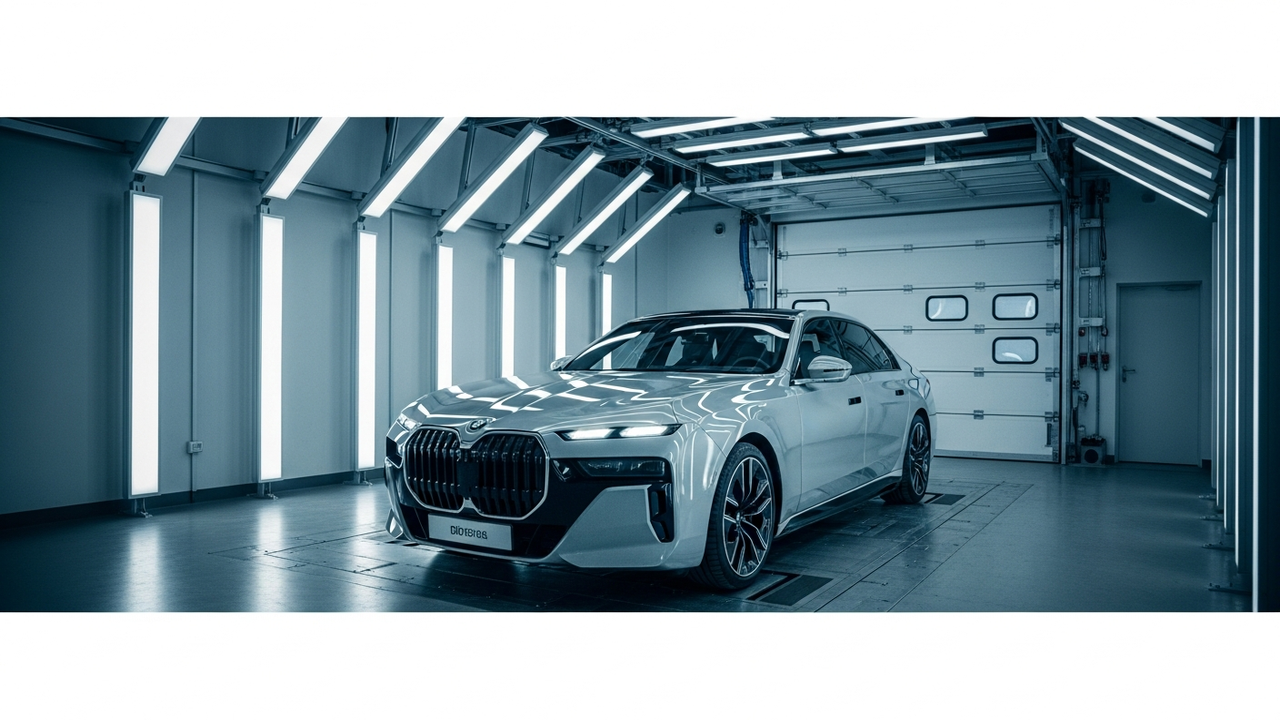
Solid-state battery technology has reached critical demonstration and pilot stages in 2026, with concrete roadmaps emerging for commercialization, particularly for commercial fleets. BMW announced in May 2025 the initiation of operations for an i7 test vehicle integrating large all-solid-state cells supplied by Solid Power. This marks a significant milestone as an automotive manufacturer evaluates solid-state batteries in real-world vehicle conditions. Further accelerating this trend, Samsung SDI has set an ambitious goal for mass production of its ‘SolidStack’ all-solid-state batteries by late 2027, targeting an impressive volumetric energy density of 900 Wh/L. These announcements collectively signal a clear transition of solid-state batteries from a ‘dream technology’ to a tangible commercial product.
Technical / Clinical Details
BMW’s deployment of test vehicles is crucial for assessing the real-world performance, safety, and durability of solid-state batteries under actual driving conditions. Solid Power’s cells are designed to provide the high power and robustness required for automotive applications. Samsung SDI’s target of 900 Wh/L in energy density represents a substantial leap beyond current liquid electrolyte lithium-ion batteries, promising significantly extended range for electric vehicles. This high energy density is likely achievable through the integration of lithium metal anodes with advanced sulfide or oxide solid electrolytes. However, maintaining this high energy density while suppressing dendrite formation, minimizing interfacial resistance between electrodes and electrolytes, and ensuring stability under high pressure remain significant technical challenges that are central to their development efforts.
Background & Context
The rapid expansion of the electric vehicle market has made battery performance improvement an urgent priority. Solid-state batteries, by eliminating flammable liquid electrolytes, offer superior safety and the potential for higher energy densities, positioning them as the leading contender for next-generation battery technology. The move by automotive OEMs like BMW to test vehicles with solid-state batteries, alongside leading battery manufacturers like Samsung SDI announcing specific mass production and performance targets, indicates a collective industry commitment to commercialize solid-state technology. This will intensify pressure on supply chain establishment, manufacturing process evolution, and cost reduction across the board.
Strategic Significance & Outlook
The initiatives from BMW and Samsung SDI are powerful drivers that will accelerate the commercialization of solid-state batteries. However, the path to mass production still entails overcoming several significant hurdles. Specifically, further reducing interfacial resistance between solid electrolytes and electrodes, achieving complete control over lithium dendrite formation, establishing reliable internal pressure management techniques, ensuring manufacturing scalability for large-scale production lines, optimizing pack certification processes for vehicle applications, and crucially, improving cost competitiveness are paramount. If these challenges are successfully addressed, solid-state batteries are expected to enter the EV market in earnest by the late 2020s, bringing about a profound transformation in the electric vehicle industry globally.
Source: https://www.febatt.com/solid-state-battery-fleet-future/
Get our weekly technology intelligence — free
Receive an infographic that lets you judge at a glance whether each field’s analysis report is worth reading.
Subscribe Free — Weekly Tech Intelligence
By subscribing, you’ll receive Troy-Technical’s weekly technology intelligence newsletter.
- Your email and selected fields are used only to deliver the newsletter.
- We never share your information with third parties.
- You can unsubscribe anytime via the link in each email.
See our Privacy Policy for details.
Takes about a minute · Unsubscribe anytime







Comments