Background
China, the world’s largest electric vehicle (EV) market, prioritizes battery technology evolution as a national strategic imperative. Solid-state batteries promise to fundamentally transform EV performance with their potential for high energy density, superior safety, and extended lifespan. However, a lack of clear definition has led to market ambiguity, with numerous technologies claiming ‘all-solid-state’ status. The introduction of a new national standard is therefore a critical measure to enhance technological transparency and accelerate the development and mass production of truly solid-state battery technologies, thereby strengthening the competitive edge of Chinese companies globally.
Regulatory Catalyst and Market Response
Effective July 1, 2026, China’s new national standard GB/T 43568-2026 for solid-state batteries introduces stringent criteria for ‘all-solid-state battery’ certification, notably requiring a 120°C vacuum test and a liquid content of less than 5%. Responding to this regulatory clarity, Doctex has swiftly become the first Chinese company to commission a gigawatt-scale manufacturing facility in Tianjin, now producing certified 350 Wh/kg solid-state cells. This landmark achievement underscores China’s tangible progress in solid-state battery mass production and its assertive leadership in global technological competition.
Technological Diversification and Progress
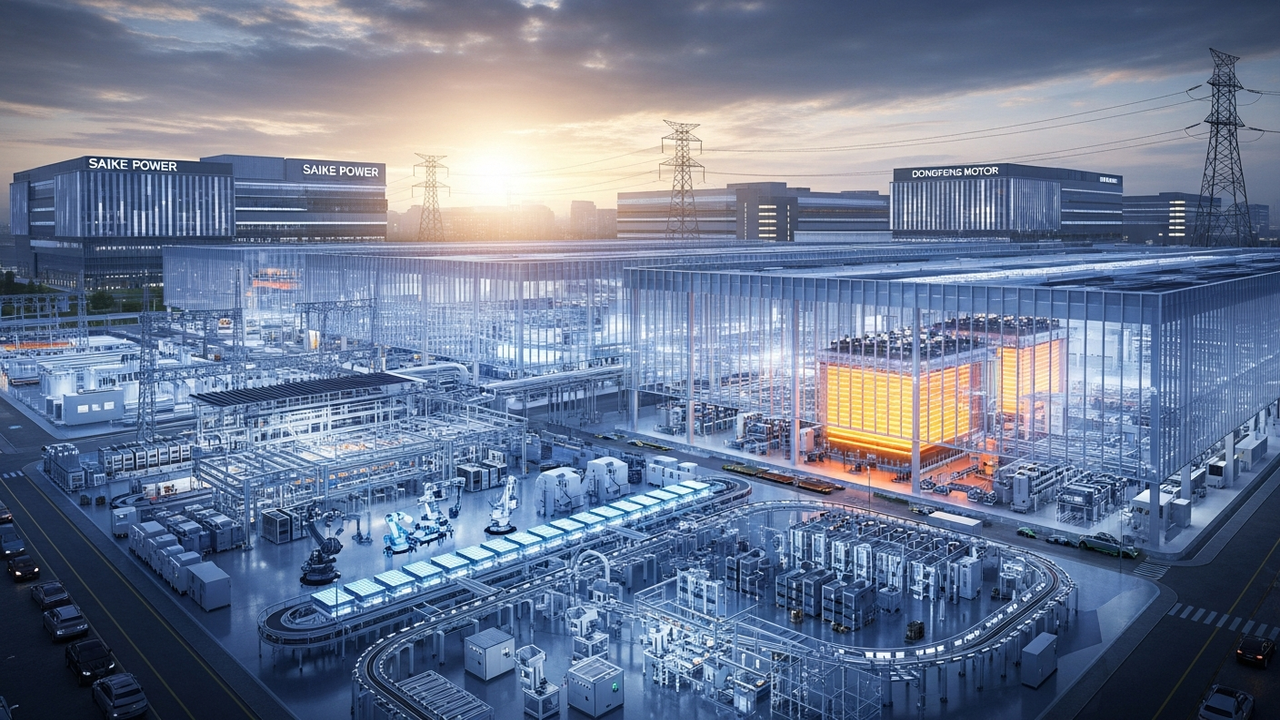
The newly commissioned Doctex gigawatt-scale facility is poised to produce 350 Wh/kg solid-state battery cells, meeting the rigorous new national standard. This high energy density is expected to significantly extend EV driving ranges, offering a substantial advantage over conventional liquid lithium-ion batteries. In parallel, Saike Power is constructing a 0.1 GWh pilot line focused on sulfide-based solid electrolytes. Sulfide electrolytes, prized for their high ionic conductivity, represent a promising avenue for next-generation solid-state batteries, with mechanical testing slated for late 2026. Meanwhile, Dongfeng Motor is advancing a 0.2 GWh manufacturing plant for 350 Wh/kg oxide-polymer hybrid cells, targeting vehicle integration by late 2026. These concurrent developments highlight China’s multifaceted approach to developing and commercializing a diverse array of solid-state battery technologies.
Strategic Implications and Outlook
The introduction of China’s new national standard, coupled with the rapid commissioning of gigawatt-scale facilities by industry leaders like Doctex, signifies a pivotal moment in solid-state battery commercialization. As other key players, including Saike Power and Dongfeng Motor, accelerate their mass production efforts across various technological pathways, China is strategically positioned to secure a dominant role in the global solid-state battery supply chain. This trajectory will profoundly reshape the competitive landscape of the global EV market, impacting automakers and battery suppliers worldwide. The broader adoption of high-performance and inherently safer solid-state batteries is anticipated to bolster consumer confidence in EVs, substantially advancing the vision of a sustainable transportation future. China’s proactive measures are thus critically important in defining the future trajectory of the global battery industry.
Get our weekly technology intelligence — free
Receive an infographic that lets you judge at a glance whether each field’s analysis report is worth reading.
Subscribe Free — Weekly Tech Intelligence
By subscribing, you’ll receive Troy-Technical’s weekly technology intelligence newsletter.
- Your email and selected fields are used only to deliver the newsletter.
- We never share your information with third parties.
- You can unsubscribe anytime via the link in each email.
See our Privacy Policy for details.
Takes about a minute · Unsubscribe anytime


Comments