Key Findings
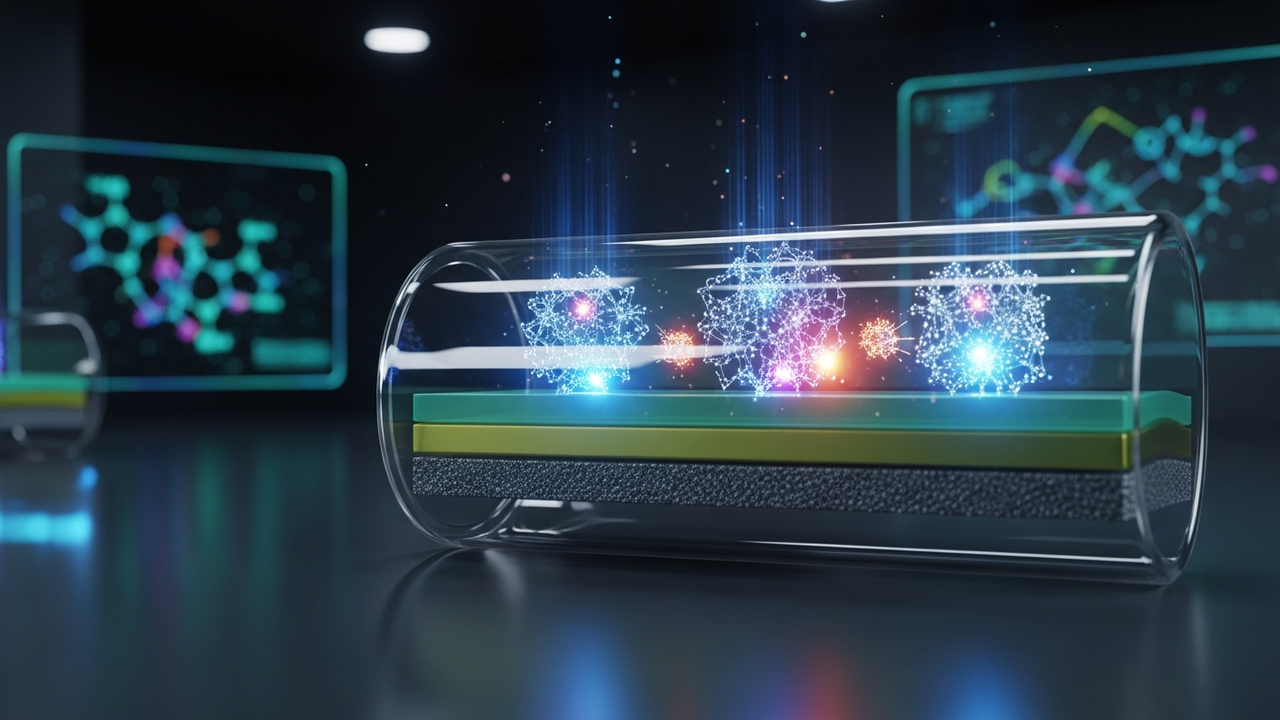
Halide cathode active materials are garnering significant attention as a disruptive platform poised to dramatically enhance the performance of all-solid-state lithium batteries (ASSLBs). These materials are not only characterized by high ionic and electronic conductivity but also by their remarkable capability for multi-electron reactions, meaning multiple lithium ions can participate in the electrochemical process simultaneously. Furthermore, they offer the potential for a ‘single-phase electrode architecture,’ which eliminates the need for inert binders and conductive additives, thereby promising higher energy density and simplified manufacturing. This review paper comprehensively details the evolution of these halide cathode active materials and the latest breakthroughs in their application.
Technical / Clinical Details
Halide cathode active materials are capable of forming high lithium-ion conductive pathways within their crystalline structures, facilitating excellent interfacial contact with solid electrolytes. The ability of transition metal elements within these materials to adopt multiple oxidation states enables multi-electron reactions, which can store and release significantly more electrons compared to conventional cathode materials that typically undergo one-electron reactions. This leads to a substantial increase in theoretical capacity per unit mass. The review also emphasizes the critical role of single-phase interfacial engineering in integrating these materials into ASSLBs, providing design principles to minimize interfacial resistance between the electrode and solid electrolyte, ensuring stable battery operation, and contributing to improvements in both energy density and cycle life.
Background & Context
All-solid-state lithium batteries are considered a game-changer for extending the range and enhancing the safety of electric vehicles (EVs). However, existing cathode materials have faced challenges with compatibility with solid electrolytes, which generally have lower ion conductivity than liquid electrolytes, and limitations in achieving higher capacities. The advent of halide cathode materials offers a potential fundamental solution to these challenges. The achievement of high energy density through multi-electron reactions, in particular, opens new horizons for battery technology. This progress in research and development signals a new paradigm shift in material design, keenly anticipated by the industry to accelerate the practical application of ASSLBs.
Strategic Significance & Outlook
While research into halide cathode active materials is still in its early stages, their future potential is considered extremely high. Moving forward, key challenges will include optimizing material composition, improving the scalability of manufacturing processes, and rigorously verifying long-term stability and safety. The realization of single-phase electrode architectures would also lead to reduced manufacturing costs, further accelerating the adoption of all-solid-state batteries. In the future, these innovative materials are expected to enable applications not only in electric vehicles but also in aerospace, drones, medical devices, and any other field requiring high energy density and safety, thus becoming central to next-generation energy storage systems globally.
Source: https://academic.oup.com/nsr/advance-article/doi/10.1093/nsr/nwag438/8735813?searchresult=1
Get our weekly technology intelligence — free
Receive an infographic that lets you judge at a glance whether each field’s analysis report is worth reading.
Subscribe Free — Weekly Tech Intelligence
By subscribing, you’ll receive Troy-Technical’s weekly technology intelligence newsletter.
- Your email and selected fields are used only to deliver the newsletter.
- We never share your information with third parties.
- You can unsubscribe anytime via the link in each email.
See our Privacy Policy for details.
Takes about a minute · Unsubscribe anytime








Comments