Key Findings
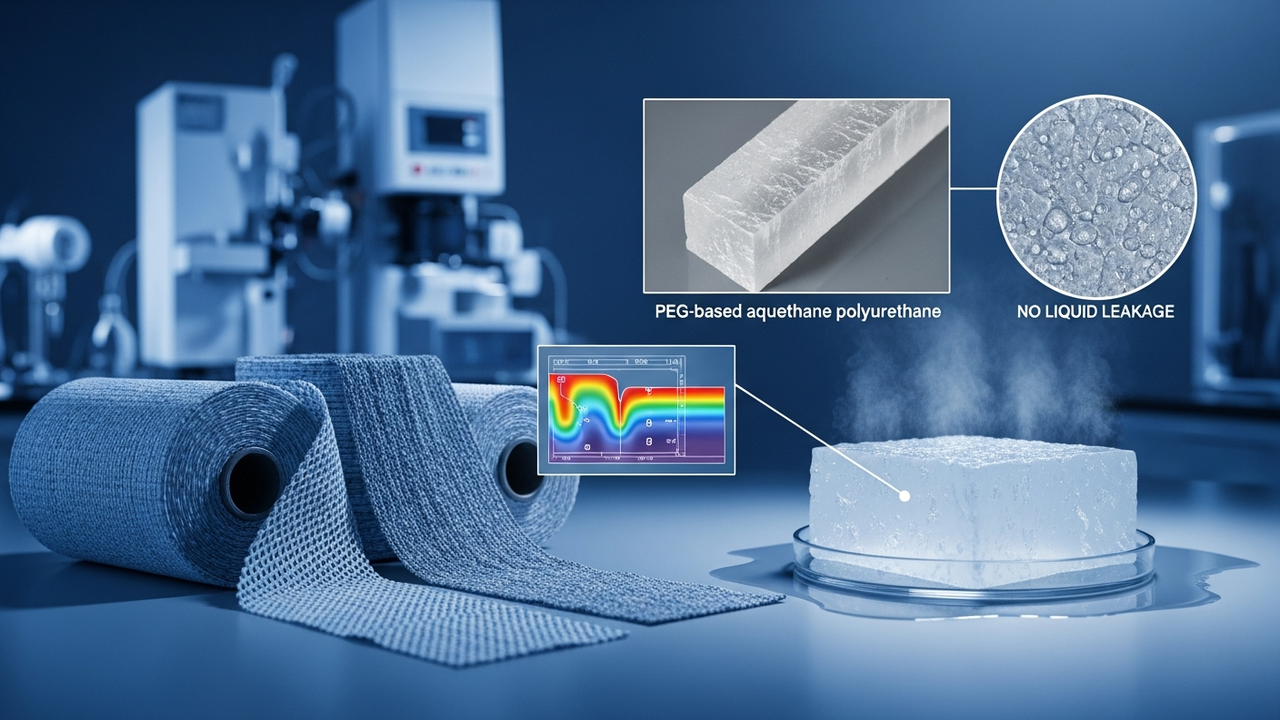
A research paper published in MDPI Polymers details the development of novel crosslinked waterborne polyurethane solid-solid phase change materials (PUSSPCMs) incorporating polyethylene glycol (PEG), specifically engineered for thermoregulating textiles. This innovative material exhibits a critical advantage: it completely prevents liquid leakage during the phase change process upon heating, while also demonstrating high latent heat storage capacity and excellent thermal stability. This marks a substantial advance in thermal management technology for the smart textile sector.
Technical / Clinical Details
The developed PUSSPCMs are constructed by chemically crosslinking PEG segments within a waterborne polyurethane network. This crosslinked structure ensures that the material maintains its solid state even when PEG undergoes melting and solidification, eliminating the risk of liquid leakage—a common problem with traditional phase change materials (PCMs) during heat absorption and release cycles. Experimental results confirmed the material’s high thermal storage capability (latent heat capacity) and its stability over repeated heating and cooling cycles, meeting the durability requirements for textile applications.
Background & Context
The demand for smart textiles with thermoregulating capabilities is rapidly growing across diverse sectors, including sportswear, protective clothing, medical apparel, and general fashion. Previous attempts to integrate PCMs into textiles faced significant practical barriers due to issues like liquid leakage, low durability, and processing difficulties. PUSSPCMs address these challenges by offering an environmentally friendly, water-based manufacturing process, combined with leak prevention through crosslinking and superior thermal properties. This breakthrough paves the way for the development of more comfortable and functional clothing.
Strategic Significance & Outlook
This PUSSPCMs technology has the potential to establish a new paradigm in the field of thermal energy storage. Beyond textile applications, it is expected to find broad deployment in building materials, thermal management of electronic devices, and even automotive interiors. Researchers and engineers will focus on further optimizing the material, reducing production costs, and developing large-scale manufacturing processes. This will enable consumers to experience greater comfort year-round and empower industries to create innovative, energy-efficient products. Investors are likely to show significant interest in the potential growth of this technology within the smart textile and thermal management markets.
Get our weekly technology intelligence — free
Receive an infographic that lets you judge at a glance whether each field’s analysis report is worth reading.
Subscribe Free — Weekly Tech Intelligence
By subscribing, you’ll receive Troy-Technical’s weekly technology intelligence newsletter.
- Your email and selected fields are used only to deliver the newsletter.
- We never share your information with third parties.
- You can unsubscribe anytime via the link in each email.
See our Privacy Policy for details.
Takes about a minute · Unsubscribe anytime







Comments