Key Findings
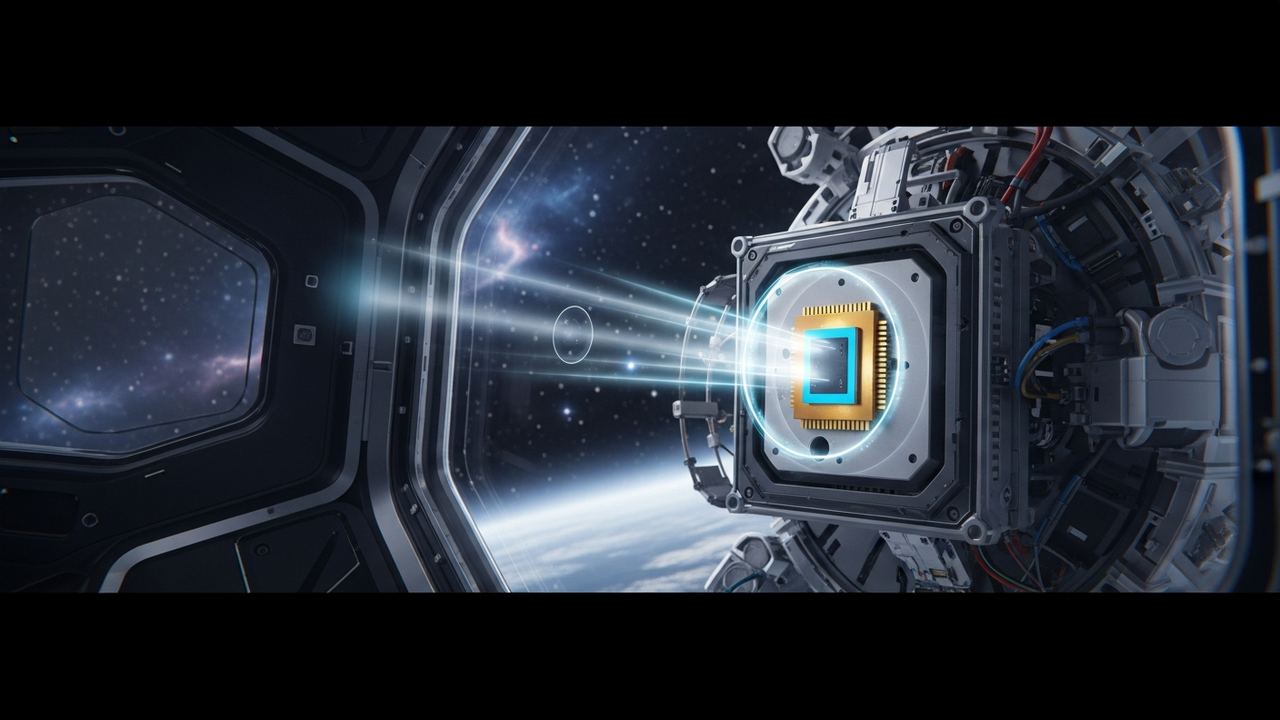
A novel Silicon Carbide (SiC) MOSFET, specifically developed for spacecraft power systems, has demonstrated significantly higher radiation hardness and stable operation across a broad range of radiation doses, including over 500 krad of Total Ionizing Dose (TID) and Single-Event Effect (SEE) immunity exceeding LET 60 MeV-cm²/mg, when compared to traditional silicon (Si)-based devices. This breakthrough substantially enhances the feasibility of creating extremely robust and efficient power conversion components essential for long-duration deep-space exploration missions and lunar/Martian base operations.
Technical Details
This new SiC MOSFET utilizes a unique wide bandgap semiconductor structure and an optimized gate oxide process to effectively suppress defect generation and charge trapping induced by radiation. Accelerator-based proton and heavy ion irradiation tests showed that while conventional Si MOSFETs exhibited significant threshold voltage shifts and increases in on-resistance, the novel SiC MOSFET demonstrated negligible changes in drain current characteristics and switching performance after irradiation. Notably, its Total Ionizing Dose (TID) tolerance was approximately doubled compared to previous SiC devices, and the risk of device failure due to Single Event Effects (SEE) was also significantly reduced. Furthermore, its excellent thermal conductivity and high-temperature operating characteristics contribute to simplified thermal management designs and miniaturization of power systems.
Background & Context
Deep-space exploration and long-duration lunar/Martian missions expose electronic components to constant high-energy radiation from solar protons and galactic cosmic rays, unprotected by Earth’s magnetosphere. This radiation can cause severe damage to power converters and power management systems onboard spacecraft, potentially jeopardizing mission success. Traditional silicon devices required extensive shielding or redundant systems to mitigate these challenges, leading to increased mass and cost. SiC MOSFETs, with their superior material properties leading to inherent radiation hardness, have been identified as a critical technology for achieving lighter, more efficient, and highly reliable space power systems.
Strategic Significance & Outlook
The achievements of this new SiC MOSFET are expected to be applied to a wide variety of spacecraft and infrastructure power conversion systems, including lunar rovers, landers, power supply units for lunar bases, and interplanetary deep-space probes. Its high reliability and efficiency in radiation environments are key to enabling ambitious future missions such as human deep-space exploration and space resource utilization. Moving forward, large-scale space qualification tests and the process for achieving space-grade product certification are expected to accelerate, with deployment in operational missions anticipated in the 2030s.
Source: #
Get our weekly technology intelligence — free
Receive an infographic that lets you judge at a glance whether each field’s analysis report is worth reading.
Subscribe Free — Weekly Tech Intelligence
By subscribing, you’ll receive Troy-Technical’s weekly technology intelligence newsletter.
- Your email and selected fields are used only to deliver the newsletter.
- We never share your information with third parties.
- You can unsubscribe anytime via the link in each email.
See our Privacy Policy for details.
Takes about a minute · Unsubscribe anytime



Comments