Key Findings
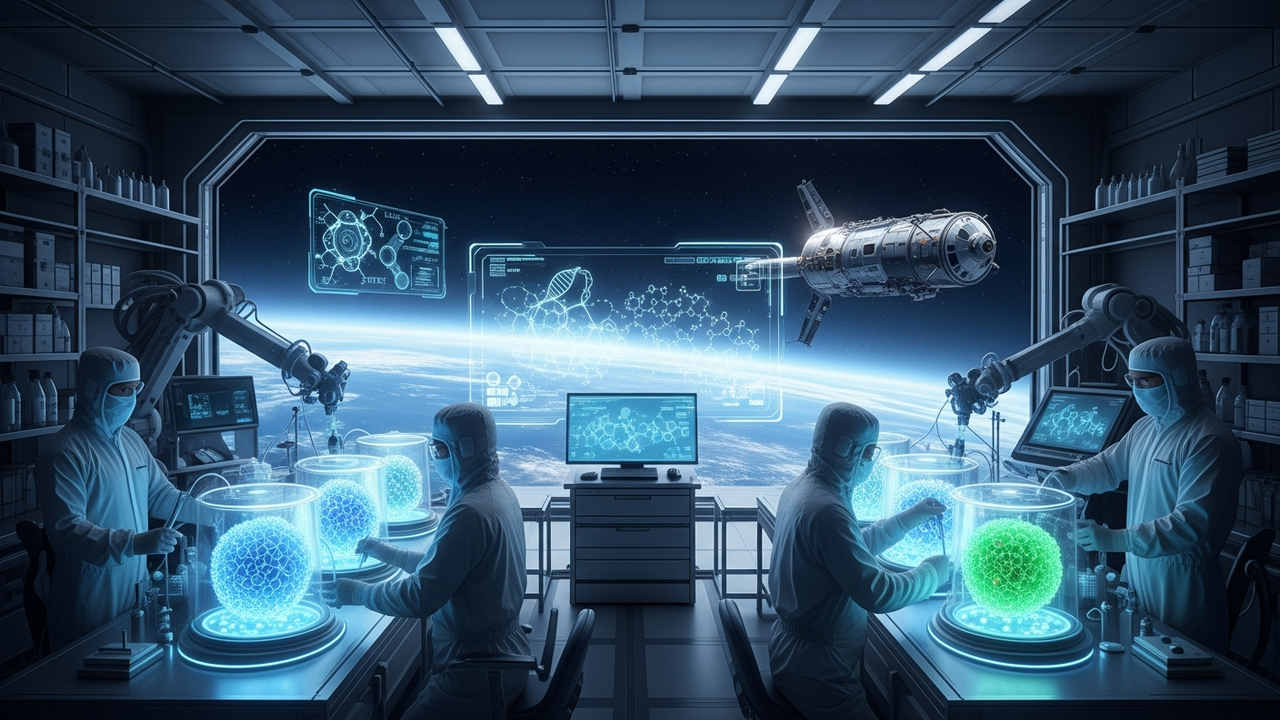
South Korea is significantly accelerating its initiatives in space-based pharmaceutical development, driven by biotechnology companies actively venturing into drug discovery and manufacturing within microgravity environments. Notably, Space LiinTech has begun establishing an autonomous microgravity pharmaceutical research and manufacturing platform with government support, while Boryung has invested $60 million in Axiom Space, a U.S. company building the first private space station. This reflects a robust public-private investment drive in this emerging sector.
Technical / Clinical Details
Biotechnology startup Space LiinTech has commenced preliminary research for the development of an autonomous microgravity pharmaceutical research and manufacturing platform, as part of the South Korean government’s new ‘Deep Tech Challenge Project.’ This platform aims to provide infrastructure for iterative drug discovery and production in space, focusing on optimizing molecular behavior, particularly protein crystallization, in microgravity. Furthermore, companies like AbTis are exploring how antibodies manufactured in microgravity can improve the development of next-generation antibody-drug conjugate (ADC) therapies, placing high hopes on the potential for high-quality protein crystal and antibody generation in space. Boryung’s $60 million investment in Axiom Space is not merely a financial contribution but signifies a commitment to securing future pharmaceutical research and manufacturing space on orbital stations and developing healthcare solutions specifically tailored for the space environment.
Background & Context
The microgravity environment has rapidly gained attention in drug discovery due to its unique advantage of producing larger, purer, and more uniform protein crystals without Earth’s gravitational interference. This can lead to more precise structural analyses of drugs, facilitating the discovery of new therapeutics and improving existing ones. Global pharmaceutical giants, including Merck, are already exploring these benefits through research on the International Space Station (ISS). South Korea is responding to these international trends by expanding its domestic biotechnology industry into the space sector, aiming to enhance its international competitiveness and create new growth engines. Government initiatives like the Deep Tech Challenge Project are designed to bolster R&D in this high-risk, high-reward domain.
Strategic Significance & Outlook
South Korea’s investment and technological development in space-based pharmaceutical development hold the potential to accelerate future drug discovery processes and lead to the development of treatments unattainable on Earth. Once Space LiinTech’s platform becomes operational, South Korea will possess unique capabilities in orbital pharmaceutical research and manufacturing. Boryung’s investment in Axiom Space accelerates the trend of space stations evolving from mere research facilities into commercial manufacturing hubs, potentially establishing new business models in the space healthcare market. These endeavors represent crucial steps for South Korea to become a key player in the global space economy, with the convergence of space technology and biotechnology expected to bring new value to human health and well-being.
Source: https://www.koreaherald.com/article/10805911
Get our weekly technology intelligence — free
Receive an infographic that lets you judge at a glance whether each field’s analysis report is worth reading.
Subscribe Free — Weekly Tech Intelligence
By subscribing, you’ll receive Troy-Technical’s weekly technology intelligence newsletter.
- Your email and selected fields are used only to deliver the newsletter.
- We never share your information with third parties.
- You can unsubscribe anytime via the link in each email.
See our Privacy Policy for details.
Takes about a minute · Unsubscribe anytime




Comments