Key Findings
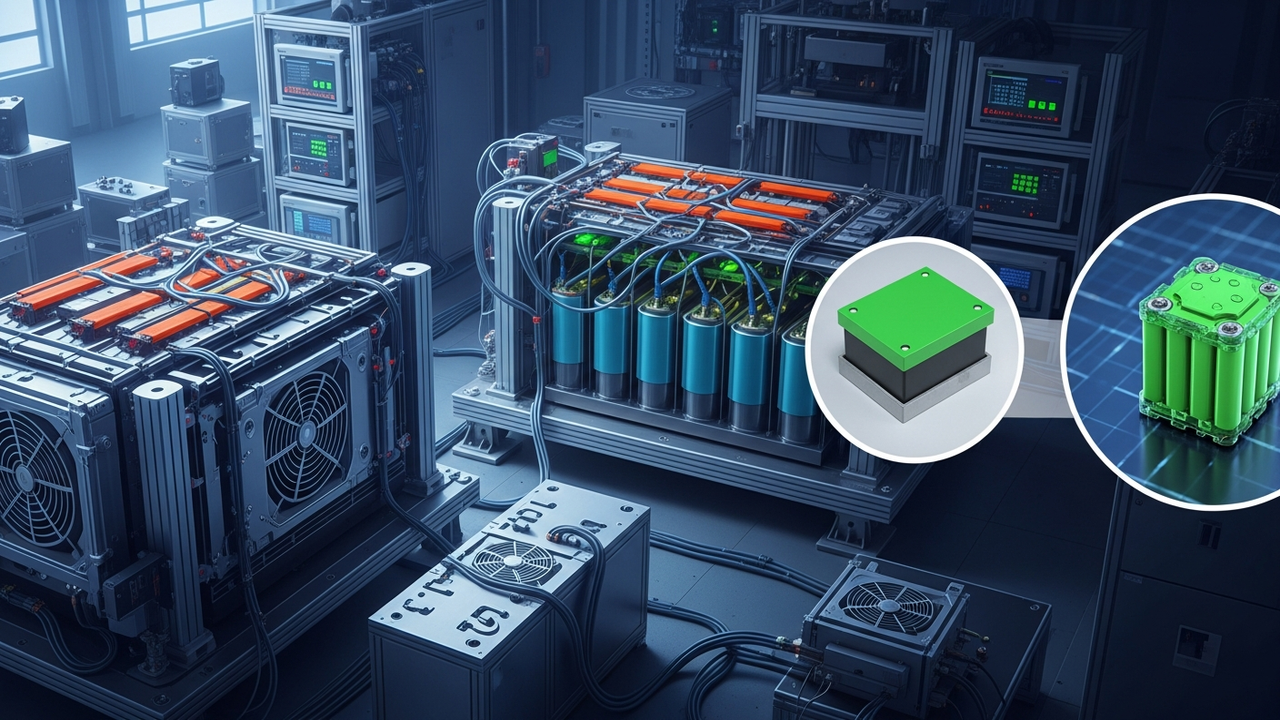
A comprehensive review article has been published focusing on the thermal safety of traction batteries utilized in rail transit systems. This research meticulously compares and analyzes the thermal safety behaviors of both currently prevalent battery chemistries—including Lithium Iron Phosphate (LFP) batteries, Nickel-Cobalt-Manganese (NCM/NMC) lithium-ion batteries, Lithium Titanate (LTO) batteries, and supercapacitors—and emerging systems such as Sodium-Ion Batteries (SIB) and All-Solid-State Lithium Batteries (SSLB). This comparative study offers vital insights for the selection and safe design of next-generation batteries in the railway sector, providing essential guidelines for evaluating the safety aspects during technological adoption.
Technical / Clinical Details
The review article delves into the detailed mechanisms of thermal runaway, heat generation behavior, and associated risk profiles for each battery chemistry. LFP batteries are generally considered to have high thermal stability. In contrast, NCM/NMC batteries, while offering high energy density, tend to exhibit a relatively higher risk of thermal runaway. LTO batteries excel in fast charge/discharge capabilities but are limited by lower energy density. Supercapacitors offer exceptional safety but possess restricted energy storage capacity. Critically, for All-Solid-State Lithium Batteries (SSLB), their solid electrolyte significantly reduces the risk of fire compared to liquid electrolytes, thus inherently offering high safety. However, the review also notes that unexplored thermal behaviors, such as localized heating due to short circuits from dendrite formation, still exist. Sodium-ion batteries are also discussed, with their thermal runaway characteristics suggested to be potentially similar to those of LFP.Background & Context
Rail transit, given its extensive power consumption and public nature, necessitates the implementation of highly efficient and exceptionally safe energy storage systems. The ongoing electrification and demand for energy efficiency are accelerating the transition from traditional diesel locomotives to battery-powered rolling stock, making the safety of traction batteries a paramount concern. This review provides objective data and evaluation criteria to select the most suitable battery technologies for railway applications, playing a crucial role in the development of safety regulations and the certification process for new battery technologies.
Strategic Significance & Outlook
This review article serves to clarify the direction of research and development regarding battery thermal safety in rail transport. Moving forward, deeper understanding of the thermal safety of emerging technologies like all-solid-state lithium batteries will be essential, requiring detailed research to integrate their characteristics into railway vehicle design and operation. Specifically, long-term thermal stability, shock safety, and vibration resistance verification under challenging operational conditions characteristic of railway systems are critical. These insights are expected to contribute significantly to the construction of safer and more reliable railway transport systems, marking an important step towards realizing a sustainable mobility society globally.
Source: https://pubs.acs.org/doi/10.1021/acs.energyfuels.6c00886
Get our weekly technology intelligence — free
Receive an infographic that lets you judge at a glance whether each field’s analysis report is worth reading.
Subscribe Free — Weekly Tech Intelligence
By subscribing, you’ll receive Troy-Technical’s weekly technology intelligence newsletter.
- Your email and selected fields are used only to deliver the newsletter.
- We never share your information with third parties.
- You can unsubscribe anytime via the link in each email.
See our Privacy Policy for details.
Takes about a minute · Unsubscribe anytime









Comments