Key Findings
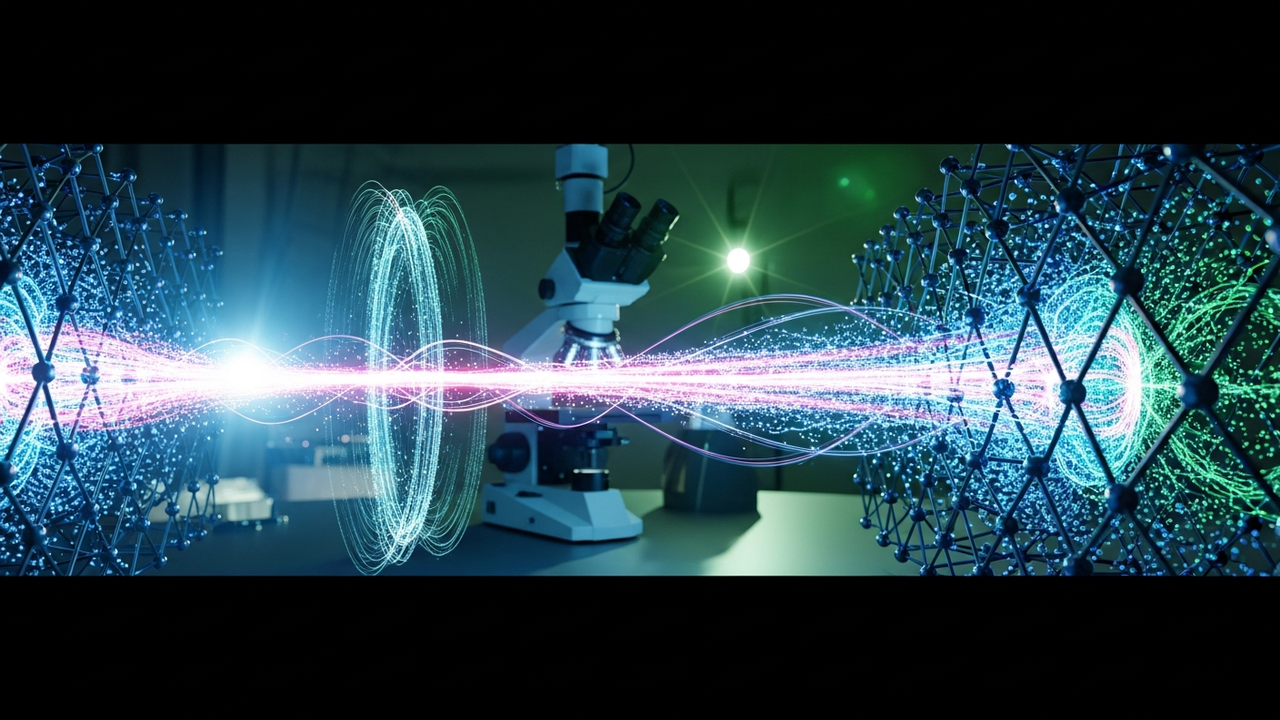
A Japanese research team, primarily from Osaka University and the National Institute of Advanced Industrial Science and Technology (AIST), has successfully elucidated the fundamental mechanism of ‘superionic conduction’—a phenomenon critical to the performance of all-solid-state batteries—for the first time globally. This groundbreaking discovery unravels the physicochemical principles behind the extraordinary speed at which ions move through solid crystals, almost as if they were in a liquid state. This pivotal insight provides novel design principles for developing high-ionic-conductivity materials essential for next-generation solid-state batteries and other high-performance energy conversion materials, such as fuel cells and thermoelectric devices.
Technical / Clinical Details
The research team employed a combination of state-of-the-art experimental and theoretical techniques, including neutron scattering, high-precision X-ray diffraction, and first-principles calculations. These advanced methods allowed them to visualize, at an atomic level, how ions move dynamically and cooperatively along specific pathways within the crystal lattice of superionic solid materials. This revealed a mechanism different from conventional models where ions hop between fixed lattice sites. Instead, local structural fluctuations and defects were found to promote ion conduction. Specifically, it was shown that in certain crystal structures, some ions exhibit ‘quasi-liquid’ behavior akin to liquid diffusion, which was identified as the key to achieving exceptionally high ionic conductivity.
Background & Context
All-solid-state batteries are anticipated as a game-changing technology for significantly extending the range and enhancing the safety of electric vehicles (EVs). To maximize their performance, solid electrolytes must possess ionic conductivity comparable to, or even superior to, liquid electrolytes. However, ion movement in solid materials is considerably more complex and slower than in liquids, making the understanding of superionic conduction a long-standing challenge. This discovery from Japan sheds light on this fundamental scientific problem, enabling the rational design of high-performance solid electrolytes.
Strategic Significance & Outlook
The elucidation of the fundamental mechanism of superionic conduction will have immeasurable impact on the future research and development of all-solid-state batteries and energy conversion materials. Based on this knowledge, researchers and engineers will be able to intentionally design ion conduction pathways and develop novel solid electrolyte materials with even higher ionic conductivity than previously thought possible. This is expected to further improve the energy density, power, and cycle life of solid-state batteries, accelerating the adoption of EVs, expanding renewable energy integration, and fostering the creation of new energy conversion technologies. This Japanese research stands to make a significant contribution to global efforts toward a sustainable energy society, setting new benchmarks for materials innovation.
Source: https://www.asiaresearchnews.com/content/how-ions-flow-liquid-through-solid-crystal
Get our weekly technology intelligence — free
Receive an infographic that lets you judge at a glance whether each field’s analysis report is worth reading.
Subscribe Free — Weekly Tech Intelligence
By subscribing, you’ll receive Troy-Technical’s weekly technology intelligence newsletter.
- Your email and selected fields are used only to deliver the newsletter.
- We never share your information with third parties.
- You can unsubscribe anytime via the link in each email.
See our Privacy Policy for details.
Takes about a minute · Unsubscribe anytime








Comments