Key Findings
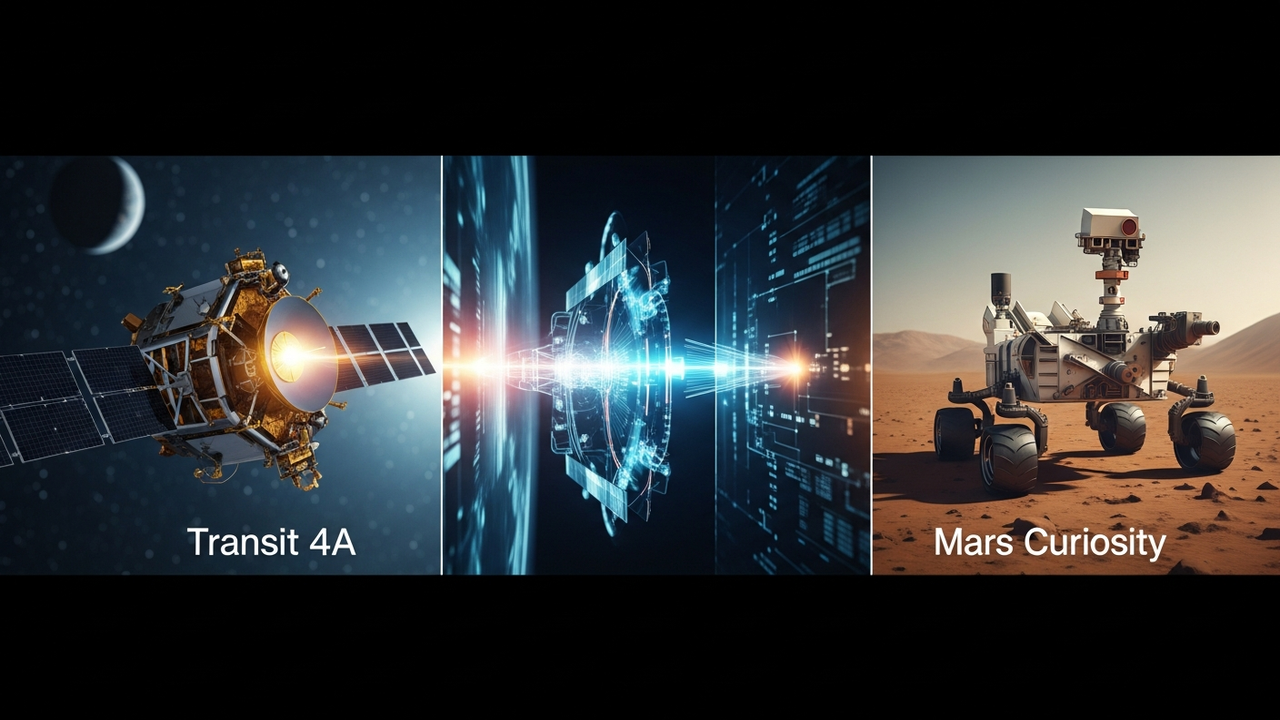
The U.S. Department of Energy (DOE) has published a comprehensive overview of the history of nuclear power in space, highlighting its pivotal role since the launch of the U.S. Navy’s Transit 4A navigation satellite in 1961. This mission marked the first time a spacecraft was powered by a radioisotope thermoelectric generator (RTG), a nuclear-based system. RTGs, developed by the DOE, have subsequently supplied reliable electricity and heat to a multitude of deep-space missions, including NASA’s Mars Curiosity rover, fundamentally enabling and extending the frontiers of space exploration.
Technical / Clinical Details
RTGs convert heat generated by the natural decay of radioisotopes, such as Plutonium-238, directly into electrical power using thermocouples. Known for their lack of moving parts, RTGs offer exceptional reliability and longevity, making them an ideal power source for deep-space missions where solar power is impractical or for long-duration operations requiring continuous energy. The DOE has been instrumental in the development and provision of RTGs for iconic NASA missions including Voyager, Galileo, Cassini, and the Mars Science Laboratory rover, Curiosity. Launched in 2011, Curiosity continues to operate on the Martian surface, serving as a testament to the durability and performance of RTG technology in extreme extraterrestrial environments.
Background & Context
Power requirements for space missions have consistently posed a significant challenge. While solar arrays are effective for missions closer to Earth, deep-space exploration demands robust alternative power sources as sunlight diminishes. RTGs have unlocked the ability to explore the outer planets like Jupiter, Saturn, Uranus, and Neptune, and to operate in permanently shadowed regions, such as those found on the lunar surface or Martian poles. The history of U.S. nuclear power in space, spanning over six decades, has underpinned countless scientific discoveries and technological advancements. This technology has dramatically expanded the range and sustainability of space exploration, deepening humanity’s understanding of the cosmos.
Strategic Significance & Outlook
While the DOE’s report emphasizes past achievements, it also implicitly underscores the enduring importance of nuclear power for future space endeavors. The continued progression of deep-space exploration and the realization of lunar bases or crewed Mars missions will necessitate even more powerful and sustainable energy solutions, including advanced nuclear fission power systems. Recent developments, such as the launch of commercial nuclear-powered satellites, indicate an expanding application of nuclear technology in the commercial sector. Collaborating with NASA and commercial partners, the DOE is expected to lead the development of next-generation nuclear propulsion and power systems, paving new avenues for human access and long-term presence in space.
Source: https://www.energy.gov/articles/history-nuclear-power-space
Get our weekly technology intelligence — free
Receive an infographic that lets you judge at a glance whether each field’s analysis report is worth reading.
Subscribe Free — Weekly Tech Intelligence
By subscribing, you’ll receive Troy-Technical’s weekly technology intelligence newsletter.
- Your email and selected fields are used only to deliver the newsletter.
- We never share your information with third parties.
- You can unsubscribe anytime via the link in each email.
See our Privacy Policy for details.
Takes about a minute · Unsubscribe anytime









Comments