Key Findings
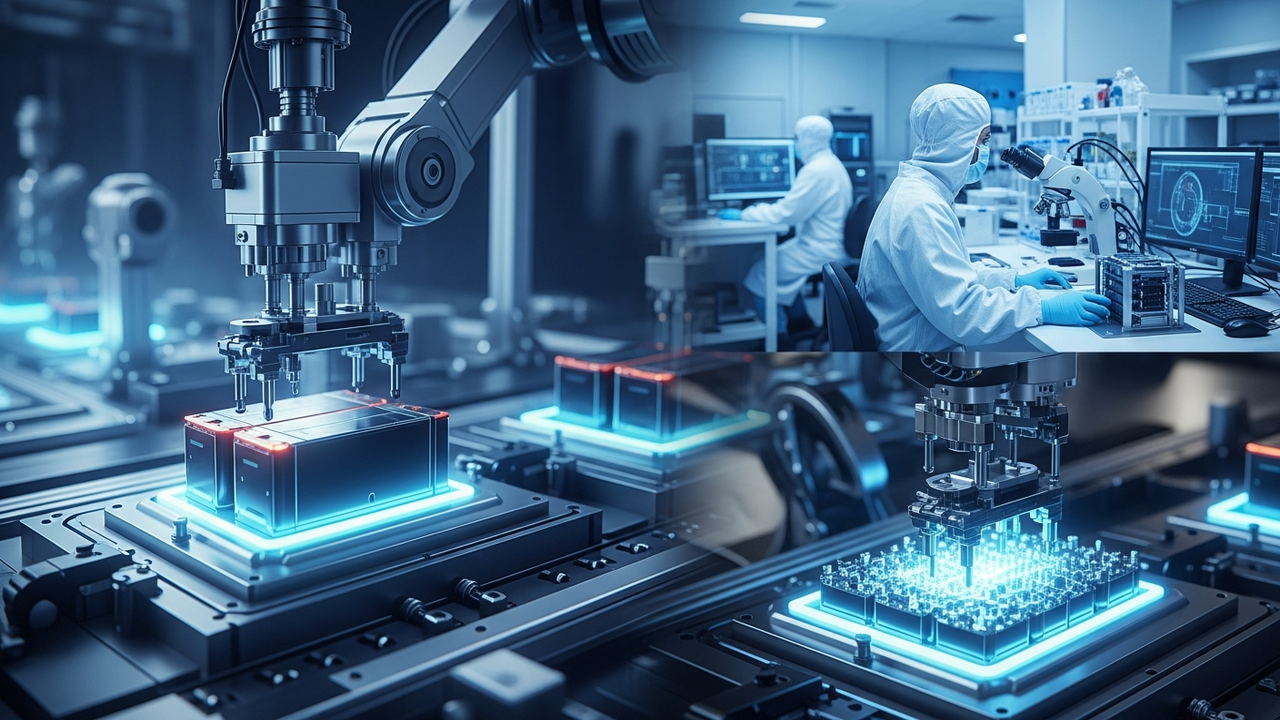
The year 2026 marks a significant milestone with the commencement of mass production for hybrid solid-liquid batteries in China, alongside the continued acceleration of research and development for true all-solid-state batteries. Chinese companies are demonstrating concrete progress across material production and battery manufacturing, with CATL notably reporting impressive data for its 3rd-generation condensed solid-state battery, achieving a high energy density of 420 Wh/kg and excellent durability exceeding 1,500 cycles, drawing considerable industry attention.
Technical and Clinical Details
In the materials sector, Huashang Zhongke successfully completed pilot tests for 99.95% high-purity lithium sulfide (Li₂S), and its 60-ton/year sulfide electrolyte pilot line has commenced operation. This represents a crucial step toward the stable supply of sulfide-based solid electrolytes, a core material for all-solid-state batteries. Tinci Materials is also scheduled to launch its 100-ton/year Li₂S and sulfide electrolyte pilot line in Q3 2026, further bolstering mass production capabilities. Additionally, Shin-Etsu (Xinzhoubang) has initiated mass sales of its oxide electrolytes, with plans to establish a 1,000-ton/year production capacity within 2026. CATL’s 3rd-generation condensed solid-state battery showcases performance significantly surpassing existing lithium-ion batteries, particularly its high energy density and long cycle life, which are set to enhance the competitiveness of solid-state batteries in electric vehicle and other applications.
Background and Industry Context
All-solid-state battery technology is considered one of the most critical challenges for the global automotive and battery industries due to its potential to dramatically improve EV range, safety, and charging speed. Nevertheless, challenges related to manufacturing costs, mass production scalability, and long-term reliability persist. China is aggressively promoting the development and industrialization of solid-state batteries as a national strategy, with numerous companies dedicating efforts to technological innovation and capacity expansion. Conversely, opinions among experts diverge regarding the industrial positioning and timeline for semi-solid and all-solid-state batteries, as highlighted by SVOLT Energy Technology’s chairman, who suggests that ‘semi-solid batteries may remain mainstream in the long term, and it will be challenging for all-solid-state batteries to achieve cost advantages by 2035.’ This debate encompasses multifaceted perspectives on technological maturity, manufacturability, and cost efficiency.
Strategic Significance and Outlook
The simultaneous mass production of hybrid solid-liquid batteries and the accelerated R&D for all-solid-state batteries indicate a multi-layered evolution within the next-generation battery market. Moving forward, further advancements in material science and the establishment of robust mass production technologies will be key to determining the cost competitiveness of solid-state batteries. The disclosure of concrete performance data by leading companies like CATL is likely to heighten expectations for solid-state battery commercialization. However, with cautious viewpoints such as that of SVOLT’s chairman, technology development and market introduction are expected to progress incrementally, balancing cost and performance. Chinese enterprises are highly likely to continue playing a leading role in this sector.
Get our weekly technology intelligence — free
Receive an infographic that lets you judge at a glance whether each field’s analysis report is worth reading.
Subscribe Free — Weekly Tech Intelligence
By subscribing, you’ll receive Troy-Technical’s weekly technology intelligence newsletter.
- Your email and selected fields are used only to deliver the newsletter.
- We never share your information with third parties.
- You can unsubscribe anytime via the link in each email.
See our Privacy Policy for details.
Takes about a minute · Unsubscribe anytime



Comments