Key Findings
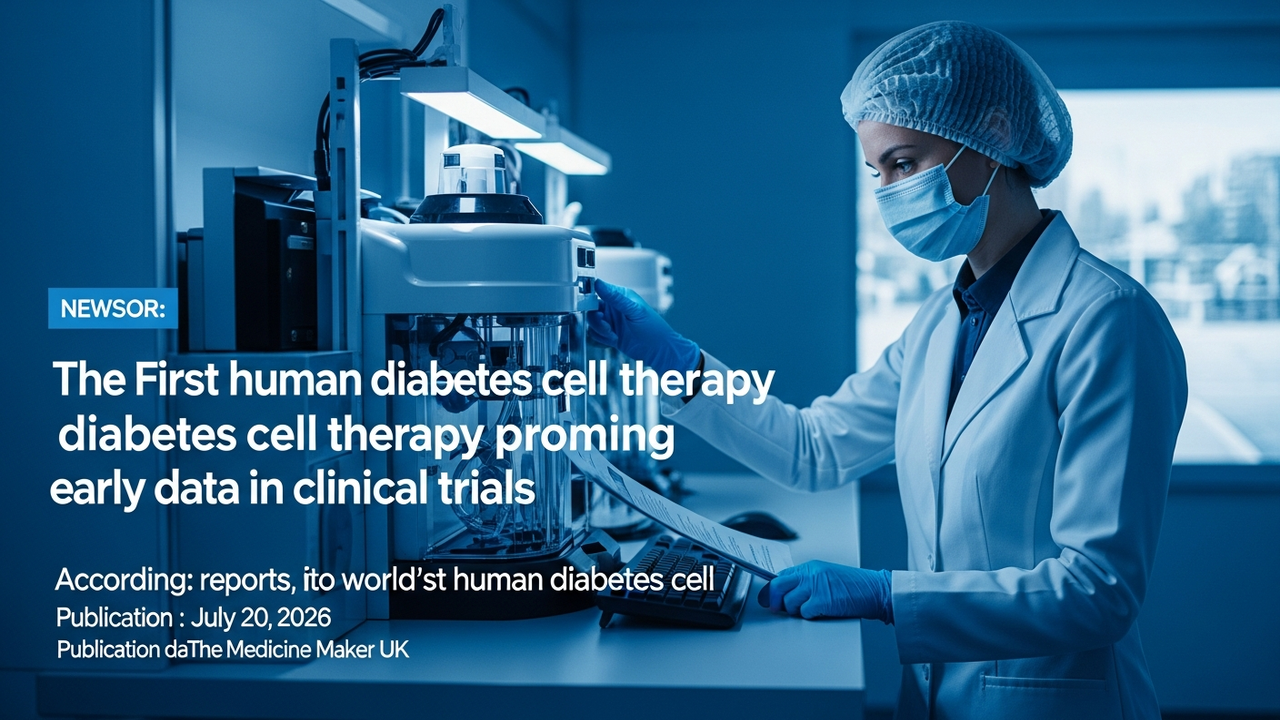
According to “The Medicine Maker’s” weekly Cell & Gene Therapy news, the world’s first human diabetes cell therapy has demonstrated promising initial data in its early clinical trials. This innovative therapeutic approach holds the potential to alleviate insulin dependence in patients with Type 1 Diabetes, marking a pivotal advancement towards a fundamental resolution of the disease.
Technical and Clinical Details
This cell therapy is presumed to involve the transplantation of insulin-producing cells (beta cells), likely differentiated from pluripotent stem cells (iPSCs or ESCs), into patients with Type 1 Diabetes. As Type 1 Diabetes results from the autoimmune destruction of pancreatic beta cells, the goal of this therapy is to restore the body’s autonomous blood glucose regulation. Initial clinical data reportedly showed promising indicators, such as improvements in biomarkers suggestive of engraftment and insulin production by the transplanted cells, as well as reductions in exogenous insulin doses. While specific patient numbers or response rates are not disclosed at this stage, this preliminary data suggests potential success in the proof-of-concept phase for this modality.
Background & Context
Type 1 Diabetes is a chronic condition requiring lifelong insulin injections, and even with insulin therapy, strict glycemic control remains challenging, accompanied by continuous risks of complications. While pancreas and islet transplantation are options, they face challenges like donor scarcity, lifelong immunosuppression, and graft dysfunction. Cell therapy has garnered significant hope as a fundamental solution to overcome these issues and provide sustained insulin production. This promising data from the first human application indicates that years of research in this field are beginning to translate into clinical benefits, poised to make a significant impact across the entire regenerative medicine sector.
Strategic Significance & Outlook
The initial success of this pioneering human diabetes cell therapy paves the way for future large-scale clinical trials. Key evaluation criteria for the next stages will include efficacy in a larger patient cohort, long-term safety, sustained engraftment and function of the transplanted cells, and the management of immunogenicity (immune rejection). Furthermore, standardization, scale-up of cell manufacturing, and cost-efficiency improvements will be indispensable for the widespread adoption of this therapy. If successful, it holds the potential to free patients from insulin injections and dramatically improve their quality of life, heralding a paradigm shift in diabetes treatment.
Get our weekly technology intelligence — free
Receive an infographic that lets you judge at a glance whether each field’s analysis report is worth reading.
Subscribe Free — Weekly Tech Intelligence
By subscribing, you’ll receive Troy-Technical’s weekly technology intelligence newsletter.
- Your email and selected fields are used only to deliver the newsletter.
- We never share your information with third parties.
- You can unsubscribe anytime via the link in each email.
See our Privacy Policy for details.
Takes about a minute · Unsubscribe anytime






Comments