
Key Findings
A study published in the Journal of Materials Science & Technology reports that a lightweight carbon aerogel derived from PBO nanofibers and ZIF-67 exhibits a remarkable combination of superior electromagnetic wave absorption capabilities and high thermal insulation properties. This innovative composite material opens new application possibilities in aerospace, electronics, and stealth technology sectors.
Technical / Clinical Details
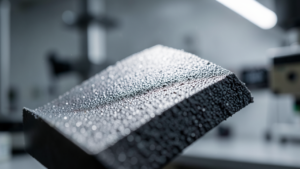
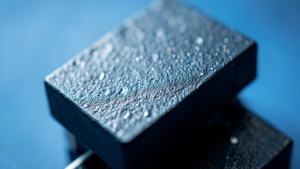
This advanced material is fabricated by first compositing high-performance polybenzoxazole (PBO) nanofibers with a zeolitic imidazole framework (ZIF-67), followed by pyrolysis to convert it into a carbon aerogel. PBO nanofibers provide excellent mechanical strength and thermal stability, while the ZIF-67-derived carbon component, with its highly porous and conductive network, facilitates broadband electromagnetic wave absorption. Specifically, the porous structure induces multiple scattering and absorption of electromagnetic waves, while the conductive carbon components convert electromagnetic energy into heat through dielectric and conductive losses. Concurrently, the aerogel structure, possessing extremely low density and high porosity, also delivers outstanding thermal insulation performance. Experimentally, the material has demonstrated high electromagnetic wave absorption efficiency (exceeding -50 dB) across a broad frequency range (e.g., X-band and Ku-band), coupled with very low thermal conductivity (below 0.03 W/mK). Its lightweight nature (density less than 0.1 g/cm3) is also a significant advantage for various applications.
Background & Context
As modern electronic devices become more sophisticated and powerful, electromagnetic interference (EMI) issues and thermal management have emerged as critical challenges. In the aerospace sector, there is a particularly strong demand for materials that offer high EMI shielding performance and thermal insulation while simultaneously being lightweight. Traditional materials have struggled to meet these multiple requirements at high standards. For example, metallic materials provide excellent EMI shielding but are heavy and have high thermal conductivity, making them unsuitable as insulators. Conversely, conventional insulating materials typically offer poor EMI shielding. The composite aerogel developed in this research overcomes these inherent trade-offs, providing a multifunctional solution.
Strategic Significance & Outlook
The PBO nanofiber@ZIF-67 derived carbon aerogel is expected to find diverse applications in areas such as lightweighting aerospace vehicles, enhancing stealth capabilities, EMI shielding for high-performance electronic devices, and thermal management systems for next-generation batteries and fuel cells. Its superior multifunctionality offers increased design flexibility, contributing to overall system performance improvements and miniaturization. The research team aims to scale up this material and establish cost-effective manufacturing methods, advancing its journey towards practical applications. This highlights how advanced material design is a crucial key to solving contemporary technological challenges and is set to enable a new generation of high-performance systems and devices across critical industries.
Source: https://www.sciencedirect.com/science/article/pii/S100503022600244X
Get our weekly technology intelligence — free
Receive an infographic that lets you judge at a glance whether each field’s analysis report is worth reading.
Subscribe Free — Weekly Tech Intelligence
By subscribing, you’ll receive Troy-Technical’s weekly technology intelligence newsletter.
- Your email and selected fields are used only to deliver the newsletter.
- We never share your information with third parties.
- You can unsubscribe anytime via the link in each email.
See our Privacy Policy for details.
Takes about a minute · Unsubscribe anytime






Comments