Background
Research into microglia, the brain’s resident immune cells, and their critical involvement in neurological pathologies has long been hampered by the inherent challenges in acquiring sufficient human brain tissue. However, the advent of induced pluripotent stem cell (iPSC) technology has revolutionized this field, enabling the generation of large quantities of functional human microglia-like cells (iMG) in vitro. This breakthrough has ushered in a new era for brain disease research, allowing for unprecedented investigation into microglial function and dysfunction. This particular study further solidifies the reliability and expands the versatility of iMG models, poised to significantly impact both neuroscience and cancer research.
Key Findings
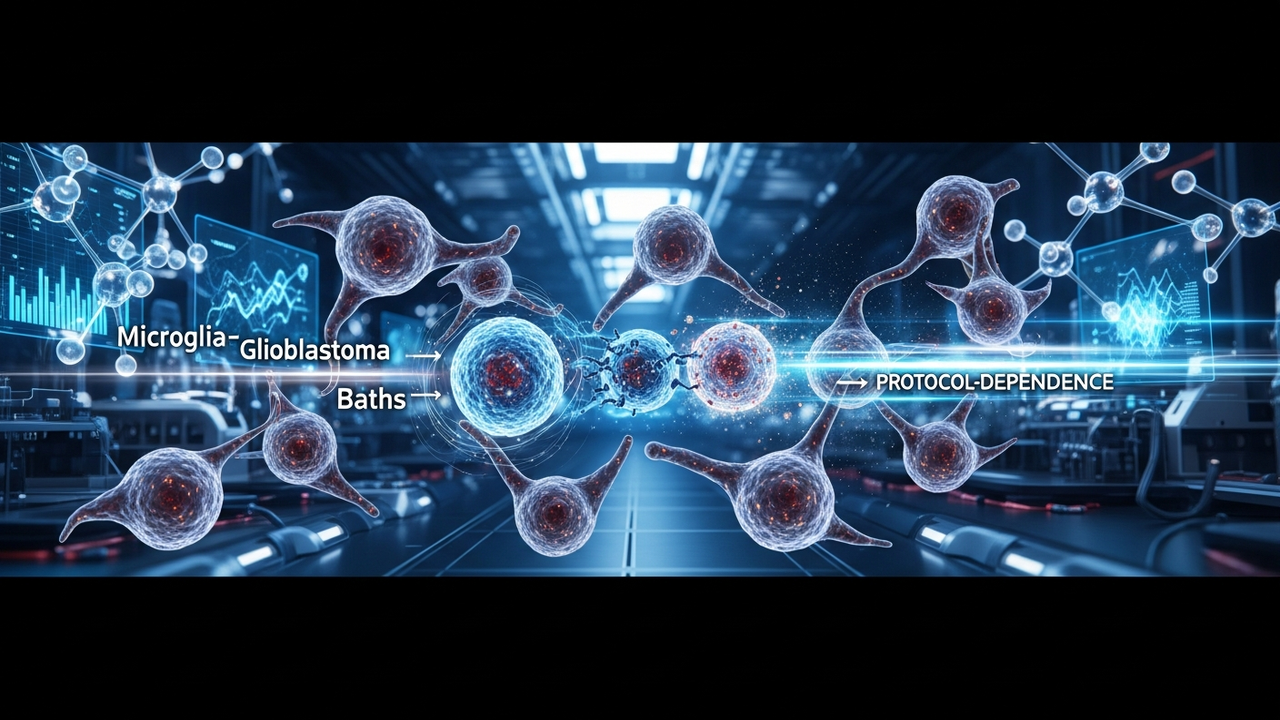
Microglia, the brain’s resident macrophages, are not merely bystanders but crucial modulators in the progression of brain tumors, especially aggressive glioblastoma (GBM). Human induced pluripotent stem cell (iPSC)-derived microglia-like cells (iMG) provide an invaluable in vitro model for dissecting human microglia function and pathology. A comprehensive investigation by a research team at Northwestern University, meticulously analyzing 54 RNA sequencing (RNA-seq) datasets from 22 distinct iMG differentiation protocols, revealed a nuanced picture. While the majority of iMG demonstrated a close resemblance to native human microglia, significant protocol-dependent variations were observed at the transcriptomic level. Crucially, the study confirmed that these iMG possess a robust capacity to phagocytose glioblastoma cells in culture, opening avenues for novel cellular therapeutic applications in brain tumor treatment.
Protocol-Dependent Phenotypes and Functional Implications
The research unequivocally established that the precise culture conditions and factors employed during iPSC differentiation profoundly influence the resulting iMG’s gene expression profile. This critical finding underscores the necessity of judiciously selecting differentiation protocols tailored for specific disease models or therapeutic strategies. Optimizing these protocols is essential to accurately recapitulate the diverse microglial subtypes and states observed in vivo, thereby enhancing the fidelity of iMG-based research.
Potent Phagocytic Activity Against Glioblastoma
Glioblastoma (GBM) stands as one of the most aggressive and treatment-resistant brain tumors, largely due to its highly immunosuppressive microenvironment. The compelling demonstration of iMG’s efficient phagocytosis of glioblastoma cells in culture offers a powerful foundation for developing innovative therapeutic approaches. These could involve enhancing microglial anti-tumor functions through strategies like Chimeric Antigen Receptor (CAR)-microglia or cytokine modifications. Such interventions hold promise not only for direct tumor cell elimination but also for dismantling the immunosuppressive barriers within the tumor microenvironment that hinder current treatments.
Broadening Applications: Disease Modeling and Drug Discovery
Beyond brain tumors, iMG models are poised to revolutionize research into a spectrum of neurodegenerative disorders, including Alzheimer’s disease, Parkinson’s disease, and multiple sclerosis. The capacity to generate patient-derived iMG enables the in vitro replication of patient-specific pathological mechanisms, paving the way for personalized drug screening and the precise evaluation of therapeutic strategies.
Future Directions and Clinical Potential
This study marks a pivotal advance towards realizing iMG-based brain tumor therapeutic strategies. Future investigations will delve deeper into how specific iMG differentiation protocols precisely dictate cellular functional characteristics, particularly their anti-tumor efficacy. Looking ahead, the research team anticipates the development of sophisticated in vitro and in vivo brain tumor therapeutic strategies utilizing iMG. This includes exploring genetic engineering to further augment tumor-specific phagocytic capabilities and the potential creation of iMG-based cell therapy products. Successful progression in these areas promises to deliver more effective and safer treatment options for patients battling intractable brain tumors such as glioblastoma.
Source: https://www.biorxiv.org/content/10.64898/2026.07.21.739939v1
Get our weekly technology intelligence — free
Receive an infographic that lets you judge at a glance whether each field’s analysis report is worth reading.
Subscribe Free — Weekly Tech Intelligence
By subscribing, you’ll receive Troy-Technical’s weekly technology intelligence newsletter.
- Your email and selected fields are used only to deliver the newsletter.
- We never share your information with third parties.
- You can unsubscribe anytime via the link in each email.
See our Privacy Policy for details.
Takes about a minute · Unsubscribe anytime