Key Findings
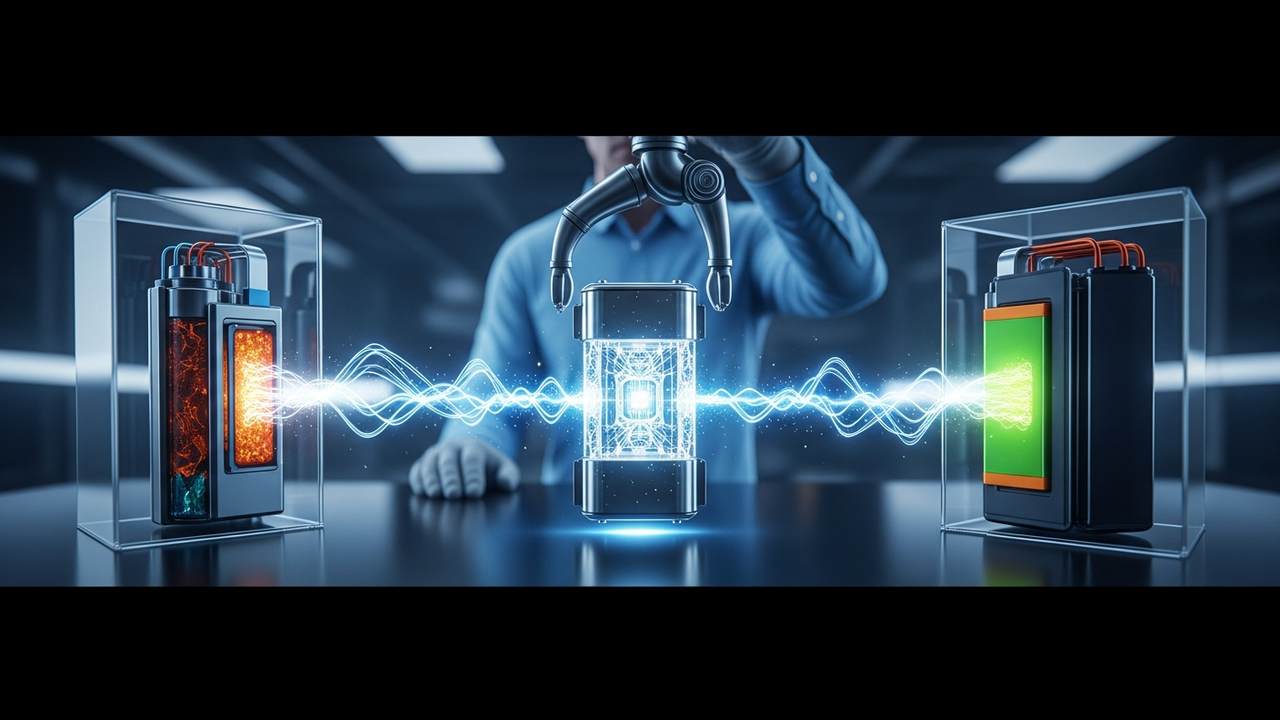
A recent article by ZENCAR analyzes that all-solid-state batteries offer distinct advantages over existing lithium-ion batteries, including substantially enhanced safety, dramatically higher energy density, and simplified structural design. The fundamental shift from liquid to solid electrolytes forms the basis for these superior attributes. This technology holds immense promise for resolving key challenges in the electric vehicle (EV) market and is widely considered the next-generation battery.
Technical / Clinical Details
The primary distinguishing feature of all-solid-state batteries is the replacement of flammable organic liquid electrolytes with solid materials such as ceramics or polymers. This fundamental change inherently reduces major safety risks associated with current lithium-ion batteries, including electrolyte leakage, fire due to internal short circuits, and thermal runaway. Solid electrolytes also enable the use of lithium metal anodes, which possess a theoretical capacity significantly higher than traditional graphite anodes (e.g., approximately ten times that of graphite). This dramatically boosts the battery’s energy storage capacity. Moreover, since the solid electrolyte can also function as a separator, the battery cell structure is simplified, allowing for more compact and lightweight designs. This enables substantial extensions in EV driving range and increases packaging flexibility.
Background & Context
As electric vehicles (EVs) become more prevalent, consumers and regulatory bodies are imposing increasingly stringent demands not only on battery performance but also on safety. While existing lithium-ion batteries are reaching maturity in terms of performance, concerns about fire incidents persist, and further extensions of driving range are facing technical limits. All-solid-state batteries are garnering attention from automakers, battery manufacturers, and research institutions worldwide as the most promising solution to these complex challenges. Leading nations such as Japan, South Korea, China, Germany, and the United States are at the forefront of this development race, investing substantial capital.
Strategic Significance & Outlook
The benefits offered by all-solid-state batteries—enhanced safety, high energy density, and structural simplification—open up applications across a wide range of sectors beyond electric vehicles, including aerospace, drones, mobile devices, and stationary energy storage. However, challenges such as reducing manufacturing costs, addressing interfacial resistance between solid electrolytes and electrodes, and completely suppressing dendrite formation still exist for large-scale commercialization. If these challenges are overcome, all-solid-state batteries have the potential to replace existing lithium-ion batteries, establish a new standard for energy storage technology, and significantly contribute to the realization of a sustainable society.
Source: https://www.zencar.net/solid-state-battery-vs-lithium-ion/
Get our weekly technology intelligence — free
Receive an infographic that lets you judge at a glance whether each field’s analysis report is worth reading.
Subscribe Free — Weekly Tech Intelligence
By subscribing, you’ll receive Troy-Technical’s weekly technology intelligence newsletter.
- Your email and selected fields are used only to deliver the newsletter.
- We never share your information with third parties.
- You can unsubscribe anytime via the link in each email.
See our Privacy Policy for details.
Takes about a minute · Unsubscribe anytime