Key Findings
Chinese automotive giant BYD has filed six new patents for solid-state battery technology, signaling a significant push towards resolving the critical challenge of high interfacial resistance between solid electrolytes and electrodes. Central to these innovations is the introduction of a unique “Re” index, which measures the physical contact area between cathode particles and the solid electrolyte, with BYD establishing that at least 60% contact is required for optimal battery performance. The company aims to commence pilot production of dual-electrolyte cathode cells by 2027, positioning itself as a frontrunner in the next-generation battery race.
Technical Details
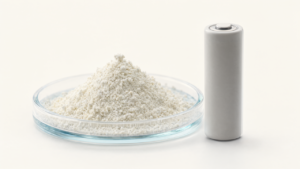
The patent portfolio spans material chemistry, electrode design, manufacturing processes, and quality control. A notable technical feature involves a composite electrode that combines fine-particle halide electrolytes with large-particle sulfide electrolytes, alongside an approach to insert a conductive layer between these electrolyte types. The “Re” index is a pivotal advancement, providing a quantitative measure for the quality of physical contact at the solid-solid interface—a notoriously difficult challenge in solid-state battery development. By addressing this fundamental issue, BYD seeks to eliminate ion conduction bottlenecks and achieve more efficient and stable battery performance. This meticulous approach to interface engineering is crucial for unlocking the full potential of solid-state batteries.
Background & Context
Solid-state batteries are widely regarded as the successor to conventional lithium-ion batteries, promising superior energy density, enhanced safety, and faster charging capabilities. However, the high interfacial resistance between the electrodes and solid electrolytes has been a significant barrier to their practical deployment. BYD’s patents offer concrete technical solutions to this core problem, demonstrating the company’s aggressive R&D efforts in solid-state technology. The ambitious target of initiating pilot production by 2027 underscores BYD’s strategic intent to lead in this transformative sector and gain a competitive advantage in the rapidly evolving electric vehicle market.
Strategic Significance & Outlook
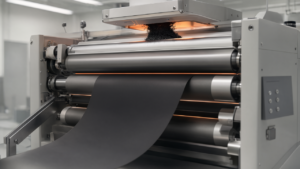
These patents and the 2027 pilot production goal represent a major stride towards the commercialization of solid-state battery technology. The adoption of a quantitative quality control metric like the “Re” index is vital for ensuring consistent performance and scaling up production. The dual-electrolyte approach, which leverages the benefits of different solid electrolyte materials, holds the promise of achieving a more balanced set of performance characteristics. This progress is expected to bring innovative battery technology to BYD’s EV lineup, further solidifying its position in the global EV market, and accelerating the broader development of the solid-state battery industry.
Get our weekly technology intelligence — free
Receive an infographic that lets you judge at a glance whether each field’s analysis report is worth reading.
Subscribe Free — Weekly Tech Intelligence
By subscribing, you’ll receive Troy-Technical’s weekly technology intelligence newsletter.
- Your email and selected fields are used only to deliver the newsletter.
- We never share your information with third parties.
- You can unsubscribe anytime via the link in each email.
See our Privacy Policy for details.
Takes about a minute · Unsubscribe anytime