Key Findings
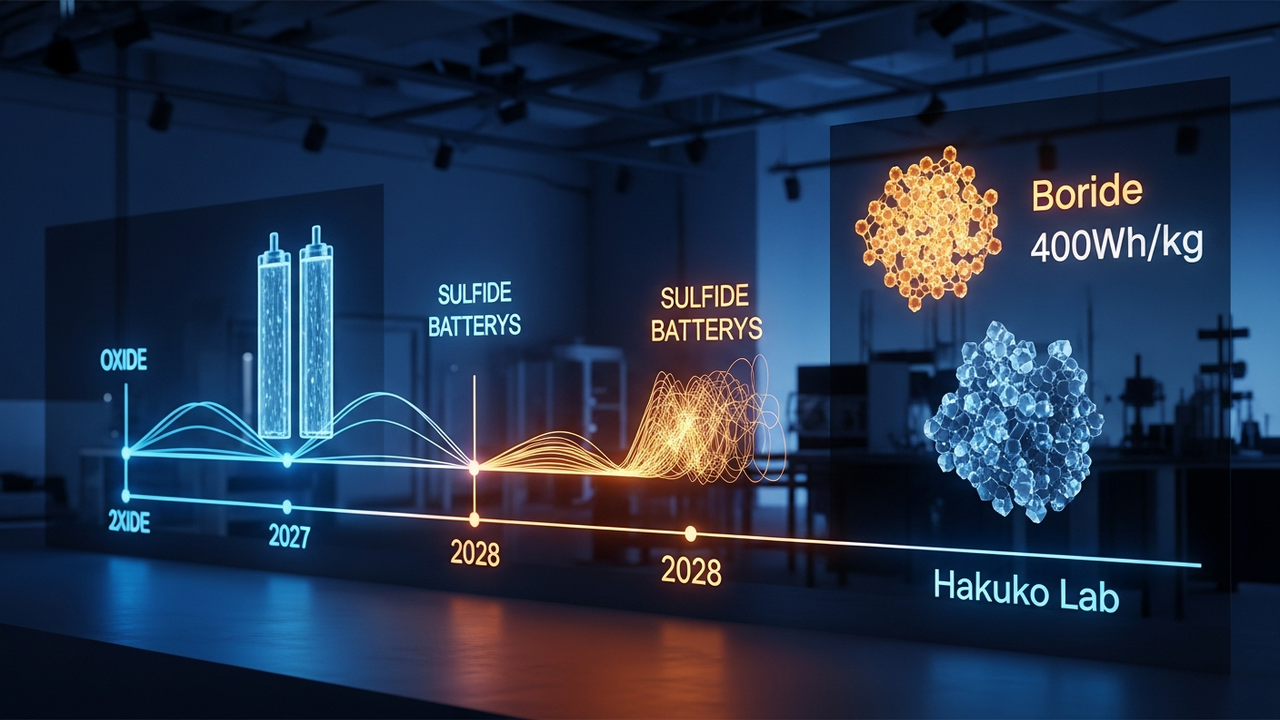
The 6th Global Solid-State Battery Summit in Chicago forged a critical consensus regarding the roadmap for next-generation battery technologies. A revised industry timeline indicated that oxide-based solid electrolytes are anticipated for prioritized introduction within the next 2-3 years, whereas the widespread commercialization of sulfide-based solid-state batteries is now projected to be delayed until 2028-2030. The summit also featured a groundbreaking announcement from the Baihu Institute, which successfully developed a boride-based solid-state battery achieving a high energy density of 400 Wh/kg and stable operation across a wide temperature range from -20℃ to 120℃, targeting applications in the low-altitude economy and robotics. Furthermore, Nissan Motor Co. reiterated its goal to integrate solid-state batteries into EVs by fiscal year 2028, following the completion of prototype testing at its Yokohama plant in April 2026.
Technical Details
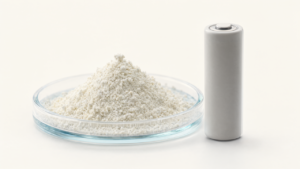
Oxide-based electrolytes are expected to be introduced earlier due to their higher air stability and relatively simpler manufacturing processes compared to sulfide-based counterparts. Sulfide-based electrolytes, while offering superior ionic conductivity and higher energy density, face challenges with moisture sensitivity in air and complex manufacturing procedures, contributing to their delayed mass production. The boride-based solid-state battery developed by Baihu Institute boasts an exceptionally high energy density of 400 Wh/kg and robust operation from -20℃ to 120℃. This performance surpasses the capabilities of current lithium-ion batteries and offers a transformative solution for specialized applications requiring high reliability in extreme temperatures, such as drones, flying cars, and advanced robotics. Nissan’s completion of prototype testing demonstrates steady progress in validating various solid-state battery technologies, including sulfide-based ones, for automotive applications.
Background & Context
Solid-state batteries are at the forefront of a global R&D race among research institutions, battery manufacturers, and automotive companies, aiming to overcome the energy density and safety limitations of conventional liquid lithium-ion batteries. Hybrid solid-state batteries are also gaining attention as a scalable bridge to full solid-state solutions. The timeline adjustments presented at the summit reflect the realities of technological maturity, manufacturing complexity, cost factors, and market demands for each technology. The delay for sulfide-based solid-state batteries, in particular, suggests that significant technical hurdles remain in scaling their superior performance to mass production. Conversely, breakthroughs from entities like the Baihu Institute highlight the diversity of technological pathways and the potential for solid-state batteries to initially proliferate in specific niche markets.
Strategic Significance & Outlook
The announcements at the Solid-State Battery Summit clearly indicate a shift towards more realistic approaches for commercialization within the industry. The early introduction of oxide-based electrolytes will enable faster market penetration and accelerate the provision of safer battery solutions. The delay for sulfide-based electrolytes implies that a period of further technical maturation is required amidst competition with existing liquid and hybrid solid-state batteries. Baihu Institute’s boride-based solid-state battery has the potential to be a game-changer in specific high-value markets, suggesting a future where diverse technologies coexist. The active commitment from major automotive manufacturers like Nissan reaffirms that solid-state batteries are an indispensable technology shaping the future of the EV market.
Get our weekly technology intelligence — free
Receive an infographic that lets you judge at a glance whether each field’s analysis report is worth reading.
Subscribe Free — Weekly Tech Intelligence
By subscribing, you’ll receive Troy-Technical’s weekly technology intelligence newsletter.
- Your email and selected fields are used only to deliver the newsletter.
- We never share your information with third parties.
- You can unsubscribe anytime via the link in each email.
See our Privacy Policy for details.
Takes about a minute · Unsubscribe anytime