Key Findings
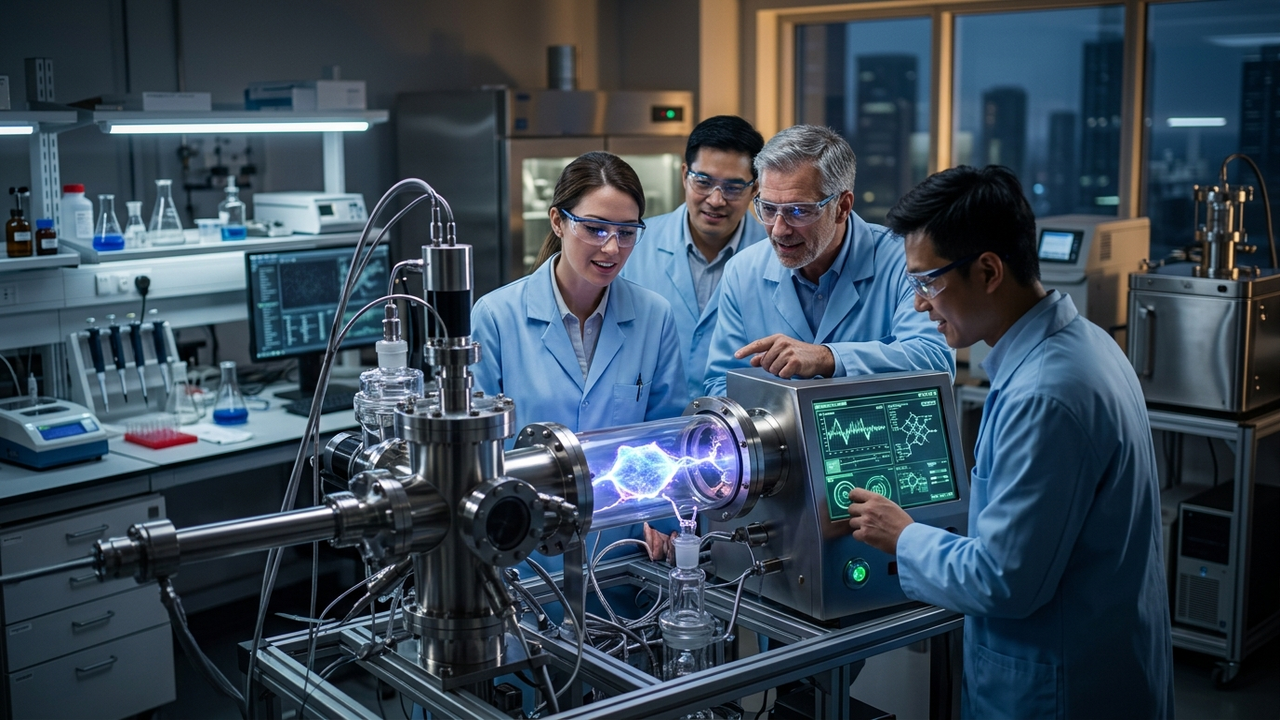
A new door has opened in the world of chemistry: the discovery of the elusive hexanitrogen (N₆) molecule. This breakthrough pushes the known limits of chemical bonding and introduces an entirely new concept for future carbon-free energy storage. The finding suggests a novel pathway to extract immense energy from nitrogen-based materials, providing fresh inspiration for the quest for sustainable energy solutions.
Technical / Clinical Details
Hexanitrogen (N₆) is a high-energy molecule consisting of six nitrogen atoms linked in a unique bonding configuration, effectively redefining the stability limits in nitrogen chemistry. The most remarkable aspect of this molecule is its characteristic ability to release a very large amount of energy when converting from high-energy nitrogen allotropes to the extremely stable dinitrogen molecule (N₂), all without emitting any environmentally harmful byproducts. This energy release has the potential to match or even surpass the energy density of traditional carbon-based fuel combustion. While N₆ is not yet an established energy storage technology, its fundamental principles offer a completely new framework for researchers exploring novel methods to deliver clean energy without carbon emissions.
Background & Context
In response to global warming and climate change, the development of carbon-free energy storage and conversion technologies to replace fossil fuels is one of the world’s most critical priorities. While hydrogen energy is a promising candidate, it presents significant challenges in terms of storage and transport. Nitrogen, which constitutes approximately 78% of Earth’s atmosphere, could become an extremely sustainable energy source if its chemical bonding energy can be efficiently harnessed. The discovery of N₆ represents a major step in fundamental science toward maximizing this potential of nitrogen. This could have ripple effects not only in energy storage but also in fields such as clean propulsion systems and explosives.
Strategic Significance & Outlook
The discovery of hexanitrogen (N₆) will vigorously drive new research fields in nitrogen chemistry and energy science. Future research will focus on optimizing N₆ synthesis pathways, improving its stability, and evaluating its feasibility as a practical energy storage medium. Although the journey is long, the carbon-free energy storage capabilities of this molecule hold the potential for revolutionary breakthroughs in future clean energy technologies, particularly in propulsion systems for aerospace and the development of safer explosive materials. Scientists are optimistic that this discovery will lead to innovative energy solutions for a carbon-neutral future.
Source: https://falling-walls.com/finalists-interviews/peter-schreiner
Get our weekly technology intelligence — free
Receive an infographic that lets you judge at a glance whether each field’s analysis report is worth reading.
Subscribe Free — Weekly Tech Intelligence
By subscribing, you’ll receive Troy-Technical’s weekly technology intelligence newsletter.
- Your email and selected fields are used only to deliver the newsletter.
- We never share your information with third parties.
- You can unsubscribe anytime via the link in each email.
See our Privacy Policy for details.
Takes about a minute · Unsubscribe anytime









Comments