Key Findings
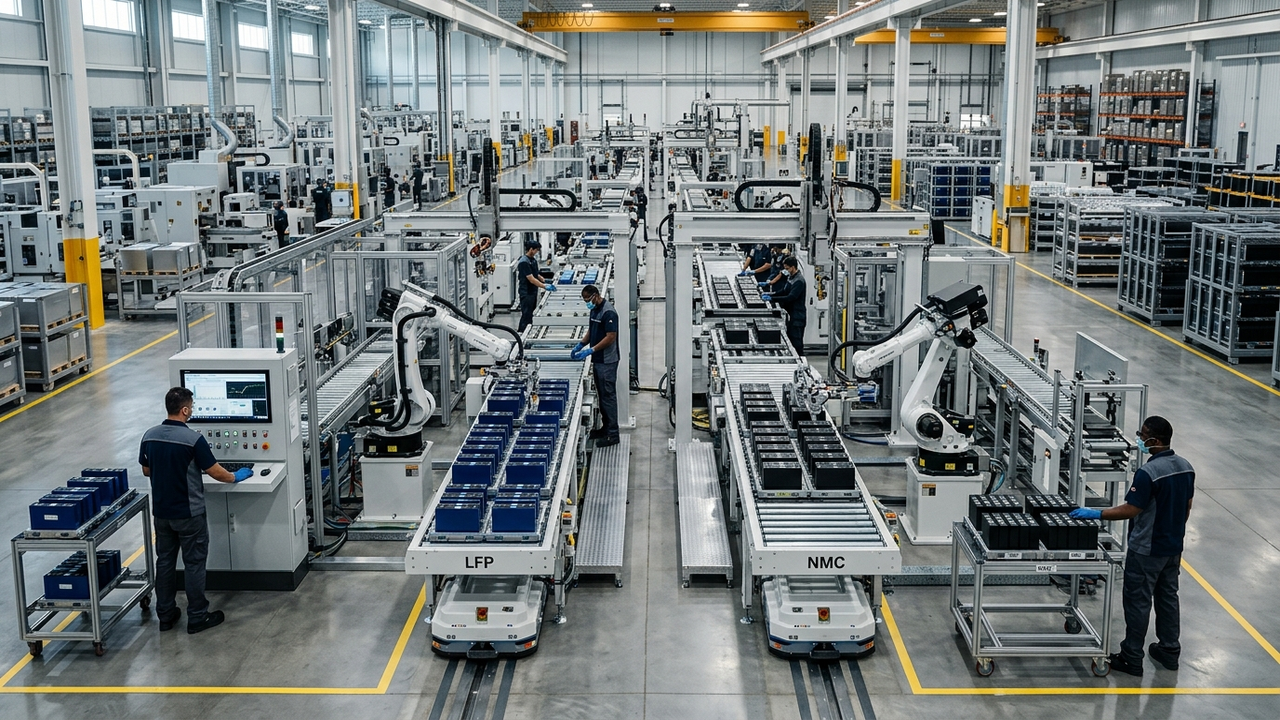
LG Energy Solution has officially commenced the production of Lithium Iron Phosphate (LFP) battery cells for Energy Storage Systems (ESS) and Nickel-Manganese-Cobalt (NMC) battery cells for Electric Vehicles (EVs) at its manufacturing facility in Lansing, Michigan, USA. This strategic move reflects the company’s proactive pivot to build a versatile production capability that addresses a broader spectrum of customer needs and market stability, rather than solely focusing on a single market segment. The robust revenue patterns and consistent structural demand growth observed in the ESS market were key drivers behind the decision to reconfigure the Lansing plant for multi-purpose output.
Technical and Manufacturing Details
The LFP battery cells produced at the Lansing facility are ideal for grid-scale and commercial & industrial ESS applications, owing to their superior safety, extended cycle life, and cost-effectiveness. Concurrently, the NMC battery cells are engineered to meet the demanding requirements of the EV market, providing high energy density and power output. By manufacturing both distinct battery chemistries within the same facility, LGES aims to achieve operational excellence, maximizing production efficiency and flexibility in responding to market fluctuations. The company has set an ambitious target of establishing over 60GWh of global ESS battery production capacity by year-end, with more than 50GWh specifically allocated to the North American market.
Background and Industry Context
The battery industry has been grappling with the dual challenges of volatility in the electric vehicle market and escalating raw material prices. The long development cycles and inherent market uncertainties associated with automotive programs have presented significant risks for manufacturers. In contrast, the demand for ESS, driven by the expansion of renewable energy sources and the need for grid stabilization, has shown consistent global growth. LG Energy Solution’s strategy to build flexible production capabilities is a calculated effort to establish a more resilient business model less susceptible to short-term market dynamics. This pivot aligns with a broader industry trend among battery manufacturers to diversify revenue streams and avoid over-reliance on any single market segment.
Future Outlook and Strategic Significance
The initiation of LFP and NMC cell production at LG Energy Solution’s Lansing plant is expected to significantly bolster the company’s competitive position in the North American market. The strong emphasis on the ESS market will play a crucial role in supporting the accelerating adoption of renewable energy and the modernization of power grids. This versatile manufacturing capability provides LGES with the agility to adapt rapidly to future market shifts and technological advancements. Through this production expansion, LG Energy Solution is anticipated to further strengthen its leadership in the global battery market and contribute significantly to the proliferation of sustainable energy solutions.
Get our weekly technology intelligence — free
Receive an infographic that lets you judge at a glance whether each field’s analysis report is worth reading.
Subscribe Free — Weekly Tech Intelligence
By subscribing, you’ll receive Troy-Technical’s weekly technology intelligence newsletter.
- Your email and selected fields are used only to deliver the newsletter.
- We never share your information with third parties.
- You can unsubscribe anytime via the link in each email.
See our Privacy Policy for details.
Takes about a minute · Unsubscribe anytime







Comments