Key Findings
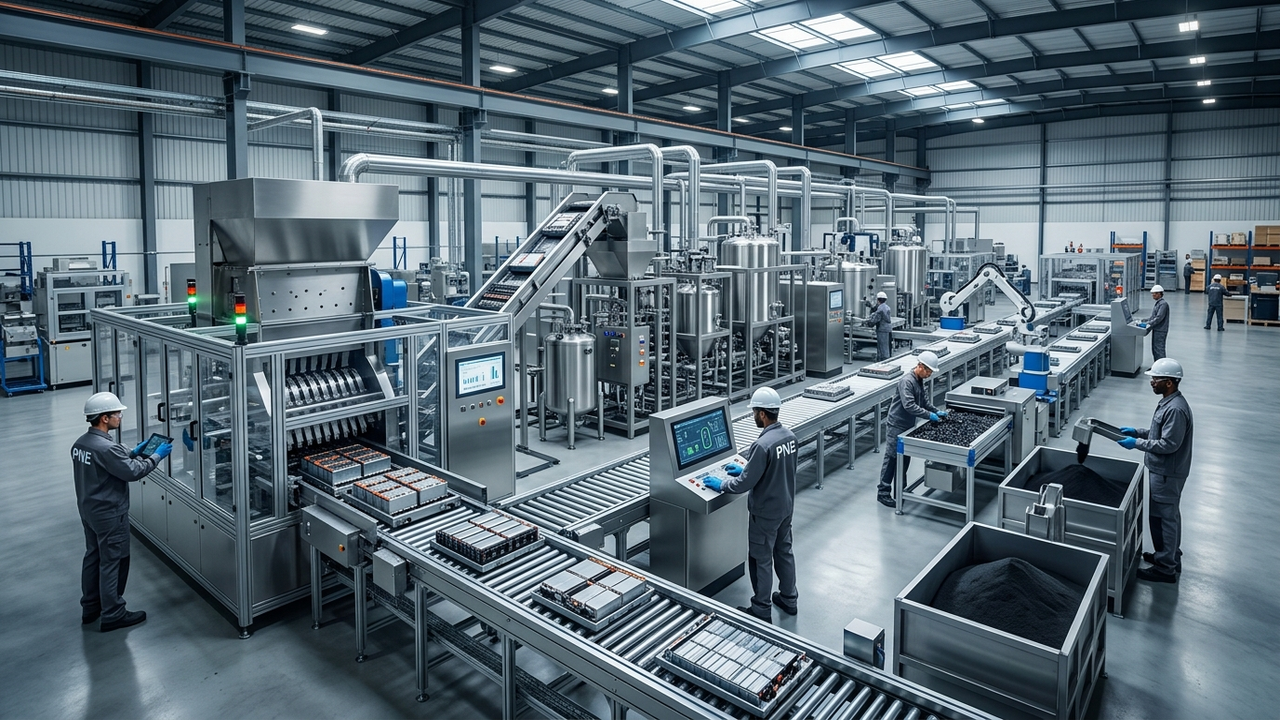
Princeton NuEnergy (PNE) has announced it has been awarded a $50 million grant from the U.S. Department of Energy (DOE) to construct the nation’s first closed-loop cathode-to-cathode recycling facility. This transformative project aims to commercially scale technology that directly recovers cathode materials from spent lithium-ion batteries and reintroduces them directly into new battery manufacturing processes. This will dramatically improve battery resource circulation and play a critical role in enhancing the domestic self-sufficiency of raw materials within the U.S. battery supply chain.
Technical / Clinical Details
PNE’s closed-loop cathode recycling technology distinguishes itself from conventional battery recycling methods, such as ‘shredding’ and ‘hydrometallurgy,’ by physically separating cathode materials from used batteries and aiming to regenerate them with minimal damage to their crystal structure and chemical composition. This approach is expected to reduce the need for expensive chemical processing and significantly lower energy consumption. The recovered cathode materials are restored to a quality comparable to newly manufactured materials and supplied directly to new battery production lines. This process is anticipated to maximize the recovery rates of critical metals like lithium, cobalt, and nickel while optimizing recycling costs. Having met the DOE’s evaluation criteria, this technology is highly regarded for its sustainability and economic efficiency.
Background & Context
With the proliferation of electric vehicles (EVs) and renewable energy, the demand for lithium-ion batteries is surging, but concurrently, the disposal of spent batteries and the stable supply of raw materials present significant challenges. Key raw materials such as lithium and cobalt face unstable supply and volatile prices, with mining and refining concentrated in specific countries, leading to high supply chain risks. The U.S. government is pursuing a strategy to mitigate these risks and accelerate the establishment of a clean energy economy by bolstering domestic battery manufacturing and recycling capabilities. PNE’s project fully aligns with this national strategy and will serve as a crucial pillar for realizing a circular economy.
Strategic Significance & Outlook
The construction of Princeton NuEnergy’s closed-loop cathode recycling facility has the potential to bring about a significant transformation in the U.S. battery recycling industry. If successful, this facility will reduce the environmental footprint of domestically manufactured batteries and substantially improve the stability of raw material supply. The $50 million grant will provide essential support for PNE to rapidly scale up and commercialize this innovative technology. Going forward, the industry will closely watch the progress of facility construction and how the regenerated materials are actually utilized in battery manufacturing. Widespread adoption of this technology is expected to establish a sustainable ‘cradle-to-cradle’ cycle for batteries, contributing to a cleaner future.
Get our weekly technology intelligence — free
Receive an infographic that lets you judge at a glance whether each field’s analysis report is worth reading.
Subscribe Free — Weekly Tech Intelligence
By subscribing, you’ll receive Troy-Technical’s weekly technology intelligence newsletter.
- Your email and selected fields are used only to deliver the newsletter.
- We never share your information with third parties.
- You can unsubscribe anytime via the link in each email.
See our Privacy Policy for details.
Takes about a minute · Unsubscribe anytime








Comments