Key Findings
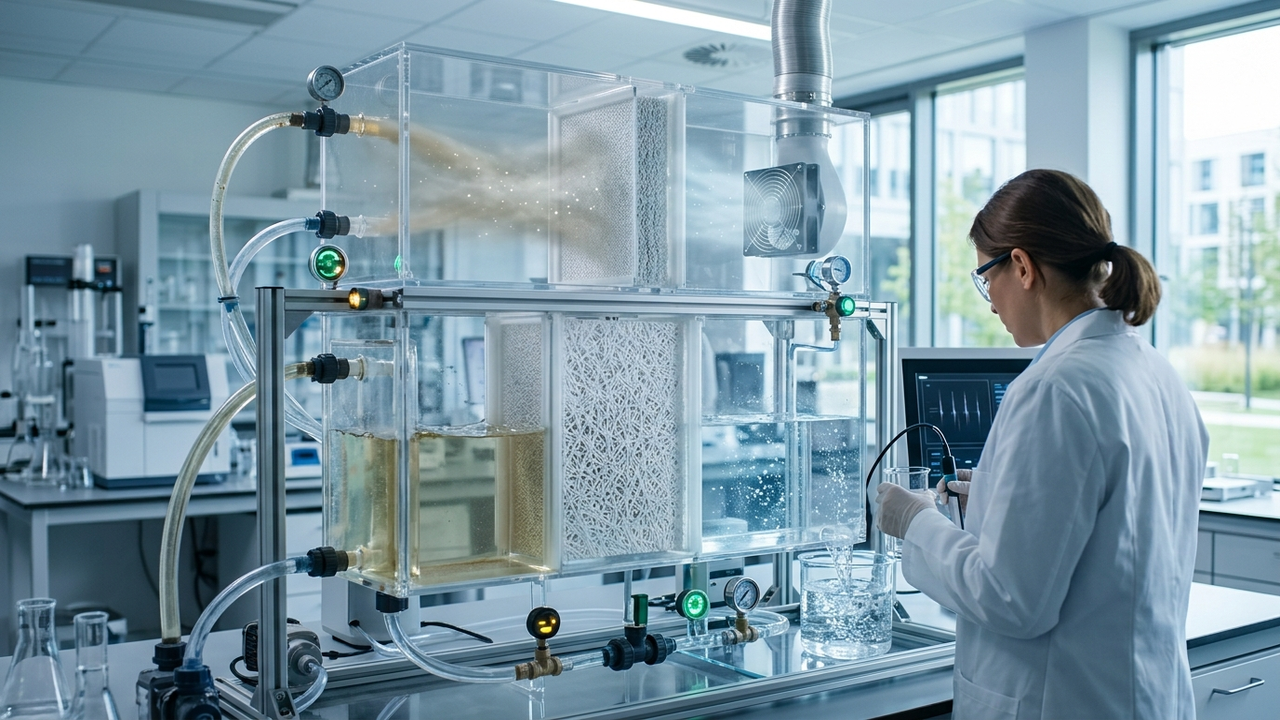
This review article emphasizes that polymer nanofiber-based membranes represent a highly promising platform for efficiently removing emerging contaminants, including nanoplastics, per- and polyfluoroalkyl substances (PFAS), volatile organic compounds (VOCs), pathogenic microorganisms, and inorganic nanoparticles, from both air and water. Their exceptional high surface area, interconnected porosity, and versatile functionalization capabilities offer solutions to challenges that have proven difficult for conventional filtration technologies.
Technical / Clinical Details
Nanofiber membranes are predominantly manufactured using electrospinning technology, a process that enables precise control over fiber diameter at the nanoscale and the formation of membranes with uniform porous structures. Strategies for enhancing removal efficiency through functionalization include:
- Charged functional groups: These promote electrostatic interactions with contaminants, thereby improving capture efficiency.
- Hydrophobic domains: These increase adsorption selectivity for specific organic pollutants.
- Biomimetic coatings: These facilitate the inactivation of pathogenic microorganisms.
- Catalytic interfaces: These provide active sites for catalytic reactions that accelerate pollutant degradation.
- Metal-organic framework (MOF)-based composites: Leveraging MOFs’ ultra-high surface area and tunable pore structures, these composites significantly boost the capture capability for specific molecules.
By combining these strategies, nanofiber membranes can achieve high removal efficiency and selectivity across a broad spectrum of pollutants. This approach is particularly critical for effectively removing persistent ‘forever chemicals’ like PFAS, which pose significant environmental and health risks.
Background & Context
The proliferation of industrialization and urbanization has led to a critical increase in emerging contaminants in water and air, such as pharmaceuticals, personal care products, and microplastics. Traditional water treatment and air filtration systems often struggle to remove these pollutants entirely, raising serious concerns about their impact on ecosystems and human health. Nanotechnology, particularly the development of nanofibers, is seen as a groundbreaking solution to these challenges. Heightened environmental regulations and a growing demand for sustainable solutions are accelerating research and development in this critical field.
Strategic Significance & Outlook
Nanofiber technology holds significant potential to deliver superior, environmentally friendly solutions for air and water purification. Future research priorities will focus on ensuring the long-term stability and reusability of functionalized nanofiber membranes, reducing manufacturing costs, and achieving scalability for large-scale production. The development of highly selective membranes tailored to specific contaminants and their integration with real-time monitoring systems are also expected to drive further commercialization and practical application of this technology. These advancements are poised to make substantial contributions to global water resource conservation and public health improvement.
Get our weekly technology intelligence — free
Receive an infographic that lets you judge at a glance whether each field’s analysis report is worth reading.
Subscribe Free — Weekly Tech Intelligence
By subscribing, you’ll receive Troy-Technical’s weekly technology intelligence newsletter.
- Your email and selected fields are used only to deliver the newsletter.
- We never share your information with third parties.
- You can unsubscribe anytime via the link in each email.
See our Privacy Policy for details.
Takes about a minute · Unsubscribe anytime







Comments