Key Findings
In 2026, the rapid global adoption of lithium-ion batteries is creating both new challenges and significant business opportunities in the processing of end-of-life batteries and the recovery of critical minerals. Recycling is increasingly recognized as an indispensable element for ensuring supply chain security and sustainability within the broader energy transition.
Technical / Clinical Details
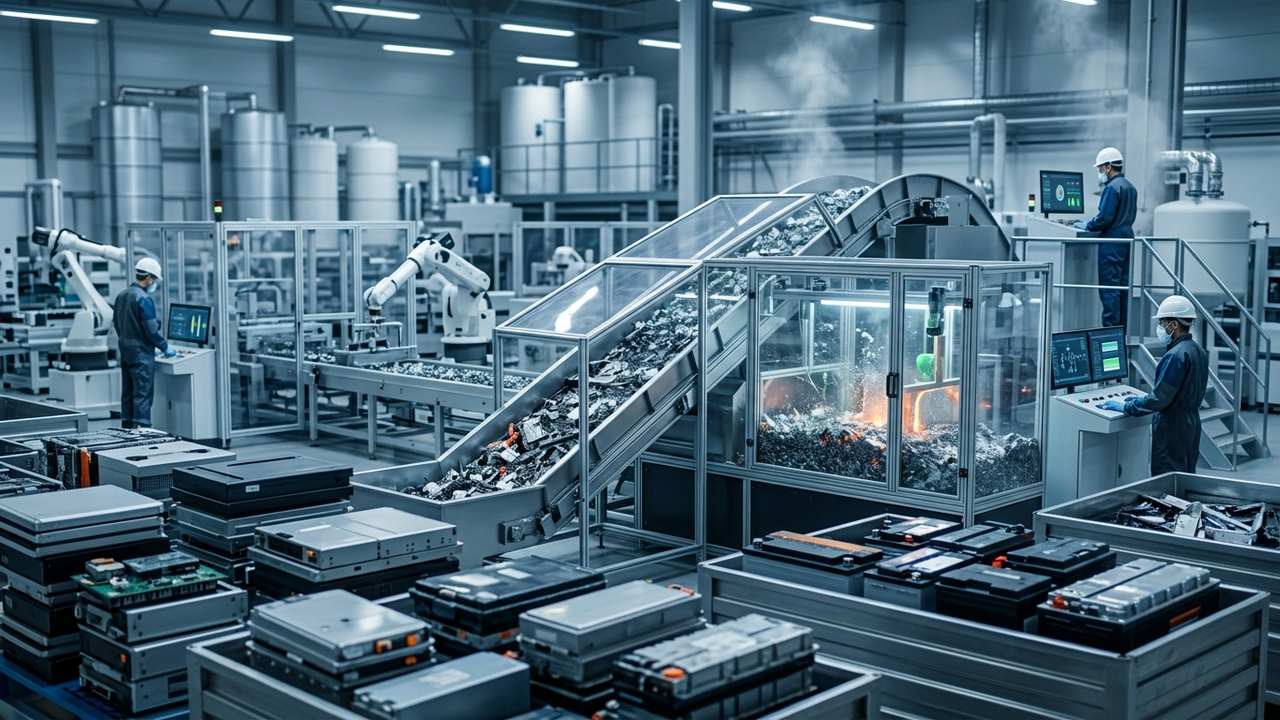
Lithium-ion batteries, valued for their high energy density and performance, are used across a wide range of applications. However, spent batteries pose thermal runaway and fire risks, demanding stringent safety protocols and specialized handling during the recycling process. Concurrently, these batteries are rich in valuable critical minerals such as lithium, cobalt, nickel, and manganese. Efficiently recovering these elements holds immense economic value and is paramount for ensuring resource sustainability. The recycling process primarily involves the following stages:
- Mechanical Pre-treatment: Safely discharging batteries, followed by shredding to produce a mixed metal powder known as ‘black mass.’
- Metallurgical Recovery:
– Pyrometallurgy: A high-temperature process that melts black mass to recover metals, typically energy-intensive.
– Hydrometallurgy: A chemical process that selectively dissolves and separates metals. This method achieves high recovery rates, often over 95% for lithium, cobalt, and nickel, with a comparatively lower environmental footprint. - Direct Recycling: Research is advancing in methods that preserve battery structures and directly regenerate cathode materials, though commercial-scale deployment remains limited.
These technologies are transforming spent batteries from hazardous waste into valuable, reusable resources.
Background & Context
As electric vehicle (EV) sales accelerate worldwide and stationary energy storage systems (ESS) are increasingly deployed, the volume of end-of-life lithium-ion batteries is inevitably rising. Major markets, including China, Europe, and the U.S., are strengthening regulations and incentives for battery recycling to stabilize critical mineral supply and enhance the competitiveness of their domestic industries. The International Energy Agency (IEA) consistently emphasizes that recycling is crucial for boosting the resilience of critical mineral supplies, a prerequisite for achieving a global clean energy transition. Given that the sourcing of minerals like lithium and cobalt is concentrated in a few regions and carries high geopolitical risks, securing domestic supply through recycling is a strategic imperative.
Strategic Significance & Outlook
The lithium-ion battery recycling market is projected for rapid expansion, driven by continuous technological innovation and supportive policy frameworks. Further optimization of hydrometallurgical techniques and the commercialization of direct recycling technologies are expected to significantly improve the overall efficiency and economics of the recycling process. This will reduce reliance on virgin mineral extraction and enhance the sustainability of the entire battery supply chain. Moreover, high-purity materials recovered through recycling will contribute to the development of next-generation batteries, enabling higher performance and lower environmental impact. For investors, researchers, and engineers, this sector represents a vital investment area and a frontier for technological advancement in building a sustainable future.
Source: https://alchemielabs.com/lithium-ion-battery-recycling-in-2026/
Get our weekly technology intelligence — free
Receive an infographic that lets you judge at a glance whether each field’s analysis report is worth reading.
Subscribe Free — Weekly Tech Intelligence
By subscribing, you’ll receive Troy-Technical’s weekly technology intelligence newsletter.
- Your email and selected fields are used only to deliver the newsletter.
- We never share your information with third parties.
- You can unsubscribe anytime via the link in each email.
See our Privacy Policy for details.
Takes about a minute · Unsubscribe anytime







Comments