Key Findings
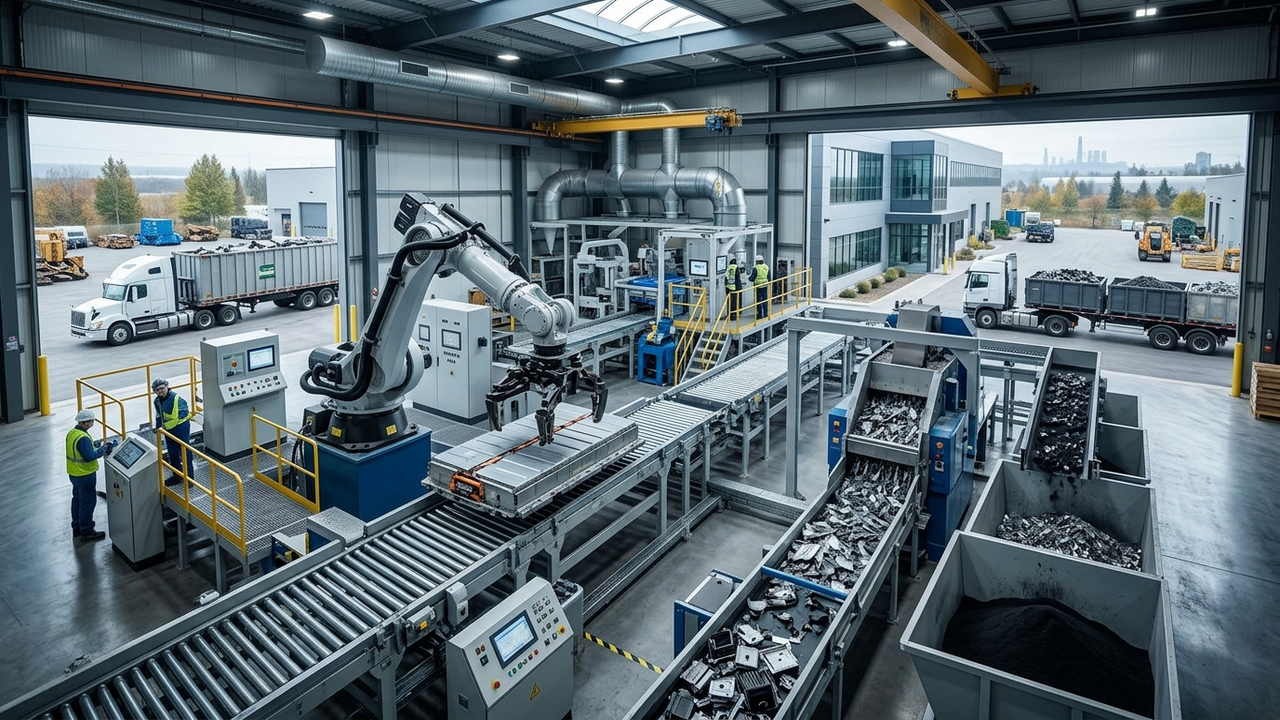
As of 2026, North America is witnessing a dramatic surge in demand for recycling end-of-life electric vehicle (EV) batteries and manufacturing scrap, fueled by the rapid proliferation of EVs and the growth of battery ‘gigafactories.’ In response, seven prominent North American battery recycling companies are undertaking substantial operational expansions, contributing to the establishment of critical mineral refining capabilities within the region.
Technical / Clinical Details
These companies leverage a variety of recycling technologies, including pyrometallurgy and hydrometallurgy, to recover vital minerals such as lithium, cobalt, nickel, and manganese from spent lithium-ion batteries. Hydrometallurgy, in particular, is favored for its ability to efficiently recover high-purity materials, making them suitable for reuse in new battery manufacturing. Historically, the majority of black mass (shredded battery material) was exported to Asia for processing. However, a strategic shift in U.S. policy now actively promotes domestic critical mineral refining. This policy support includes executive orders restricting critical mineral exports and a $500 million grant from the U.S. Department of Energy (DoE) specifically for recycling and refining projects, accelerating the development of national recycling infrastructure.
Background & Context
The global critical mineral supply chain is plagued by geopolitical risks and a heavy concentration of supply in a few countries. The U.S. government has prioritized stabilizing domestic critical mineral supply and enhancing supply chain resilience as part of its clean energy transition agenda. The burgeoning demand for EV batteries significantly increases the consumption of these minerals, making recycling indispensable for reducing reliance on virgin mining and mitigating environmental impact. The expansion of recycling companies in North America is strongly underpinned by this policy and economic context, also contributing to regional economic revitalization and job creation.
Strategic Significance & Outlook
The North American battery recycling industry is projected for continued growth, driven by the expanding EV market and sustained policy support, which will encourage further investment and technological innovation. These companies are not only focused on expanding their facility capacities but also on developing more efficient and environmentally friendly recycling technologies. The establishment of robust domestic recycling capabilities is paramount for enhancing the sustainability of the entire battery supply chain and strengthening U.S. energy security. Furthermore, the recovered critical minerals will accelerate the development of next-generation battery technologies, providing a foundational element for advancing the clean energy economy. For investors and policymakers, this trend represents a significant opportunity to foster a circular economy and build a more sustainable society.
Get our weekly technology intelligence — free
Receive an infographic that lets you judge at a glance whether each field’s analysis report is worth reading.
Subscribe Free — Weekly Tech Intelligence
By subscribing, you’ll receive Troy-Technical’s weekly technology intelligence newsletter.
- Your email and selected fields are used only to deliver the newsletter.
- We never share your information with third parties.
- You can unsubscribe anytime via the link in each email.
See our Privacy Policy for details.
Takes about a minute · Unsubscribe anytime








Comments