Key Findings
Recent research indicates that the U.S. government’s black mass export ban, enacted on August 27, 2026, aimed at increasing critical mineral recovery from end-of-life lithium-ion batteries, is insufficient in isolation to significantly boost domestic electric vehicle (EV) battery recycling. While intended to strengthen the domestic supply chain, a critical shortfall in current U.S. refining capacity presents a major bottleneck.
Technical / Clinical Details
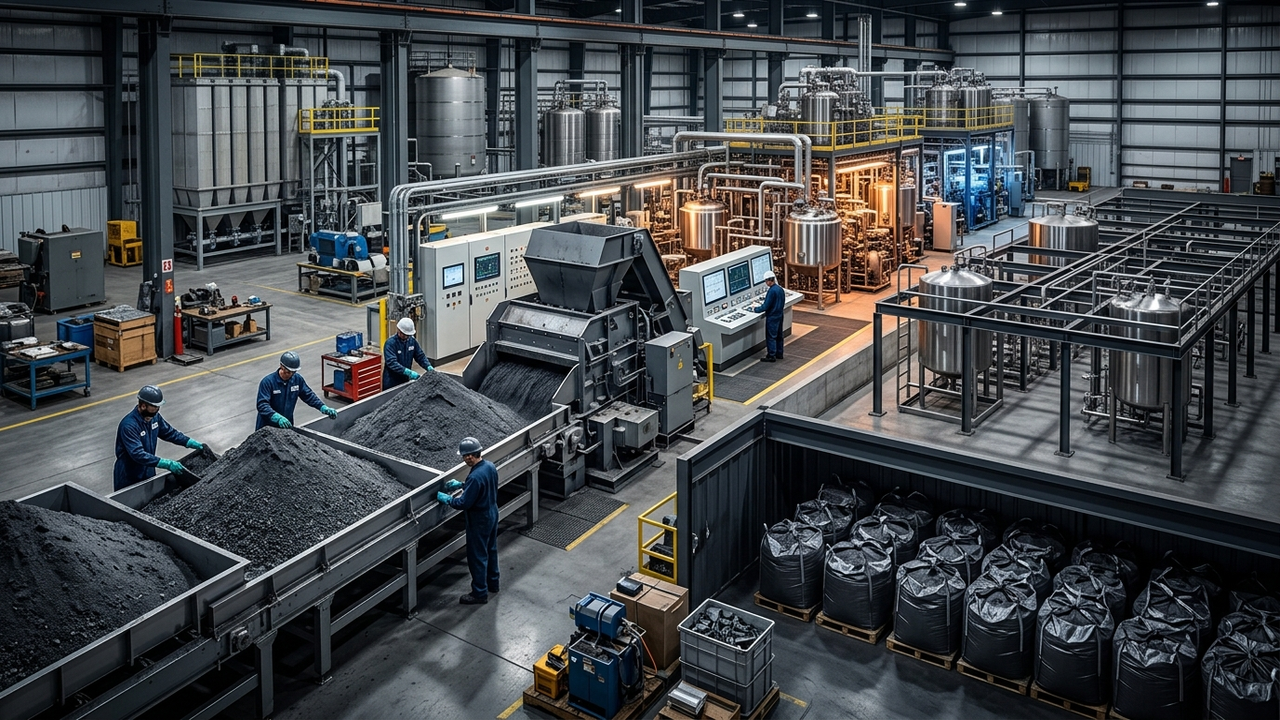
‘Black mass’ refers to the mixed metal powder obtained by mechanically shredding and sorting spent lithium-ion batteries, containing valuable critical minerals such as lithium, cobalt, nickel, manganese, and graphite. Refining these minerals into reusable forms requires advanced technologies, primarily hydrometallurgy and pyrometallurgy. However, as of 2026, the estimated domestic black mass refining capacity in the U.S. is a mere 7,000 metric tons per year. This contrasts sharply with the projected 65,000 metric tons of black mass requiring processing annually, resulting in a deficit of approximately 58,000 metric tons. Without bridging this capacity gap, the export ban risks merely creating a domestic stockpile rather than genuinely promoting recycling.
Background & Context
The U.S. export ban is part of a broader national strategy to establish a domestic critical mineral supply chain and reduce reliance on foreign nations. The increasing importance of batteries, driven by EV adoption, makes the stable supply of their raw materials a top economic security priority. Historically, a significant volume of black mass was shipped to Asian refining facilities due to cost and technological constraints. While the current ban aims to redirect this flow domestically, concerns remain that its intended effects may not materialize without commensurate growth in domestic refining infrastructure.
Strategic Significance & Outlook
To truly accelerate domestic EV battery recycling, it is proposed that regulatory measures like the black mass export ban must be complemented by additional policies. These include implementing mandatory battery recycling legislation and establishing clear recycling requirements that ensure high recovery rates for lithium and other critical minerals. Furthermore, incentivizing investment in domestic refining facilities and supporting the development of innovative recycling technologies are crucial. Through such a comprehensive approach, the U.S. can establish a sustainable and resilient battery supply chain, strongly advancing its clean energy transition. Investors, engineers, and policymakers are keenly observing for concrete solutions to address this significant capacity gap.
Get our weekly technology intelligence — free
Receive an infographic that lets you judge at a glance whether each field’s analysis report is worth reading.
Subscribe Free — Weekly Tech Intelligence
By subscribing, you’ll receive Troy-Technical’s weekly technology intelligence newsletter.
- Your email and selected fields are used only to deliver the newsletter.
- We never share your information with third parties.
- You can unsubscribe anytime via the link in each email.
See our Privacy Policy for details.
Takes about a minute · Unsubscribe anytime






Comments