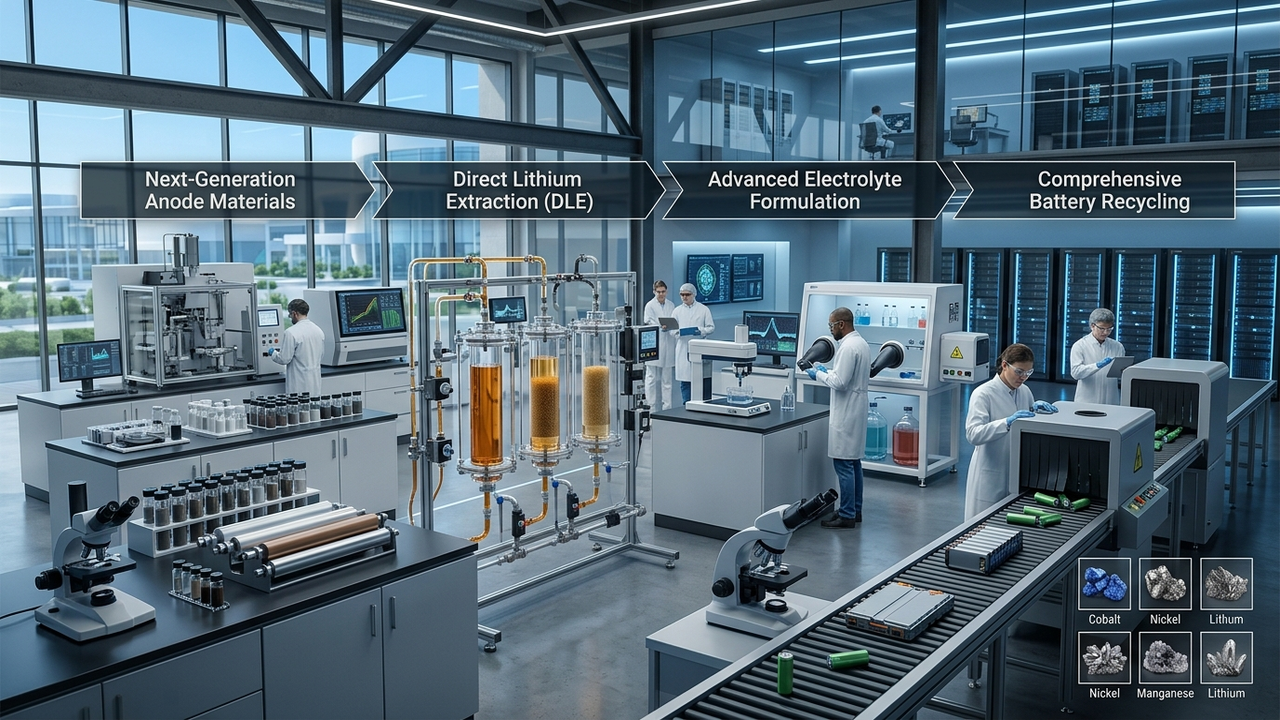
The U.S. Department of Energy (DoE) has unveiled a substantial grant program aimed at bolstering the nation’s battery supply chain and advancing next-generation energy technologies. This investment is a crucial step for the United States to maintain competitiveness in the clean energy economy.
Key Findings
- $500 Million Grant Program Announced: The U.S. Department of Energy announced a major grant program totaling $500 million at the end of August 2026. This funding is dedicated to supporting advancements in battery materials, manufacturing processes, and recycling technologies.
- Broad Focus on Critical Areas: The grants will target a diverse array of areas across the entire battery ecosystem, including the development of next-generation anode materials, innovations in Direct Lithium Extraction (DLE) technologies, reduction or substitution of cobalt, research into high-performance electrolyte materials, and the enhancement of battery recycling efficiencies.
- Objective to Strengthen Domestic Supply Chain: A primary goal of this program is to reinforce domestic capabilities in the sourcing, processing, manufacturing, and recycling of battery minerals and materials, thereby reducing reliance on imports.
Technical & Clinical Details
The DoE grants are strategically focused on addressing multiple bottlenecks within battery technology. Development of next-generation anode materials aims to improve battery energy density and fast-charging capabilities, with particular emphasis on silicon- and lithium-metal-based anodes. Direct Lithium Extraction (DLE) is a vital technology for securing domestic lithium supply while minimizing environmental impact. Cobalt alternative technologies are crucial for mitigating geopolitical risks and human rights concerns within the supply chain. High-performance electrolytes, especially solid electrolytes for all-solid-state batteries, hold the potential to dramatically enhance battery safety and longevity. Investments in battery recycling technologies are indispensable for promoting the circular economy of rare metals and building a sustainable battery ecosystem.
Background & Context
With global demand for electric vehicles (EVs) and renewable energy storage systems surging, battery technology has become a cornerstone of national economic and security interests. The United States faces challenges in the resilience of its battery supply chain compared to countries like China, particularly lagging in mineral resource security, material processing, and battery manufacturing capacity. Through policies such as the Inflation Reduction Act (IRA), the U.S. government is vigorously supporting the domestic development and manufacturing of clean energy technologies, and these DoE grants are a part of that broader effort. This initiative is expected to foster collaboration among domestic research institutions, universities, and private companies to accelerate technological innovation.
Strategic Significance & Outlook
The $500 million in grants will significantly impact R&D and manufacturing capabilities within the U.S. battery industry. This is expected to accelerate the development of next-generation battery technologies and enhance the competitiveness of the U.S. clean energy sector, potentially expediting the commercialization of all-solid-state batteries and other advanced battery solutions. Technological breakthroughs achieved through these grants are also anticipated to contribute to job creation domestically and, in the long term, support U.S. energy independence and climate change mitigation efforts. However, whether these investments translate into concrete commercial success and truly enhance international competitiveness will depend on future technological progress and market dynamics.
Get our weekly technology intelligence — free
Receive an infographic that lets you judge at a glance whether each field’s analysis report is worth reading.
Subscribe Free — Weekly Tech Intelligence
By subscribing, you’ll receive Troy-Technical’s weekly technology intelligence newsletter.
- Your email and selected fields are used only to deliver the newsletter.
- We never share your information with third parties.
- You can unsubscribe anytime via the link in each email.
See our Privacy Policy for details.
Takes about a minute · Unsubscribe anytime








Comments