Key Findings
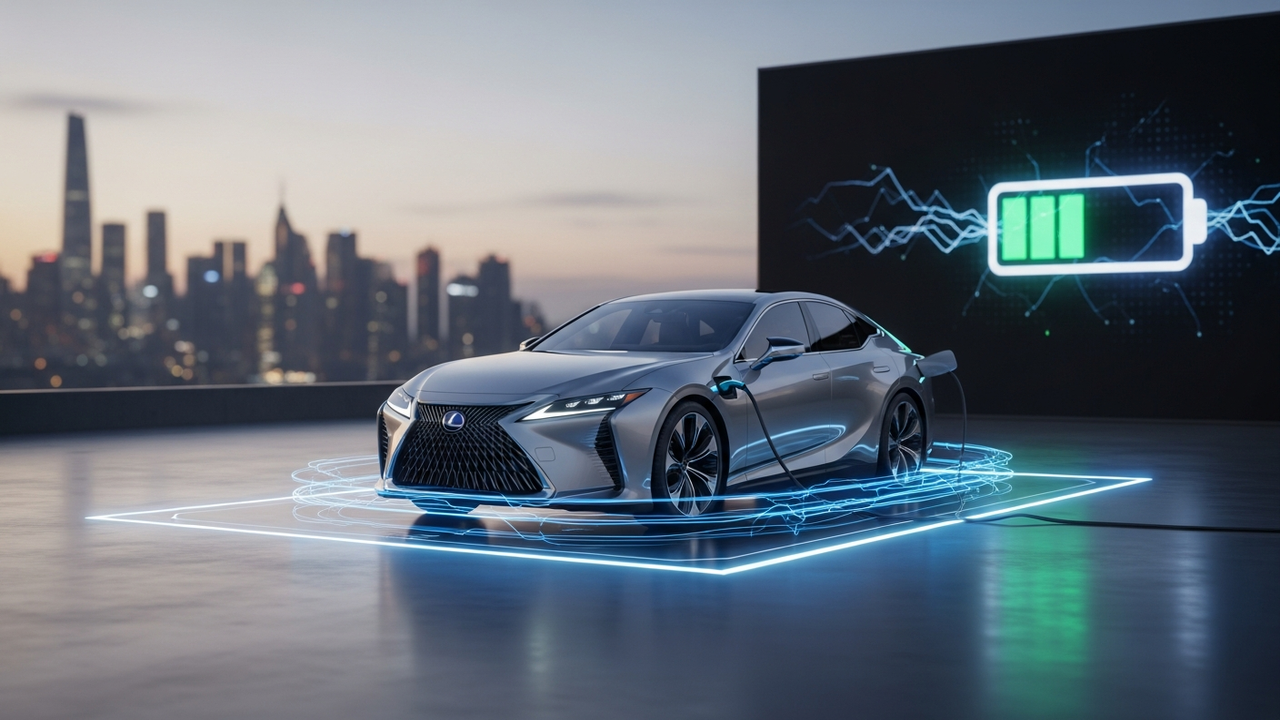
Toyota Motor Corporation has set ambitious goals for the commercialization of its all-solid-state battery technology, planning its debut in a luxury Lexus model by 2028. This next-generation battery aims to deliver an astounding 745-mile (approximately 1,200 km) range on a single charge and achieve a full recharge in less than 10 minutes. As of 2026, while not yet in mass-produced vehicles, Toyota targets a commercial energy density of 400–500 Wh/kg, which is roughly double the performance of today’s best lithium-ion battery packs.
Technical and Clinical Details
Toyota’s solid-state battery is based on sulfide-based solid electrolytes. By replacing liquid electrolytes with solid materials, the technology significantly enhances battery safety and energy density. Sulfide-based solid electrolytes are particularly promising due to their high ionic conductivity and excellent stability at elevated temperatures, making them critical for improving EV performance. Toyota is pursuing strategic partnerships with Idemitsu Kosan for solid electrolyte development and Sumitomo Metal Mining for cathode materials, leveraging their material science expertise to establish mass production capabilities. These technological advancements are key to achieving the targeted high energy density and rapid charging performance. The ability of solid-state batteries to store more energy in less space, compared to conventional liquid-electrolyte batteries, will also increase design flexibility and enhance the performance of EVs.
Background and Industry Context
As the electric vehicle market expands, battery performance remains a crucial factor influencing consumer adoption. Range anxiety and long charging times are significant barriers to widespread EV ownership. Toyota’s solid-state battery technology has the potential to fundamentally address these challenges, elevating EVs to a competitive level with internal combustion engine vehicles. In 2026, numerous automakers and battery manufacturers are intensely focused on solid-state battery development, but Toyota’s integrated approach, from material development to vehicle integration, stands out. The planned deployment in a Lexus supercar will serve as an ideal showcase for the technology’s superiority and reliability.
Strategic Significance and Outlook
If Toyota’s solid-state battery successfully enters the market by 2028, it will undoubtedly trigger a major transformation in the EV sector. This could shift consumer perceptions of EVs and accelerate their adoption significantly. The primary challenges moving forward will be establishing mass production systems and reducing costs, areas where Toyota’s robust supply chain and manufacturing expertise offer a considerable advantage. Beyond automotive, this technology is also expected to have ripple effects across other sectors, including aerospace and stationary energy storage, potentially setting a new standard for next-generation energy storage solutions.
Source: https://evcube.net/toyota-solid-state-battery-2026-everything-you-need-to-know/
Get our weekly technology intelligence — free
Receive an infographic that lets you judge at a glance whether each field’s analysis report is worth reading.
Subscribe Free — Weekly Tech Intelligence
By subscribing, you’ll receive Troy-Technical’s weekly technology intelligence newsletter.
- Your email and selected fields are used only to deliver the newsletter.
- We never share your information with third parties.
- You can unsubscribe anytime via the link in each email.
See our Privacy Policy for details.
Takes about a minute · Unsubscribe anytime






Comments