Key Findings
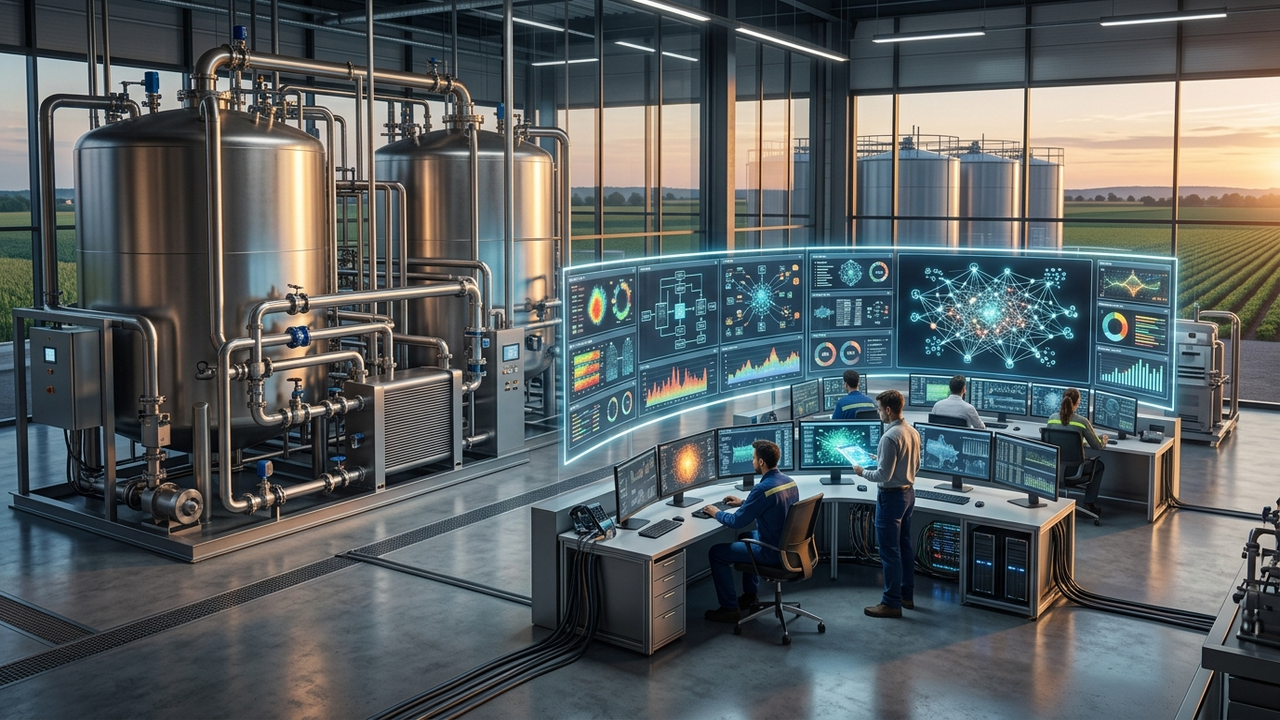
In the realm of bioenergy generation from anaerobic digestion (AD) processes, Artificial Intelligence (AI) and Machine Learning (ML)-based approaches are demonstrating significant progress in process prediction, optimization, and intelligent control. These technologies, through the utilization of data processing pipelines, predictive models, and digital twins, are capable of substantially improving AD process stability and biogas production efficiency.
Technical and Clinical Details
The AD process is a complex microbiological process that generates biogas (methane and carbon dioxide) from organic waste and is sensitive to fluctuations in operating conditions. AI and ML are particularly effective in modeling the nonlinear and dynamic nature of this process. Specifically, the following elements are utilized: First, real-time process data (e.g., temperature, pH, volatile fatty acid concentrations, biogas flow rate) obtained from various sensors are integrated and cleaned through efficient data processing pipelines. Next, based on these data, ML algorithms, such as neural networks and support vector machines, construct models that predict biogas production and process stability. Soft sensors estimate parameters that are difficult to measure directly (e.g., microbial community structure) from other measurable variables. Furthermore, digital twins function as virtual replicas of physical AD reactors, combining real-time data with simulations to predict process behavior and test optimal control strategies. Intelligent control systems dynamically adjust reactor operating conditions (e.g., substrate feeding rate, temperature) based on these predictions and models, maximizing process efficiency.
Background and Industry Context
From the perspectives of global warming countermeasures and energy security, the importance of biogas as a renewable energy source is increasing. Anaerobic digestion is a sustainable technology that simultaneously processes various organic wastes, such as agricultural waste, food waste, and sewage sludge, while recovering energy. However, the instability of AD processes and variability in production efficiency have hindered their commercial widespread adoption. The introduction of AI and ML offers groundbreaking solutions to overcome these challenges, enabling more reliable and economically viable biogas production. This contributes to achieving sustainability goals in both waste management and energy production sectors.
Strategic Significance and Outlook
AI and ML technologies hold the potential to redefine the future of anaerobic digestion processes. In the future, more sophisticated algorithms, larger datasets, and the integration of decentralized control systems will further advance the autonomous optimization of AD processes. This will lead to reduced operating costs for biogas production facilities, improved energy conversion efficiency, and the ability to recover more energy from a wider variety of waste types. These advancements will strengthen the principles of a circular economy and are indispensable for expanding the role of biogas in the renewable energy portfolio. Ultimately, these technological innovations are expected to contribute to the realization of a cleaner and more sustainable society.
Source: https://www.mdpi.com/1996-1073/19/18/4244
Get our weekly technology intelligence — free
Receive an infographic that lets you judge at a glance whether each field’s analysis report is worth reading.
Subscribe Free — Weekly Tech Intelligence
By subscribing, you’ll receive Troy-Technical’s weekly technology intelligence newsletter.
- Your email and selected fields are used only to deliver the newsletter.
- We never share your information with third parties.
- You can unsubscribe anytime via the link in each email.
See our Privacy Policy for details.
Takes about a minute · Unsubscribe anytime





Comments