
Key Findings
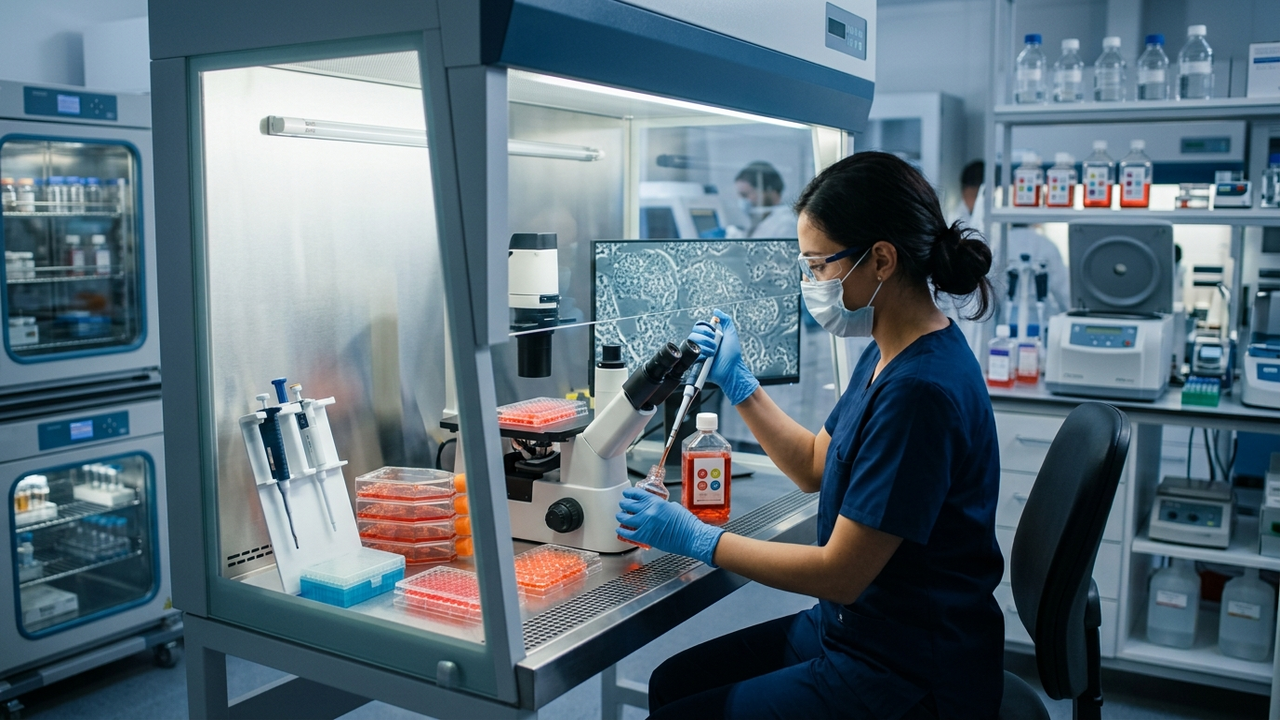
It has been re-emphasized that “defined media” – serum-free, xeno-free, feeder-free, and animal component-free – are crucial for ensuring consistent medium performance and stable cell quality in the maintenance of pluripotent stem cells (PSCs). This significantly enhances reliability and reproducibility in PSC research and its clinical applications.
Technical and Clinical Details
Defined media are designed with all components known and concentrations strictly controlled, minimizing batch-to-batch variability. Specifically, serum-free media eliminate variability risks from undefined serum components. Xeno-free (free of animal-derived components) and animal component-free (ACM-Free) media reduce risks of xenopathogen contamination and immune reactions in cell therapy products intended for human transplantation. Furthermore, feeder-free media (not requiring feeder cells) cut down on the labor and cost associated with feeder cell preparation, facilitating the adoption of automated culture processes. These characteristics are essential for long-term maintenance of PSC undifferentiated state, pluripotency, and genetic stability, forming a critical foundation for quality assurance and regulatory approval in regenerative medicine product manufacturing.
Background and Industry Context
Pluripotent stem cells, particularly iPSCs and ESCs, hold revolutionary potential in regenerative medicine, drug screening, and disease modeling. However, their culture is highly sensitive, with even minor changes in media composition affecting cell quality and differentiation potential. Traditional culture methods using serum-containing media and feeder cells, while convenient, faced challenges regarding difficult quality control and potential safety issues. The transition to defined media is a necessary progression to resolve these issues and accelerate the standardization and industrialization of PSC-based therapies and product development.
Strategic Significance and Outlook
Further optimization and wider adoption of defined media will drive breakthroughs in PSC research and clinical applications. With the development of more stable and high-performance defined media, PSC culture processes are expected to become even simpler and more automated. This will enable large-scale, cost-effective production of high-quality PSCs and their differentiated derivatives, accelerating the commercialization of regenerative medicine products and offering new treatment options for a broader range of diseases. Defined media represent a crucial step towards ‘off-the-shelf’ cell therapy products, and their evolution is set to continue.
Source: https://cellbase.com/blogs/news/defined-media-pluripotent-stem-cell-maintenance
Get our weekly technology intelligence — free
Receive an infographic that lets you judge at a glance whether each field’s analysis report is worth reading.
Subscribe Free — Weekly Tech Intelligence
By subscribing, you’ll receive Troy-Technical’s weekly technology intelligence newsletter.
- Your email and selected fields are used only to deliver the newsletter.
- We never share your information with third parties.
- You can unsubscribe anytime via the link in each email.
See our Privacy Policy for details.
Takes about a minute · Unsubscribe anytime