


Key Findings
A PROTAC (Proteolysis-Targeting Chimera) therapy for breast cancer has received medical approval, ushering in a new era of precision medicine for patients with advanced and metastatic breast cancer characterized by specific genetic mutations. This approval is a landmark event, establishing PROTAC technology as an effective modality in cancer treatment. This new class of drugs offers significant hope, particularly for patients who have developed resistance to conventional therapies or for whom treatment options were previously limited.
Technical / Clinical Details
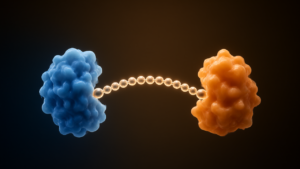
PROTACs are bifunctional molecules designed to induce the degradation of disease-causing proteins. One end of the PROTAC binds to the target protein of interest, while the other end recruits an E3 ubiquitin ligase. This effectively brings the target protein into proximity with the E3 ligase, leading to its ubiquitination and subsequent degradation by the proteasome. This mechanism of action differs fundamentally from traditional inhibitors that merely block protein function; PROTACs remove the protein entirely from the cell, leading to more potent and durable effects. The approved breast cancer PROTAC therapy specifically targets mutated cancer-driving proteins, thereby selectively inhibiting the proliferation and survival of cancer cells. Clinical trials leading to approval reported significant improvements in objective response rates (ORR) and progression-free survival (PFS) in patients with advanced and metastatic breast cancer harboring specific genetic mutations (e.g., estrogen receptor mutations). The safety profile was manageable, demonstrating lower toxicity compared to conventional chemotherapies. This technology holds the potential to be effective at lower doses and to overcome mechanisms of resistance.
Background & Context
Breast cancer is the most common cancer among women, and in its advanced or metastatic stages, treatment resistance significantly worsens prognosis. The development of effective therapeutic options for patients who have become resistant to hormone therapy, HER2-targeted therapies, or CDK4/6 inhibitors has been an urgent unmet need. Since its concept was first proposed in the early 2000s, PROTAC technology has garnered theoretical interest, but challenges in stable molecular design and efficient delivery have only recently been overcome, leading to clinical applications. The approval of this breast cancer PROTAC therapy validates PROTAC’s unique ability to degrade ‘undruggable’ targets in cancer treatment. This positions PROTAC technology as a third major modality, following small molecules and antibodies.
Strategic Significance & Outlook
The approval of a PROTAC therapy for breast cancer is a breakthrough that will likely accelerate the clinical development of other PROTAC candidates. Numerous PROTACs are already in development pipelines, targeting various solid and hematologic malignancies, including prostate cancer and blood cancers. This success provides strong evidence that PROTACs can be applied not only to a single disease but also to a wide range of cancers and non-cancerous conditions. In the future, optimization of PROTAC technology is expected to lead to the development of even more target-specific drugs with fewer side effects. Investors and researchers are keenly interested in the rapid expansion of the PROTAC market and its profound impact on healthcare.
Get our weekly technology intelligence — free
Receive an infographic that lets you judge at a glance whether each field’s analysis report is worth reading.
Subscribe Free — Weekly Tech Intelligence
By subscribing, you’ll receive Troy-Technical’s weekly technology intelligence newsletter.
- Your email and selected fields are used only to deliver the newsletter.
- We never share your information with third parties.
- You can unsubscribe anytime via the link in each email.
See our Privacy Policy for details.
Takes about a minute · Unsubscribe anytime