Background
Fuel cells, particularly Polymer Electrolyte Fuel Cells (PEFCs), are recognized as a vital technology for achieving a decarbonized society, with applications spanning automotive, stationary power, and backup power systems. Historically, conventional PEFCs have relied heavily on PFAS-based fluoropolymers, such as Nafion, for their electrolyte membranes due to their superior proton conductivity. However, growing concerns over PFAS (Per- and Polyfluoroalkyl Substances) as ‘forever chemicals,’ owing to their environmental persistence and potential health impacts, have led to increasingly stringent global regulations on their manufacture and use. Against this backdrop, the development of high-performance, fluorine-free electrolyte membranes has emerged as an urgent challenge, critical for the sustainable growth and widespread adoption of the fuel cell industry.
Key Findings
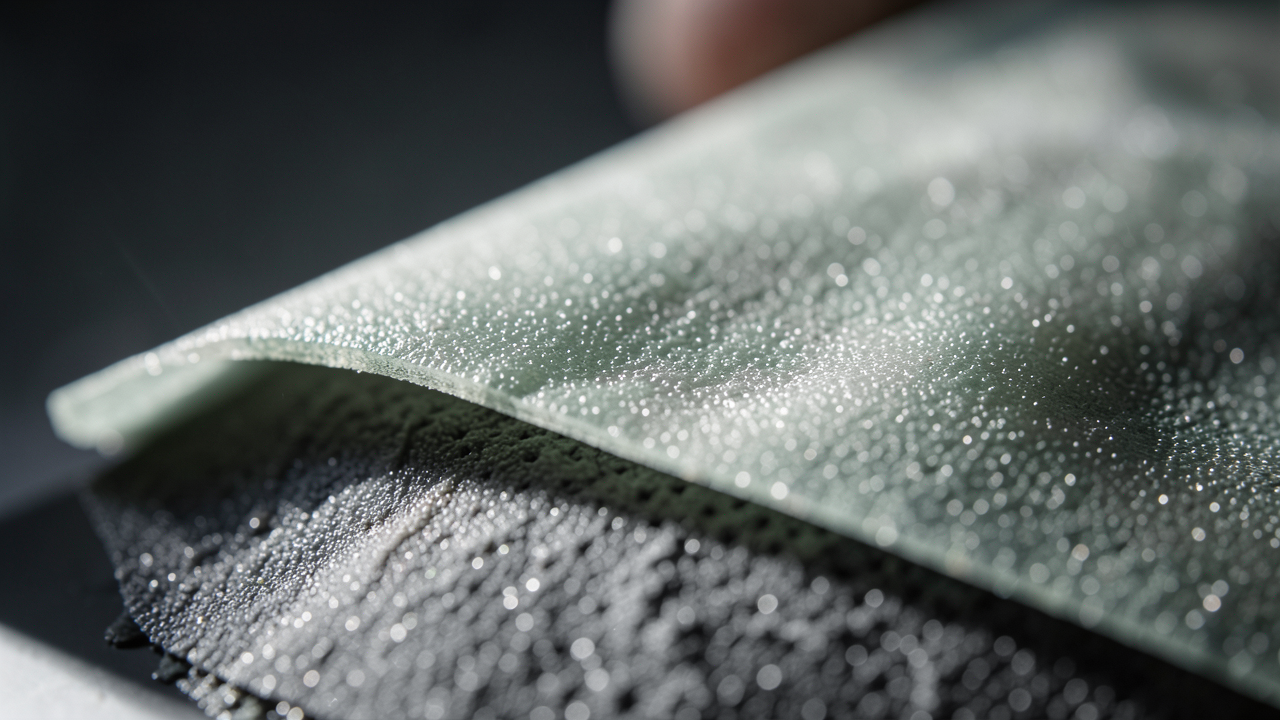
A research group at Shinshu University’s Faculty of Textile Science has successfully developed a novel, high-performance, and highly durable polymer composite membrane that is entirely fluorine-free, positioning it as a critical advancement for next-generation fuel cell electrolyte membranes. This innovative membrane achieves high proton conductivity comparable to conventional fluorine-based materials while simultaneously exhibiting superior mechanical strength, characterized by significant elongation, and excellent gas barrier properties. Notably, the team demonstrated successful fuel cell operation at elevated temperatures (120°C) and proved durability exceeding 100,000 cycles, representing a major breakthrough for the commercial viability of fuel cells. This fluorine-free design directly addresses increasingly stringent global regulations concerning PFAS.
The developed polymer composite membrane achieves its high performance through the intricate compounding of specific polymer backbones with specialized inorganic fillers. This optimization creates efficient proton conduction pathways, maintaining high proton conductivity even under high-temperature and low-humidity conditions. To replicate the high chemical stability and proton conductivity typically associated with fluorine-based polymers using fluorine-free materials, the research group applied proprietary polymer design and composite technologies. Specifically, they utilized a copolymer structure with precisely controlled hydrophilic segments for high proton conductivity and hydrophobic segments to enhance mechanical strength and gas barrier properties. The uniform dispersion of special inorganic nanoparticles further boosts the membrane’s overall performance and long-term durability.
The membrane’s impressive performance is underpinned by:
- Proton Conductivity: Maintains practical levels of high conductivity even at elevated temperatures (e.g., 120°C), crucial for efficient operation.
- Mechanical Properties: Achieves significant elongation, several times higher than conventional membranes, making it highly flexible yet robust enough to withstand the mechanical stresses from expansion and contraction during fuel cell stack operation.
- Gas Barrier Properties: Effectively suppresses the crossover of fuel (hydrogen) and oxidant (oxygen) through the membrane, ensuring high power generation efficiency and enhancing safety.
- Durability: Demonstrates stable operation for over 100,000 cycles at 120°C, a critical benchmark for long-term reliability in demanding applications like automotive use.
- PFAS-Free: Offers a significant environmental advantage, aligning with escalating global regulations and promoting sustainable technology development.
The PFAS-free polymer composite membrane developed by Shinshu University represents a decisive step towards realizing next-generation PEFCs. Its practical application could significantly contribute to reducing fuel cell costs and environmental impact while enhancing performance, thereby accelerating the establishment of a hydrogen-based society. The capability for high-temperature operation is particularly beneficial, allowing for simplified cooling systems, more compact stack designs, and improved overall fuel cell system efficiency. Future efforts will focus on establishing mass production technologies and collaborating with automotive and fuel cell stack manufacturers to facilitate early commercialization. This technology is also being considered for applications in other electrochemical devices, including water electrolysis and advanced sensors.
Source: https://www.shinshu-u.ac.jp/faculty/textiles/news/2026/02/221476.html
Get our weekly technology intelligence — free
Receive an infographic that lets you judge at a glance whether each field’s analysis report is worth reading.
Subscribe Free — Weekly Tech Intelligence
By subscribing, you’ll receive Troy-Technical’s weekly technology intelligence newsletter.
- Your email and selected fields are used only to deliver the newsletter.
- We never share your information with third parties.
- You can unsubscribe anytime via the link in each email.
See our Privacy Policy for details.
Takes about a minute · Unsubscribe anytime




Comments