
Key Findings
Assistant Professor Jean-François Lou of Auburn University’s Department of Chemical Engineering has been awarded a $1.04 million National Science Foundation (NSF) grant to spearhead the development of biohybrid soft robots. These novel robots are designed to perceive tactile sensations through living neurons, marking a significant step towards creating more sensitive and interactive robotic systems than previously possible with conventional sensors.
Technical and Clinical Details
Dr. Lou’s research draws inspiration from how plants transmit mechanical information through their soft, fluid-filled tissues. His approach integrates several key technological components into robotic systems:
- Fluid-Filled Microchannels: Soft robotic sensors will incorporate microchannels filled with fluid to efficiently propagate pressure signals throughout the structure.
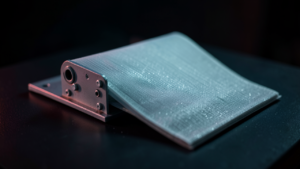
- Piezoelectric Ionic Hydrogels: These specialized hydrogels act as a transduction bridge. Upon mechanical deformation, they facilitate ion movement, converting mechanical stress into an ionic electrical signal.
- Living Neuron Activation: Crucially, these mechanically generated ionic signals are in a form that living neurons can directly detect and respond to. This enables a seamless bio-interface between the robot and biological cells.
By mimicking biological mechanotransduction, the robots will gain the ability to ‘feel’ external physical stimuli and interpret them in a manner analogous to a biological nervous system, offering unprecedented sensitivity and responsiveness.
Background and Industry Context
Accurate and delicate tactile sensing remains a critical challenge in modern robotics, particularly for humanoid and medical robots. Traditional rigid sensors often lack the compliance and sensitivity of human skin, limiting interaction capabilities. This biohybrid approach offers a pathway to overcome these limitations, potentially allowing robots to interact more gently with patients, manipulate fragile objects, and navigate complex environments with greater finesse. The use of bio-inspired mechanisms also aligns with trends toward more energy-efficient and biocompatible robotic systems.
Strategic Significance and Outlook
The success of this research could have profound implications across several sectors:
- Healthcare and Rehabilitation: Enabling the creation of safer, more intuitive surgical robots and patient-friendly wearable rehabilitation devices.
- Humanoid Robotics: Advancing humanoid robots with sophisticated touch capabilities for more natural and secure human-robot interaction.
- Wearable Technology: Facilitating the development of next-generation wearable sensors that provide real-time physiological monitoring and environmental awareness.
The NSF grant underscores the national strategic importance of this interdisciplinary research, accelerating its trajectory toward practical applications and positioning biohybrid robotics at the forefront of innovation.
Get our weekly technology intelligence — free
Receive an infographic that lets you judge at a glance whether each field’s analysis report is worth reading.
Subscribe Free — Weekly Tech Intelligence
By subscribing, you’ll receive Troy-Technical’s weekly technology intelligence newsletter.
- Your email and selected fields are used only to deliver the newsletter.
- We never share your information with third parties.
- You can unsubscribe anytime via the link in each email.
See our Privacy Policy for details.
Takes about a minute · Unsubscribe anytime






Comments