
Key Findings
Danube Dynamics and EVVA, based in Austria, have successfully developed an AI-powered system for detecting surface defects on highly reflective components. This breakthrough system dramatically cuts the inspection time per Eurobox, capable of holding up to 126 components, from over 30 seconds for traditional manual visual inspection to less than 5 seconds. This represents a monumental leap in accelerating quality control processes and ensuring reproducibility within manufacturing operations.
Technical Details
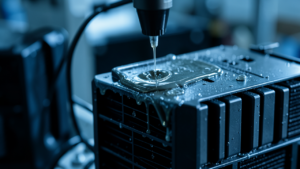
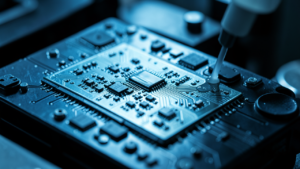
The developed AI-based inspection system integrates high-resolution cameras with advanced image processing algorithms and deep learning models. It specializes in detecting surface defects on notoriously challenging highly reflective materials, such as those with metallic luster. The system effectively filters out noise caused by glare and reflections to accurately identify subtle flaws like scratches, indentations, and foreign particles. It captures multiple components placed in a Eurobox simultaneously, with the AI then analyzing the acquired images to automatically assess the surface quality of each part. This automated evaluation ensures consistent quality standards, independent of human subjectivity, thereby enhancing the reliability of the inspection process.
Background & Context
Inspecting surface defects on highly reflective components is crucial across industries like automotive, precision machinery, and electronics. However, due to their inherent properties, visual inspection has traditionally been difficult, time-consuming, and required highly skilled operators. Manual inspection is prone to human error, inconsistencies in judgment among inspectors, and struggles to keep pace with accelerating production lines, making consistent quality assurance a significant challenge. The introduction of AI technology is a vital step toward resolving these issues by enabling automation, efficiency, and improved objectivity in inspection.
Strategic Significance & Outlook
This AI-based inspection system holds immense potential to revolutionize quality control processes in the manufacturing sector. The dramatic reduction in inspection time directly translates to increased production throughput, contributing to cost savings and shorter time-to-market. Furthermore, the consistent high-precision inspection provided by AI enhances product reliability and boosts customer satisfaction. In the future, the application scope is expected to broaden to include a wider variety of materials and component shapes, accelerating its adoption as a critical enabling technology for fully automated manufacturing lines. Ultimately, it is anticipated to integrate with predictive maintenance systems that feed real-time inspection results back into the production process to identify and correct root causes of defects.
Source: https://metrology.news/ai-based-inspection-detects-surface-defects-on-highly-reflective-components/
Get our weekly technology intelligence — free
Receive an infographic that lets you judge at a glance whether each field’s analysis report is worth reading.
Subscribe Free — Weekly Tech Intelligence
By subscribing, you’ll receive Troy-Technical’s weekly technology intelligence newsletter.
- Your email and selected fields are used only to deliver the newsletter.
- We never share your information with third parties.
- You can unsubscribe anytime via the link in each email.
See our Privacy Policy for details.
Takes about a minute · Unsubscribe anytime







Comments