
Key Findings
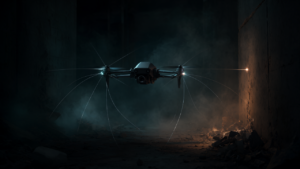
Researchers at the Massachusetts Institute of Technology (MIT) have developed a groundbreaking new AI control system that has successfully enhanced the speed of their insect-sized flying robot by approximately 450% and its acceleration by about 250%. This remarkable advancement enables the robot to perform acrobatic maneuvers, including 10 complete flips in just 11 seconds, showcasing unprecedented agility and flight performance.
Technical / Clinical Details
This dramatic performance improvement is attributed to a two-part AI control system designed by the research team. The system is engineered to strike an optimal balance between performance and computational efficiency, precisely controlling the high-speed movements of the robot’s minuscule wings. Mimicking the flight mechanics of insects, the AI optimizes flight trajectories and stabilizes posture in real-time, facilitating rapid and acrobatic maneuvers previously impossible with conventional methods. Specifically, this AI can react to aerodynamic changes and external disturbances in milliseconds, adapting flight control dynamically. The introduction of this control system allows the robot to execute more complex flight patterns with enhanced energy efficiency.
Background & Context
Insect-sized flying robots hold immense promise for applications in exploration, surveillance, and inspection in confined spaces or hazardous environments inaccessible to humans, owing to their small size and lightweight nature. However, previous miniature flying robots faced limitations in flight speed, agility, and autonomy due to constraints in battery capacity and computational resources. MIT’s research demonstrates that advancements in AI technology can overcome these limitations, representing a significant step towards the practical implementation of small-scale robots. This makes their application in diverse fields such as disaster search and rescue, precision agriculture, infrastructure inspection, and environmental monitoring a tangible reality.
Strategic Significance & Outlook
The substantial increase in speed and agility, driven by this AI control system, will significantly enhance the future capability of miniature robots to search inside the rubble of earthquake-collapsed buildings or autonomously navigate dangerous, narrow spaces that larger, conventional drones cannot access. For instance, more advanced and precise missions, such as internal inspection of chemical plant pipelines or biological sample collection, are expected to become feasible. The research team aims to further develop this technology to enable robots to autonomously learn more complex tasks and adapt to a wider range of environments.
Source: https://www.sciencedaily.com/releases/2026/09/260921081114.htm
Get our weekly technology intelligence — free
Receive an infographic that lets you judge at a glance whether each field’s analysis report is worth reading.
Subscribe Free — Weekly Tech Intelligence
By subscribing, you’ll receive Troy-Technical’s weekly technology intelligence newsletter.
- Your email and selected fields are used only to deliver the newsletter.
- We never share your information with third parties.
- You can unsubscribe anytime via the link in each email.
See our Privacy Policy for details.
Takes about a minute · Unsubscribe anytime




Comments