
Key Findings
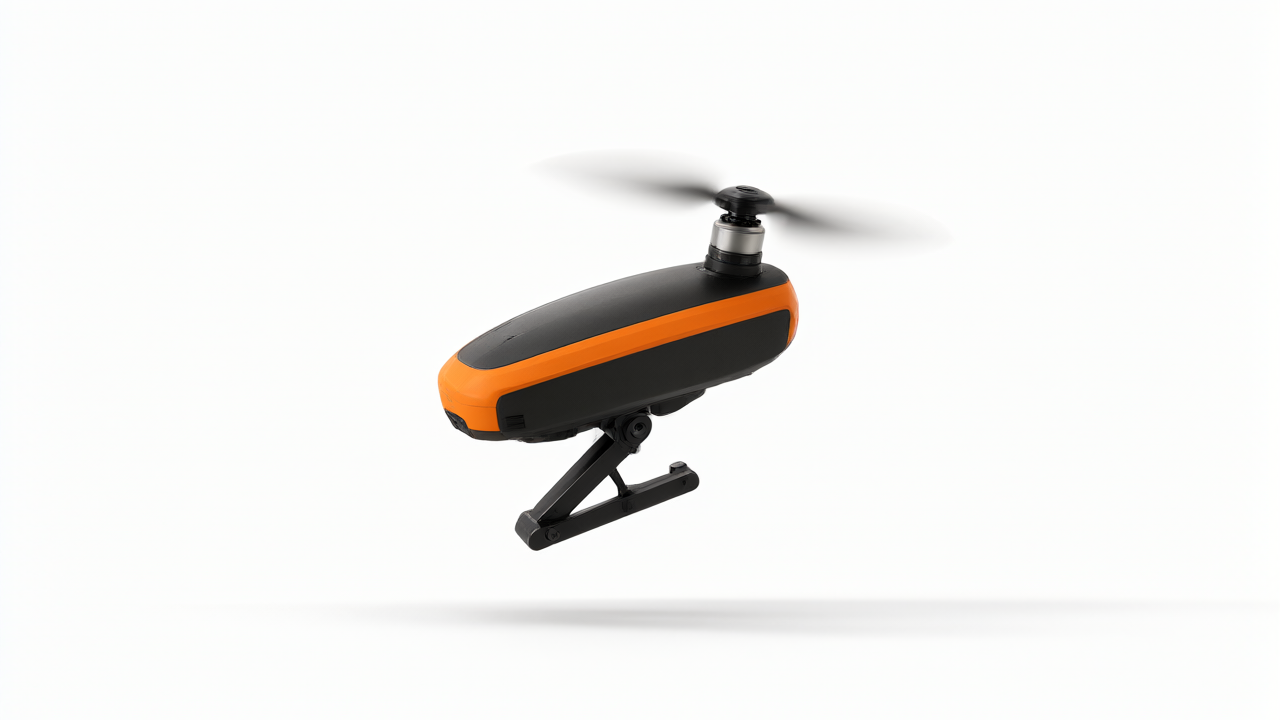
Joshua Bird has successfully flown a single-motor drone that utilizes a hinged propeller system to achieve flight and steering. The aircraft is capable of lifting off and maintaining level flight while responding to stick inputs. Currently, the drone is limited to indoor flight within a single room due to its reliance on an infrared beacon for heading correction.
Technical Details
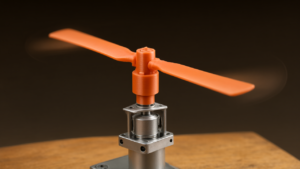
The drone replaces the traditional helicopter swashplate with a propeller hub featuring hinges angled at 45 degrees. By timing motor speed surges 300 times per second, the system creates blade lag that pitches the blades up or down, allowing the drone to tilt in any direction. The 6-inch propeller operates at nearly 20,000 RPM.
- Motor Control: Because standard drone ESCs lost sync above 50 accelerations per second due to back EMF noise, Bird implemented an mjbots moteus r4 servo controller with a magnetic encoder.
- Firmware: To eliminate a 20-degree rotation lag caused by separate microcontrollers, the moteus firmware was rewritten to allow the motor controller to communicate directly with the flight controller.
- Hardware: The hub was printed using carbon-fiber-filled PPA on an H2C printer.
- Vibration Mitigation: A homemade strobe camera was used to identify a 160 Hz vibration caused by blade flapping and bending; this was resolved by using stiffer blades.
Background & Context
While hinged rotors have been explored previously—such as the University of Hong Kong’s PULSAR in 2023 and Tom Stanton’s swashplateless helicopter—Bird’s design is smaller and faster-spinning. His propeller area is more than six times smaller than that of the PULSAR.
Significance & Outlook
The project demonstrates that reducing motor count can decrease drone size. However, the cost offset is significant, as the removal of mechanical parts required a $94 moteus servo drive and custom firmware. Future iterations aim to replace the infrared beacon with a linear camera sensor to allow the drone to navigate independently and fly outdoors.
Source: https://dronexl.co/2026/10/20/joshua-bird-single-motor-drone-hinged-propeller/
Get our weekly technology intelligence — free
Receive an infographic that lets you judge at a glance whether each field’s analysis report is worth reading.
Subscribe Free — Weekly Tech Intelligence
By subscribing, you’ll receive Troy-Technical’s weekly technology intelligence newsletter.
- Your email and selected fields are used only to deliver the newsletter.
- We never share your information with third parties.
- You can unsubscribe anytime via the link in each email.
See our Privacy Policy for details.
Takes about a minute · Unsubscribe anytime