
Key Findings
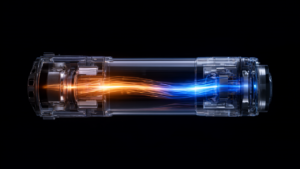
Nokia highlights a significant expansion in the deployment of coherent pluggable optics, moving beyond their traditional terrestrial applications into the more challenging domain of subsea networks. This transition is primarily fueled by the advent of advanced 800ZR/ZR+ pluggable optics, which leverage cutting-edge 3nm Digital Signal Processors (DSPs). Key advantages include substantial reductions in power consumption per bit and enhanced functionality, crucial for improving the efficiency and economics of optical transmission in subsea cable systems.
Technical / Clinical Details
Historically, pluggable optics have been less common in subsea systems due to stringent performance requirements. However, the latest generation of 800ZR/ZR+ pluggables, powered by advanced 3nm DSPs, exhibits dramatically improved power efficiency. This leads to a smaller device footprint and reduced overall power consumption. Critically, these new modules feature enhanced chromatic dispersion compensation capabilities, vital for maintaining signal integrity over the immense distances characteristic of subsea cables. This allows subsea cable operators to achieve higher data throughput with fewer devices, translating into significant operational cost savings.
Background & Context
Global data traffic is experiencing exponential growth, continuously elevating the importance of subsea cable networks for intercontinental and wide-area connectivity. Previous subsea cable systems have relied heavily on proprietary line cards and custom-designed transmission equipment, leading to high initial investment and operational costs. The evolution of coherent pluggable optics, offering standardized form factors and reduced costs, provides a flexible and more economical alternative for building and upgrading subsea networks. This development is a crucial step towards meeting the escalating bandwidth demands driven by the expansion of AI and cloud computing.
Strategic Significance & Outlook
Nokia’s analysis underscores the pivotal role coherent pluggable optics are expected to play in the future of subsea networking. For subsea cable operators focused on optimizing power, space, and cost, this technology presents a highly attractive option. It is anticipated that the adoption of pluggable optics in future subsea cable projects will enhance the flexibility and scalability of the global data communication infrastructure. Furthermore, continued technological advancements could enable even longer-reach and higher-capacity subsea transmissions to become standard capabilities for pluggable devices, fundamentally reshaping the economics of global connectivity.
Get our weekly technology intelligence — free
Receive an infographic that lets you judge at a glance whether each field’s analysis report is worth reading.
Subscribe Free — Weekly Tech Intelligence
By subscribing, you’ll receive Troy-Technical’s weekly technology intelligence newsletter.
- Your email and selected fields are used only to deliver the newsletter.
- We never share your information with third parties.
- You can unsubscribe anytime via the link in each email.
See our Privacy Policy for details.
Takes about a minute · Unsubscribe anytime








Comments