

Key Findings
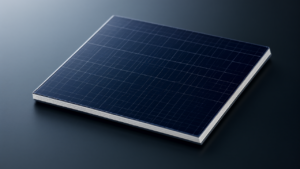
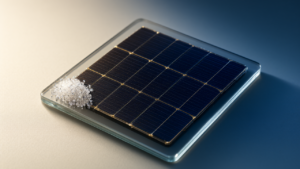
Researchers from Hebei University of Technology, Jiaxing Nanhu University, and Tianjin University in China have made a significant stride in photovoltaic technology, demonstrating an impressive 27.39% power conversion efficiency for inverted perovskite solar cells. This achievement stems from a novel molecular design that incorporates a new additive, ADA-DA, specifically engineered to enhance device stability and performance.
Technical Details
The innovative additive, ADA-DA, plays a crucial role in optimizing the interface between the perovskite active layer and the charge transport layers. Its design enables a delicate balance, preventing undesirable molecular aggregation at these critical interfaces while simultaneously promoting effective defect passivation and efficient charge carrier transport. This meticulous control over interfacial properties significantly reduces non-radiative recombination losses, leading to improved open-circuit voltage (VOC) and fill factor (FF). The result is a highly efficient device with enhanced intrinsic stability, making it more robust for practical applications. This molecular engineering approach offers a pathway to overcome long-standing challenges in perovskite device stability without sacrificing efficiency.
Background & Context
Inverted perovskite solar cells are gaining traction due to their compatibility with low-temperature processing and potential for flexible and semi-transparent applications. However, achieving high efficiency concurrently with long-term stability has remained a key challenge. Optimizing interfaces and mitigating defects are paramount for realizing the full potential of these devices. This research addresses these critical issues through a clever additive-based interfacial engineering strategy, marking a substantial maturation of inverted perovskite technology.
Strategic Significance & Outlook
The 27.39% efficiency achieved with this new molecular design is particularly significant for applications requiring both high performance and flexibility, such as building-integrated photovoltaics (BIPV). By concurrently advancing efficiency and stability, this technology is poised to accelerate the commercial deployment of perovskite solar cells across diverse sectors. Future research will focus on scaling up the manufacturing processes for large-area modules, further reducing production costs, and conducting extended reliability testing under various environmental conditions to ensure widespread adoption.
Source: https://www.thecooldown.com/green-tech/inverted-perovskite-solar-cell-efficiency-molecular-design/
Get our weekly technology intelligence — free
Receive an infographic that lets you judge at a glance whether each field’s analysis report is worth reading.
Subscribe Free — Weekly Tech Intelligence
By subscribing, you’ll receive Troy-Technical’s weekly technology intelligence newsletter.
- Your email and selected fields are used only to deliver the newsletter.
- We never share your information with third parties.
- You can unsubscribe anytime via the link in each email.
See our Privacy Policy for details.
Takes about a minute · Unsubscribe anytime