Key Findings
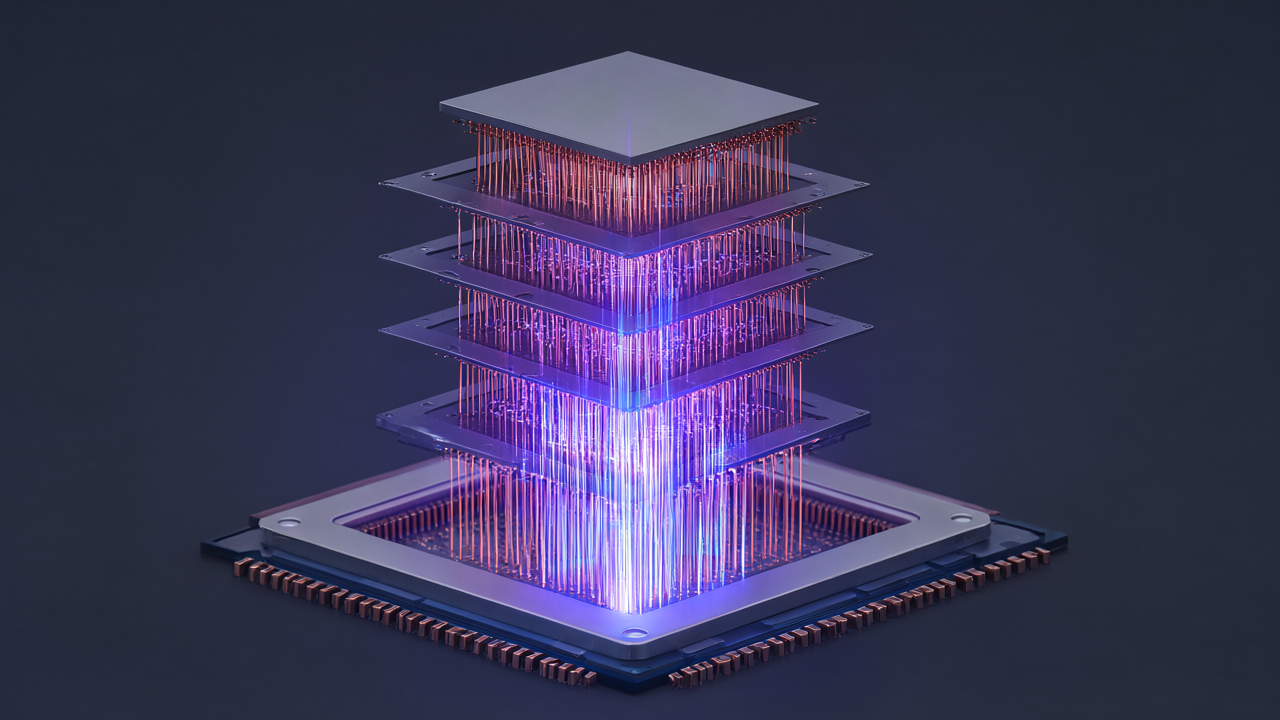
Samsung Electronics has achieved a significant leap in HBM4 capabilities, effectively doubling the I/O pin count compared to HBM3E, which drastically accelerates data transfer rates between AI accelerators and memory. Furthermore, the company is pioneering a revolutionary next-generation stacked memory technology called ‘zHBM,’ which vertically stacks memory directly on top of AI accelerators, a departure from traditional HBM configurations positioned alongside. This innovative architecture targets an ambitious eightfold increase in performance, a threefold improvement in power efficiency, and a reduction in thermal resistance to less than half compared to HBM5.
Technical / Clinical Details
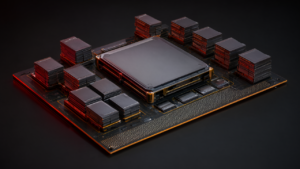
Samsung’s HBM4 leverages its proprietary 4nm process technology for the base die, enabling the doubling of I/O pins relative to HBM3E. This expansion significantly boosts the data transfer bandwidth between HBM and AI accelerators, crucial for accelerating AI workloads. The most compelling development is zHBM (Z-axis HBM). This technology adopts a paradigm-shifting approach by directly stacking multiple HBM dies vertically onto an AI accelerator chip. Conventional HBM systems typically place HBM modules horizontally adjacent to GPUs or other AI accelerators, connecting them via an interposer. In contrast, zHBM’s direct vertical interconnection physically minimizes data transmission distances. This extremely short path dramatically reduces signal latency and power consumption, potentially boosting data transfer speeds and overall system performance by up to eight times. This vertical integration also contributes to a smaller package footprint, aiding in system miniaturization. The target of reducing thermal resistance by more than 50% is anticipated to be achieved through a combination of novel cooling technologies, advanced materials, and optimized structural designs.
Background & Context
In the rapidly expanding fields of AI and High-Performance Computing, there is an ever-increasing demand for greater memory bandwidth and processing speed to handle an explosion of data. While conventional HBM technology brought significant advancements with its stacked structure and wide bandwidth, challenges such as data transmission latency and power consumption—arising from the physical separation between AI accelerators and HBM—became apparent. Specifically, longer data transmission distances increase signal degradation and noise, impacting ultimate system performance. Vertical stacking approaches like zHBM are critical breakthroughs to mitigate this ‘Von Neumann bottleneck’ and minimize the distance between memory and processor, thereby elevating AI chip performance to the next level. This trend exemplifies the broader semiconductor industry’s strategy to surpass Moore’s Law limitations and achieve performance gains through advanced packaging and stacking technologies.
Strategic Significance & Outlook
Should Samsung’s zHBM technology become commercially viable, it promises to revolutionize AI accelerator design and dramatically enhance AI application capabilities. The projected eightfold performance increase, threefold power efficiency improvement, and significant thermal resistance reduction will have the greatest impact on large-scale AI model training and real-time inference. This will substantially contribute to power consumption reduction and computing power enhancement in data centers, accelerating breakthroughs in diverse AI fields such such as autonomous driving, natural language processing, and image recognition. Through zHBM, Samsung aims to establish unparalleled technological leadership in the next-generation AI semiconductor market and foster a new ecosystem.
Source: https://www.mk.co.kr/en/business/12167424
Get our weekly technology intelligence — free
Receive an infographic that lets you judge at a glance whether each field’s analysis report is worth reading.
Subscribe Free — Weekly Tech Intelligence
By subscribing, you’ll receive Troy-Technical’s weekly technology intelligence newsletter.
- Your email and selected fields are used only to deliver the newsletter.
- We never share your information with third parties.
- You can unsubscribe anytime via the link in each email.
See our Privacy Policy for details.
Takes about a minute · Unsubscribe anytime