


Key Findings
The iodine-tuned hard carbon anode delivers a reversible capacity of 352.9 mAh/g at 0.1C and maintains a capacity of 288.9 mAh/g at a 5C rate. The material exhibits an initial Coulombic efficiency of 88.4%, with a plateau contribution accounting for 64.1% of the total discharge capacity. Long-term stability is demonstrated by a 95.6% capacity retention after 200 cycles at 0.33C.
Technical Details
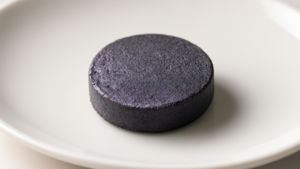
The synthesis utilizes starch as a precursor, modified via iodine-mediated oxidative cross-linking. This process converts the starch framework into a thermally stable conjugated network, suppressing the formation of volatile levoglucosan during pyrolysis. Consequently, the carbon yield increases to 45.5%, compared to less than 10% in iodine-free samples.
The resulting spherical hard carbon is characterized by:
- Abundant ultramicropores smaller than 0.9 nanometers (concentrated between 0.5 and 0.6 nanometers).
- A low external surface area of 1.5 square meters per gram.
- Carbonyl-rich surfaces that provide additional sodium-storage sites.
Density functional theory calculations indicate that pores below 0.804 nanometers act as molecular sieves, sterically excluding bulky ethylene carbonate solvent molecules while allowing sodium ions to enter. This environment promotes the adsorption of PF6 anions and the formation of a NaF-rich inorganic solid electrolyte interphase (SEI), which reduces the interfacial energy barrier for sodium-ion transport.
Background & Context
Sodium-ion batteries are a sustainable alternative to lithium-ion technology, but the larger size of sodium ions makes efficient shuttling through carbon frameworks difficult. While hard carbon is a promising anode material, researchers typically face trade-offs between initial Coulombic efficiency, plateau capacity, charge-transfer kinetics, and cycling stability.
Significance & Outlook
By regulating the electrolyte at the molecular level through ultramicropore confinement, this strategy breaks the conventional performance trade-offs. The ability to preserve the precursor’s spherical geometry and deliberately control the pore architecture allows for the creation of an inorganic-rich interphase, significantly improving the electrochemical behavior of sodium-ion anodes.
Get our weekly technology intelligence — free
Receive an infographic that lets you judge at a glance whether each field’s analysis report is worth reading.
Subscribe Free — Weekly Tech Intelligence
By subscribing, you’ll receive Troy-Technical’s weekly technology intelligence newsletter.
- Your email and selected fields are used only to deliver the newsletter.
- We never share your information with third parties.
- You can unsubscribe anytime via the link in each email.
See our Privacy Policy for details.
Takes about a minute · Unsubscribe anytime