

Key Findings
Fraunhofer ISE has successfully tested in-house manufactured battery cells featuring silicon-rich anodes for more than 1,000 full cycles. The cells retained over 83% of their original capacity, provided an external compression pressure of 1,000 kilopascals was applied. In contrast, cells tested under a lower pressure of 300 kilopascals showed a more sharp decline in usable capacity.
Technical Details
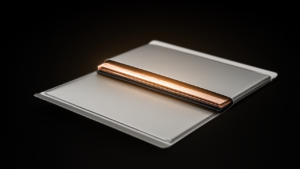
The research was conducted as part of the StrOboBatt project. The tested pouch cells consist of 40 layers with a capacity of 25 amp-hours and were produced on a semiautomated line. The technical specifications include:
- Anode: A silicon-carbon/graphite composite, where the silicon-carbon composite accounts for 51% of the active material.
- Cathode: Nickel-rich nickel-manganese-cobalt oxide.
- Energy Density: 280 watt-hours per kilogram for the research cells, with an expected 330 watt-hours per kilogram for industrially optimized formats.
- Testing Parameters: Charge and discharge cycles were performed in one hour each.
Researchers noted that external pressure is a critical factor as it improves electrical contact and reduces the separation of electrode materials. Additionally, a widening gap was observed between capacity measured at a low discharge rate and capacity available during regular operation as cycle counts increased.
Background and Context
Silicon-rich anodes are highly attractive for applications in electric mobility, aerospace, and stationary energy storage due to their promise of higher energy densities compared to standard lithium-ion batteries. However, limited lifespan has historically been the primary barrier to industrial adoption.
Significance and Outlook
These results indicate that mechanical compression is a key lever in extending the cycle life of high-energy cells. Because performance varies based on discharge rates and pressure, Fraunhofer ISE emphasizes that future applications require a detailed assessment of performance under specific operating conditions. The cells developed serve as a reference for further investigation into new materials and cell designs.
Get our weekly technology intelligence — free
Receive an infographic that lets you judge at a glance whether each field’s analysis report is worth reading.
Subscribe Free — Weekly Tech Intelligence
By subscribing, you’ll receive Troy-Technical’s weekly technology intelligence newsletter.
- Your email and selected fields are used only to deliver the newsletter.
- We never share your information with third parties.
- You can unsubscribe anytime via the link in each email.
See our Privacy Policy for details.
Takes about a minute · Unsubscribe anytime