

Key Findings
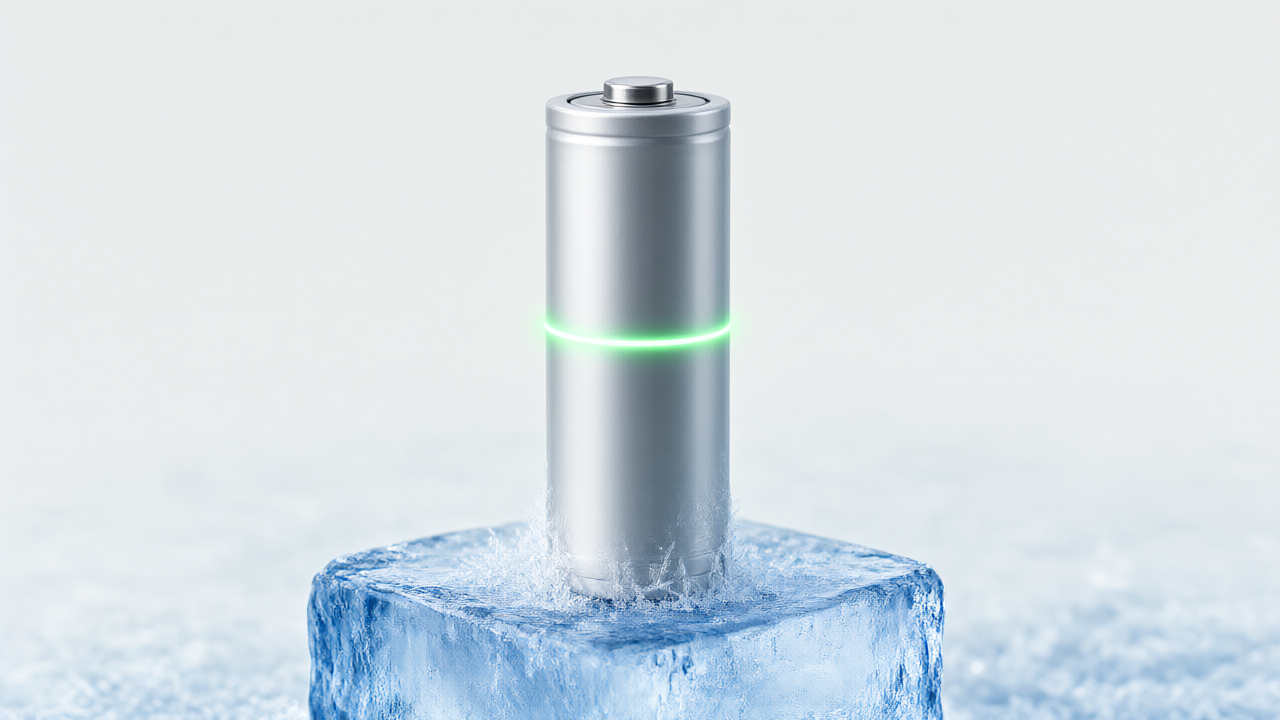
The optimized composite anode, designated SSNC-10, demonstrated high cycling stability and low-temperature adaptability in electrode-level tests. It maintained a reversible capacity of approximately 1,000 mAh g−1 after 500 charge-discharge cycles at a current density of 0.5 A g−1. In cold-environment testing, the electrode remained electrochemically active, delivering a stable reversible capacity of 450 mAh g−1 after 100 cycles at −20 °C, 300 mAh g−1 at −30 °C, and 190 mAh g−1 at −40 °C.
Technical Details
The material is a hierarchical SiOx/C-SnSb@NC composite fabricated through in situ alloying and nitrogen-doped carbon encapsulation. The structural design consists of a homogeneously dispersed SnSb bimetallic-alloy network protected by a carbon layer. This architecture addresses several technical hurdles:
- Conductivity: The SnSb network improves electronic conductivity and reduces electrode polarization.
- Structural Integrity: The collaborative stepwise lithiation behavior of SiOx and SnSb buffers volume expansion, suppressing interfacial side reactions and structural pulverization.
- Encapsulation: Nitrogen-doped carbon encapsulation modifies the electrical and structural behavior of the electrode.
Background & Context
Silicon oxide (SiOx) is highly valued for its high theoretical specific capacity but faces practical deployment challenges, including poor electronic conductivity, low initial Coulombic efficiency, and unsatisfactory rate capability. This research, published in the Journal of Materials Science, sought to mitigate these limitations by integrating the SnSb alloy and carbon layers to stabilize the SiOx framework.
Significance & Outlook
The study presents a feasible structural design for silicon-based anodes that require both high capacity and resilience to subzero temperatures. However, the researchers note that this was an electrode-material study rather than a full commercial battery cell demonstration. Consequently, data regarding full-cell energy density, calendar-aging performance, temperature-cycling results, and manufacturing-scale assessment were not provided in the report.
Get our weekly technology intelligence — free
Receive an infographic that lets you judge at a glance whether each field’s analysis report is worth reading.
Subscribe Free — Weekly Tech Intelligence
By subscribing, you’ll receive Troy-Technical’s weekly technology intelligence newsletter.
- Your email and selected fields are used only to deliver the newsletter.
- We never share your information with third parties.
- You can unsubscribe anytime via the link in each email.
See our Privacy Policy for details.
Takes about a minute · Unsubscribe anytime