


Key Findings
The developed biosensor demonstrates high sensitivity and stability in complex food matrices. It detected monosodium glutamate and the umami peptide BMP with detection limits of 0.33 picomolar, while inosine 5′-monophosphate (IMP) and the organic acid WSA were detected at 3.3 picomolar. The sensor’s antifouling capabilities are significant: when exposed to foulants such as bovine serum albumin, lipids, and fish metabolites, the signal changed by only 0.18 to 4.42 percent after forty minutes. In contrast, bare electrodes showed signal change rates between 45.14 and 84.14 percent.
Technical Details
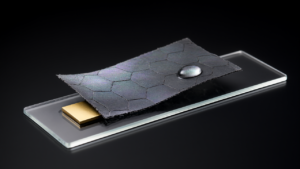
The sensing interface integrates three functional components to balance conductivity and antifouling properties:
- SBMA (Sulfobetaine methacrylate): A hydrophilic zwitterionic compound that forms a hydration layer to prevent impurities from contacting the electrode.
- AuNPs/MXene Framework: Gold nanoparticles grown on Ti3C2 MXene provide high conductivity and anchoring points to compensate for the electron transfer impedance caused by SBMA.
- T1R1-VFT: The Venus flytrap domain of the human umami taste receptor is immobilized on the gold nanoparticles.
The fabrication process involves dissolving SBMA monomer, a crosslinker, and an initiator in water, mixing them with the AuNPs/MXene and receptor solutions, and gelling the mixture on a polished glassy carbon electrode.
Background & Context
Biofouling is a primary obstacle in food analysis because proteins, carbohydrates, and fats adsorb onto electrode surfaces, blocking target analytes and increasing background noise. While sensory panels and electronic tongues exist, they are often limited by subjectivity or insufficient specificity. Previous bionic sensors using nanomaterials frequently lost receptor activity during long-term storage.
Significance & Outlook
By combining a zwitterionic hydrogel with a conductive MXene framework, this sensor maintains high signal-to-noise ratios (4.5 to 5.5 near detection limits) and long-term stability. This architecture allows for the continuous tracking of flavor profiles in fish during spoilage, providing a practical tool for objective food quality analysis.
Source: https://bioengineer.org/antifouling-hydrogel-biosensor-tracks-umami-signals-in-fish-during-storage/
Get our weekly technology intelligence — free
Receive an infographic that lets you judge at a glance whether each field’s analysis report is worth reading.
Subscribe Free — Weekly Tech Intelligence
By subscribing, you’ll receive Troy-Technical’s weekly technology intelligence newsletter.
- Your email and selected fields are used only to deliver the newsletter.
- We never share your information with third parties.
- You can unsubscribe anytime via the link in each email.
See our Privacy Policy for details.
Takes about a minute · Unsubscribe anytime