
Key Findings
A research team led by Dr. Hwang Dong-won of the Korea Research Institute of Chemical Technology and Professor Han Ji-hoon of Pohang University of Science and Technology has successfully optimized the production of 2,5-furandicarboxylic acid (FDCA), a bio-based alternative to petroleum-derived terephthalic acid used in PET bottles. The process achieves a final FDCA purity of over 99% while significantly reducing high-pressure reactions and purification steps.
Technical Details
The developed “BMF-AMF-FDCA linked process” consists of three stages:
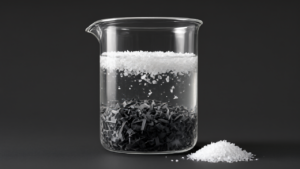
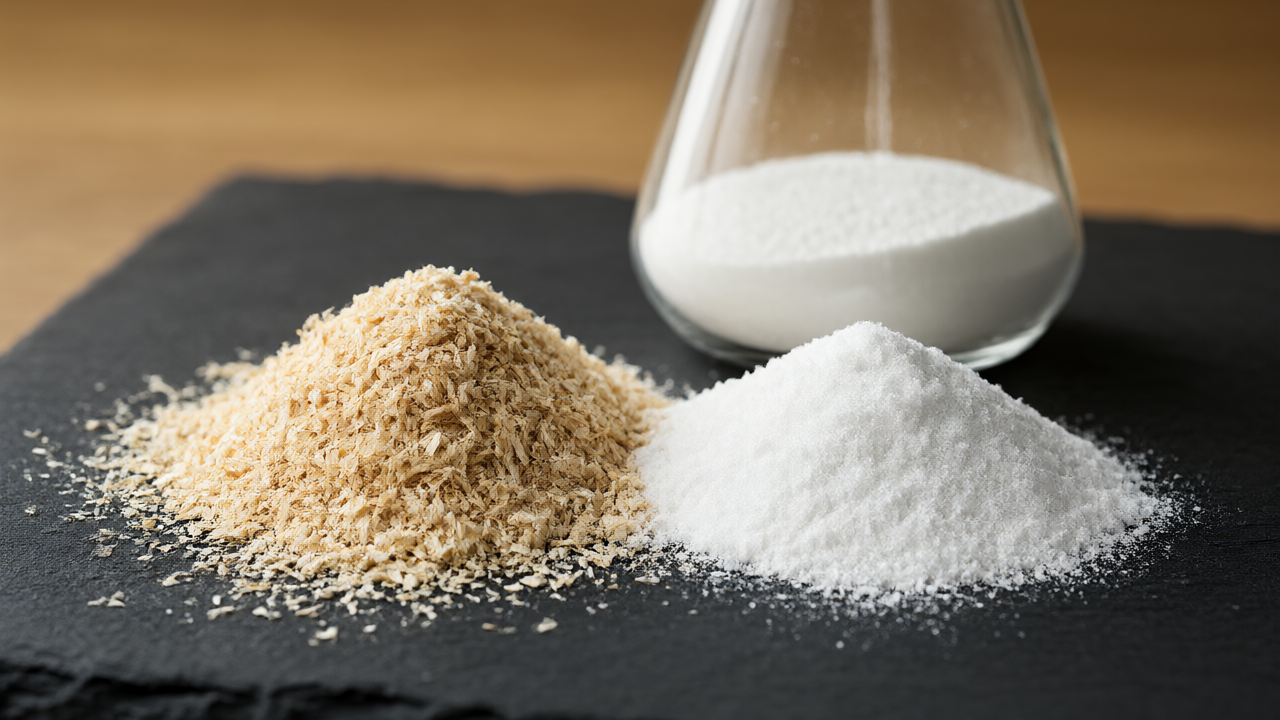
- Stage 1 (Cellulose to BMF): Using sulfuric acid and bromide salts, cellulose is converted to BMF at atmospheric pressure. This biphasic system moves unstable intermediate substances into an oil layer to prevent byproduct formation. BMF yield reached a maximum of 82%, with productivity over three times higher than reported CMF/BMF processes. Halogen-based substance usage was reduced by more than 30 times compared to hydrochloric acid-based CMF processes.
- Stage 2 (BMF to AMF): BMF is converted to AMF at 25°C. In a 1L reactor, a single pass yielded over 95%. Using regenerated ion-exchange resin, the process maintained a 97% AMF yield over 15 repeated operations.
- Stage 3 (AMF to FDCA): AMF is oxidized directly without additional purification to produce FDCA.
The total mass yield of FDCA was 56.8% (molar yield 59%) based on cellulose and 45.5% (molar yield 47.2%) based on wood sawdust, surpassing the 32.7% cellulose-based yield reported by the University of Groningen in 2022.
Background & Context
While FDCA is typically produced from fructose or sugar derived from corn, wood-based research faces challenges due to the rigid structure of wood and the instability of intermediate substances. This new process eliminates the need for high-pressure reactions and minimizes solvent replacement or separate purification of intermediates.
Significance & Outlook
Life cycle assessment (LCA) simulations indicate that producing 1kg of FDCA via this method emits 2.77kg of CO2 equivalent, roughly 60% lower than the 6.91kg emitted by edible sugar processes. Fossil resource use was reduced by 47.9%. Future research will focus on verifying manufacturing costs and large-scale continuous operation.
Source: https://www.fnnews.com/news/202610301642245786
Get our weekly technology intelligence — free
Receive an infographic that lets you judge at a glance whether each field’s analysis report is worth reading.
Subscribe Free — Weekly Tech Intelligence
By subscribing, you’ll receive Troy-Technical’s weekly technology intelligence newsletter.
- Your email and selected fields are used only to deliver the newsletter.
- We never share your information with third parties.
- You can unsubscribe anytime via the link in each email.
See our Privacy Policy for details.
Takes about a minute · Unsubscribe anytime