
Key Findings
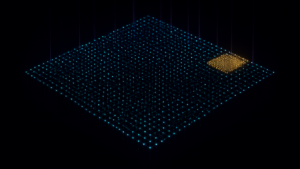
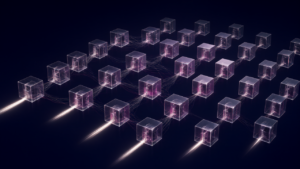
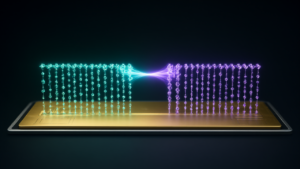
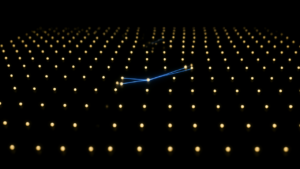
The “Jiuzhang 4” optical quantum computing prototype, led by the University of Science and Technology of China, was awarded a Leading Technology Award at the 2026 World Internet Conference in Wuzhen on November 2. It was one of only two basic research achievements among 20 award-winning results selected from over 430 entries across 43 countries and regions.
Technical Performance
In solving the specific mathematical problem of Gaussian Boson Sampling, “Jiuzhang 4” generates a single sample in 25 microseconds. In comparison, the El Capitan supercomputer, utilizing the most advanced classical algorithms, would require more than 10^42 years to complete the same task. This represents a computational speed increase of 10^54 times over the supercomputer, establishing a new world record in optical quantum computing.
The Shift to Post-Quantum Cryptography (PQC)
The advancement of quantum computing has intensified the urgency for cryptographic migration. A Google white paper published on March 31, 2026, estimated that an optimized Shor’s algorithm could theoretically derive a private key from a public key for Bitcoin’s Elliptic Curve Cryptography (ECC-256) within 9 minutes, requiring approximately 500,000 physical qubits.
In response, the U.S. National Institute of Standards and Technology (NIST) released “Transitioning to Post-Quantum Cryptography Standards” on October 27. The guidelines mandate that federal high-value assets and high-impact systems complete the migration of key establishment by the end of 2030 and digital signatures by the end of 2031, with an overall target completion year of 2035.
Engineering Implementation
Industrial responses are emerging, such as the “Xuanyue Tianjian Quantum Zero Trust” system released in September 2026 by Xuanyue Technology (incubated by the Zhejiang University Huzhou Research Institute). This system employs a hybrid route combining national secret algorithms with PQC, supporting ML-KEM key encapsulation and ML-DSA digital signatures integrated with the SM2/SM4/TLCP framework. This approach targets data with secrecy cycles of ten or more years to mitigate “harvest now, decrypt later” risks.
Source: https://www.news.cn/tech/20261106/c7acf577401d43dbbfe1295fea76e7e2/c.html
Get our weekly technology intelligence — free
Receive an infographic that lets you judge at a glance whether each field’s analysis report is worth reading.
Subscribe Free — Weekly Tech Intelligence
By subscribing, you’ll receive Troy-Technical’s weekly technology intelligence newsletter.
- Your email and selected fields are used only to deliver the newsletter.
- We never share your information with third parties.
- You can unsubscribe anytime via the link in each email.
See our Privacy Policy for details.
Takes about a minute · Unsubscribe anytime