
Key Findings
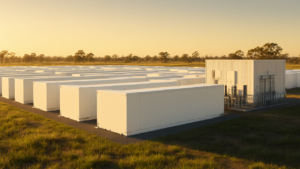
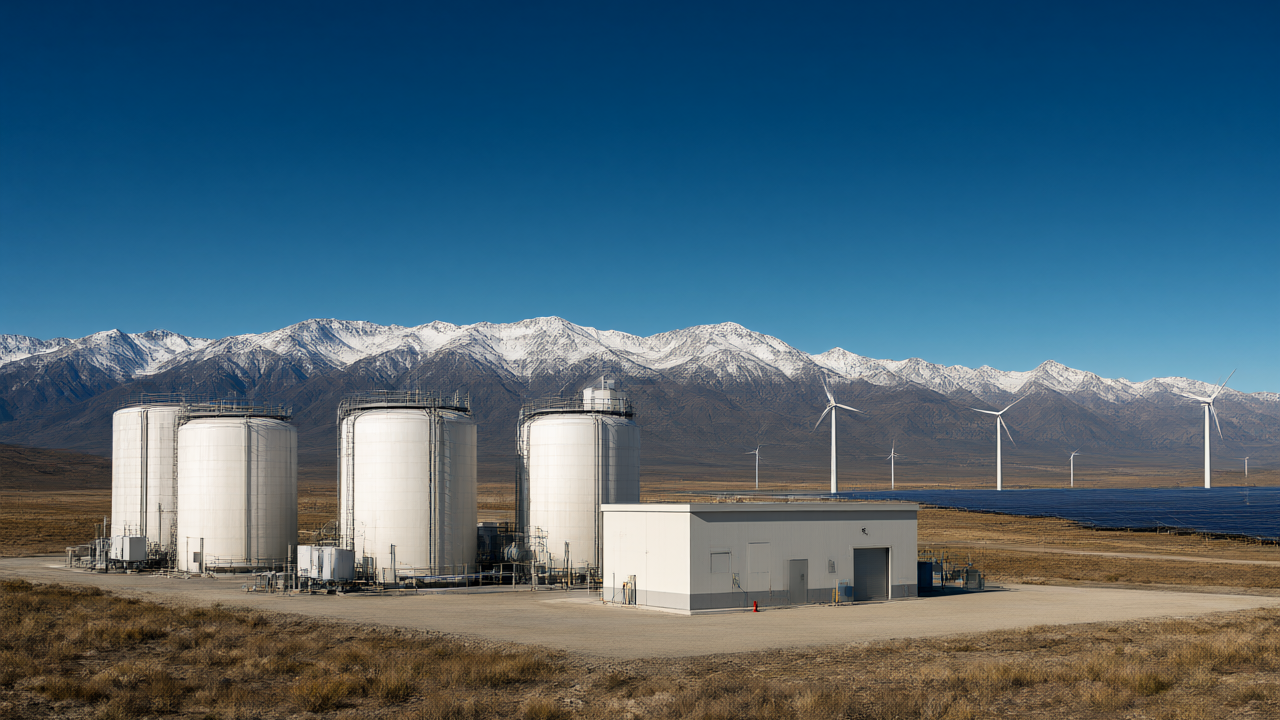
A 60 MW/600 MWh liquid air energy storage (LAES) demonstration project in Golmud, Haixi Mongolian and Tibetan Autonomous Prefecture, began generating electricity on October 30. Developed by the state-owned China Green Development Investment Group (CGDG) in cooperation with the Technical Institute of Physics and Chemistry of the Chinese Academy of Sciences (CAS), the facility is the world’s largest grid-connected LAES plant by both rated power and energy capacity.
Technical Details
The system utilizes ambient air as the working fluid, eliminating the need for electrochemical batteries or underground caverns. The process operates in three primary stages:
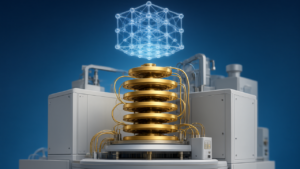
- Charging: Surplus electricity powers a three-stage centrifugal compressor to pressurize purified air to approximately 7 MPa. Heat from this process is recovered and stored as hot water at temperatures up to 195 C. The air is then cooled and liquefied at approximately -194 C for storage in insulated cryogenic tanks.
- Discharging: Liquid air is pressurized, reheated, and vaporized. The resulting expanding gas drives turbines connected to generators.
- Recovery: Cold energy recovered during vaporization is stored for use in subsequent charging cycles.
The facility is designed for 10 hours of continuous electricity delivery. It can accommodate approximately 600 MWh of surplus renewable electricity daily, supplying an estimated 180 GWh to the grid annually.
Background & Context
Construction began in July 2023 as part of China’s national new-type energy storage demonstration program. The project achieved a 100% localization rate, with all major equipment—including liquid expanders, cryogenic heat exchangers, and large centrifugal compressors—manufactured domestically. Engineering was handled by Hualu Engineering & Technology, with construction participation from China National Chemical Engineering Third Construction.
Significance & Outlook
Located in the renewable-rich Qaidam Basin, the facility provides inertial support to the power grid and offers greater site flexibility than compressed-air storage due to its use of insulated tanks. This project represents one of several long-duration storage technologies China is pursuing alongside lithium-ion, including vanadium redox flow, sodium-ion, and thermal storage.
Get our weekly technology intelligence — free
Receive an infographic that lets you judge at a glance whether each field’s analysis report is worth reading.
Subscribe Free — Weekly Tech Intelligence
By subscribing, you’ll receive Troy-Technical’s weekly technology intelligence newsletter.
- Your email and selected fields are used only to deliver the newsletter.
- We never share your information with third parties.
- You can unsubscribe anytime via the link in each email.
See our Privacy Policy for details.
Takes about a minute · Unsubscribe anytime