

Key Findings
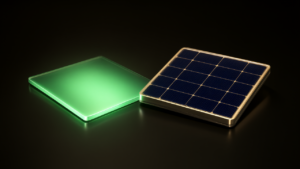
Longi has developed a two-terminal monolithic tandem solar cell that reached a champion power conversion efficiency of 35.31%. This device exhibited a short-circuit current density of 20.82 mA/cm2, an open-circuit voltage of 2.007 V, and a fill factor of 84.53%. Independent certification by China’s National Center of Inspection on Solar Photovoltaic Products Quality (CPVT) confirmed a reverse-scan efficiency of 35.25% and a stabilized efficiency of 35.13%.
Technical Details
The efficiency gain is attributed to the use of specially designed self-assembled molecules (SAMs) that prevent excessive molecular stacking while maintaining efficient charge transport. Researchers developed four derivatives based on the 4PACz molecule (TC0, TC1, TC2, and TC3). The TC2 variant provided the optimal balance of substrate adhesion and charge transport, achieving over 80% surface coverage on rough, pyramid-textured silicon surfaces.
The TC2-based interface improved the ITO work function and energy-level alignment, which accelerated charge separation and reduced recombination. Furthermore, TC2 promoted controlled perovskite crystallization, resulting in larger grains and higher crystallinity. Photoluminescence measurements for TC2 showed a quantum yield of 1.46% and a quasi-Fermi level splitting of 1.292 eV.
The device architecture consists of:
- A heterojunction (HJT) silicon bottom cell with an ITO recombination layer.
- A TC2-based SAM hole-selective contact.
- A perovskite absorber top cell.
- A stack comprising a lithium fluoride (LiF) interlayer, fullerene (C60) electron transport layer, and tin oxide (SnOx) buffer layer.
- A transparent indium zinc oxide (IZO) electrode, silver (Ag) contact, and magnesium fluoride (MgFx) optical coating.
Stability and Context
Stability tests under the ISOS-L-1 protocol showed the device retained 94% of its initial efficiency after 1,500 hours of continuous operation. Under the ISOS-L-2 protocol (65 C), it retained 82% efficiency after 1,000 hours. This research, published in Nature, involved collaborations with Soochow University, Northwestern Polytechnical University, and Hong Kong Polytechnic University.
Significance and Outlook
This development follows a trend of rapid efficiency increases in tandem cells, including a 31.71% certified cell from Northwestern Polytechnical University in December 2025 and a 32.12% certified cell from Soochow University. Longi’s latest result demonstrates that optimized molecular interface engineering can simultaneously enhance efficiency, charge transport, and operational stability.
Get our weekly technology intelligence — free
Receive an infographic that lets you judge at a glance whether each field’s analysis report is worth reading.
Subscribe Free — Weekly Tech Intelligence
By subscribing, you’ll receive Troy-Technical’s weekly technology intelligence newsletter.
- Your email and selected fields are used only to deliver the newsletter.
- We never share your information with third parties.
- You can unsubscribe anytime via the link in each email.
See our Privacy Policy for details.
Takes about a minute · Unsubscribe anytime