
Key Findings
The integration of a graphitic carbon nitride (g-C3N4) buffer layer has enabled inverted perovskite solar cells (PSCs) to reach a power conversion efficiency of 27.05%. Beyond efficiency, the devices demonstrate significant operational stability, maintaining more than 90% of their initial efficiency after 1056 h of maximum power point tracking during realistic day-night cycling.
Technical Details
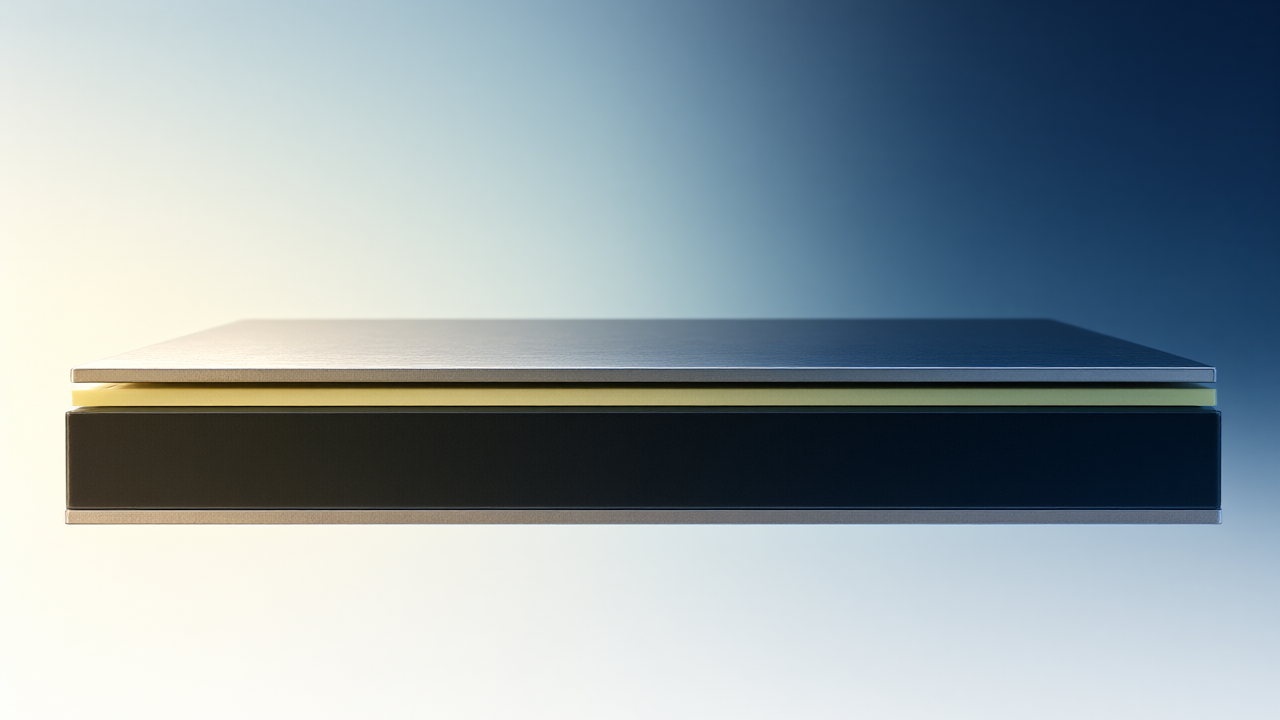
The study identifies a specific failure mechanism at the C60/atomic layer deposition (ALD)-SnO2 interface. A severe mismatch in the mechanical properties of these layers leads to the accumulation of internal stress, which triggers interfacial delamination and accelerates the degradation of the device. To resolve this, the researchers introduced g-C3N4 as a two-dimensional multifunctional buffer layer between the C60 and ALD-SnO2.
- Mechanical Function: The g-C3N4 acts as a compliant mechanical bridge that alleviates stress and suppresses the formation of microcracks.
- Electrical Function: The layer simultaneously facilitates electron transport across the interface.
Background and Context
While previous research has focused on managing thermo-mechanical stress within the perovskite layer itself, the degradation of adjacent functional layers during day-night cycling has been largely overlooked. This interfacial instability has remained a critical bottleneck for the commercialization of PSCs, as real-world applications require tolerance to the mechanical stresses induced by diurnal temperature and light fluctuations.
Significance and Outlook
By addressing the mechanical mismatch at the C60/ALD-SnO2 interface, this research provides a practical strategy for enhancing the robustness of inverted PSCs. The findings advance the fundamental understanding of interfacial failure mechanisms and offer a scalable method to support the transition of durable perovskite photovoltaics from the laboratory to commercial application.
Source: https://www.nature.com/articles/s41467-026-79172-7
Get our weekly technology intelligence — free
Receive an infographic that lets you judge at a glance whether each field’s analysis report is worth reading.
Subscribe Free — Weekly Tech Intelligence
By subscribing, you’ll receive Troy-Technical’s weekly technology intelligence newsletter.
- Your email and selected fields are used only to deliver the newsletter.
- We never share your information with third parties.
- You can unsubscribe anytime via the link in each email.
See our Privacy Policy for details.
Takes about a minute · Unsubscribe anytime