


Key Findings
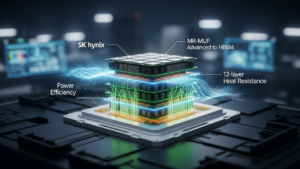
Reports indicate that SK hynix has pushed the yield rate of its HBM4 memory beyond 70%. While the company has not officially disclosed specific figures, it stated during its third-quarter earnings conference call on October 28 that yields for both front-end and back-end processes are at the highest industry levels. The company further noted that HBM4 yields have exceeded original plans, leading to an upward revision of internal targets.
Technical Details
HBM4 is a next-generation memory that vertically stacks multiple DRAMs to increase data processing speeds and bandwidth. Key technical specifications include:
- Interface: A 2048-bit interface, doubling the data transmission paths compared to the fifth-generation HBM3E.
- Manufacturing Complexity: Higher precision is required in the stacking and connection process to minimize defects.
- Cost Structure: Because HBM involves a sequence of chip fabrication, stacking, packaging, and final inspection, low yields result in higher manufacturing costs as resources must be increased to secure the same volume of usable products.
Background and Context
The industry views the 70% yield threshold as significant; for instance, an increase from 60% to 70% represents an approximately 16.7% increase in usable products for the same input. Competition is intensifying as Samsung Electronics and Micron accelerate their HBM4 strategies. In September, industry observations suggested Samsung Electronics’ HBM4 yields may have reached around 80%, though the source notes that yield calculation standards vary by company.
Significance and Outlook
Yield stability directly impacts SK hynix’s ability to supply major AI semiconductor customers, such as Nvidia, who require high memory bandwidth and power efficiency. As AI accelerators evolve, the ability to provide stable volumes that meet strict quality and performance requirements is a primary competitive factor. The battle for market share has now shifted from basic performance implementation to the securing of mass-production yields and cost competitiveness.
Source: https://biz.chosun.com/jp/jp-it/2026/11/12/2L23Z4N7VNF3PGESREKC6XZX3M/
Get our weekly technology intelligence — free
Receive an infographic that lets you judge at a glance whether each field’s analysis report is worth reading.
Subscribe Free — Weekly Tech Intelligence
By subscribing, you’ll receive Troy-Technical’s weekly technology intelligence newsletter.
- Your email and selected fields are used only to deliver the newsletter.
- We never share your information with third parties.
- You can unsubscribe anytime via the link in each email.
See our Privacy Policy for details.
Takes about a minute · Unsubscribe anytime