

Key Findings
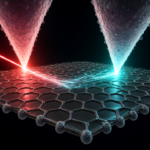
Scanning X-ray microscopy (SXM) and scanning electrochemical cell microscopy (SECCM) have revealed that Faradaic processes on Ti3C2Tx MXene flakes are delocalized. For reactions including electrochemical oxidation and the hydrogen evolution reaction, the reactions extend well beyond the MXene flake area in direct contact with the droplet cell. Additionally, the study provides evidence of hydrogen storage on monolayer MXene flakes.
Technical Details
The researchers used SECCM to probe localized regions of monolayer MXene flakes with a probe radius of approximately 300 nm. They observed anomalously high capacitance values when normalized to the probe contact area, exceeding those of state-of-the-art devices. However, when normalized to the total flake area, the capacitance aligned with existing benchmarks. This discrepancy indicates a highly efficient, long-range proton diffusion pathway across the MXene surface. This mechanism is supported by the presence of a thin electrolyte film—approximately 5 nm in thickness—that forms a tenuous ionic bridge, drawing water from the droplet toward the material under reaction conditions.
Background and Context
MXenes are 2D transition metal carbides and nitrides valued for their high conductivity, hydrophilicity, and ultrafast intercalation kinetics. While O-terminated Ti3C2Tx shows superior performance for H+ intercalation due to confined water molecules in interlayers, it is prone to spontaneous oxidation to TiO2. Previous macroscale studies noted that planar electrodes sometimes exhibited higher gravimetric capacitances than macroporous ones, contradicting the assumption that increasing accessible surface area is the primary driver of capacitance. This suggested that lateral 2D proton transport along the MXene surface plays a critical role.
Significance and Outlook
By decoupling intercalation from redox pseudocapacitance at the single-flake level, this work clarifies the role of interfacial water in mediating electrochemical connectivity over micron-scale distances. These insights address a major bottleneck in the scale-up of MXene-based energy storage devices by explaining the intrinsic electrochemical behavior and the influence of surface terminations on stability and performance.
Source: https://doi.org/10.1038/s41467-026-79237-7
Get our weekly technology intelligence — free
Receive an infographic that lets you judge at a glance whether each field’s analysis report is worth reading.
Subscribe Free — Weekly Tech Intelligence
By subscribing, you’ll receive Troy-Technical’s weekly technology intelligence newsletter.
- Your email and selected fields are used only to deliver the newsletter.
- We never share your information with third parties.
- You can unsubscribe anytime via the link in each email.
See our Privacy Policy for details.
Takes about a minute · Unsubscribe anytime